
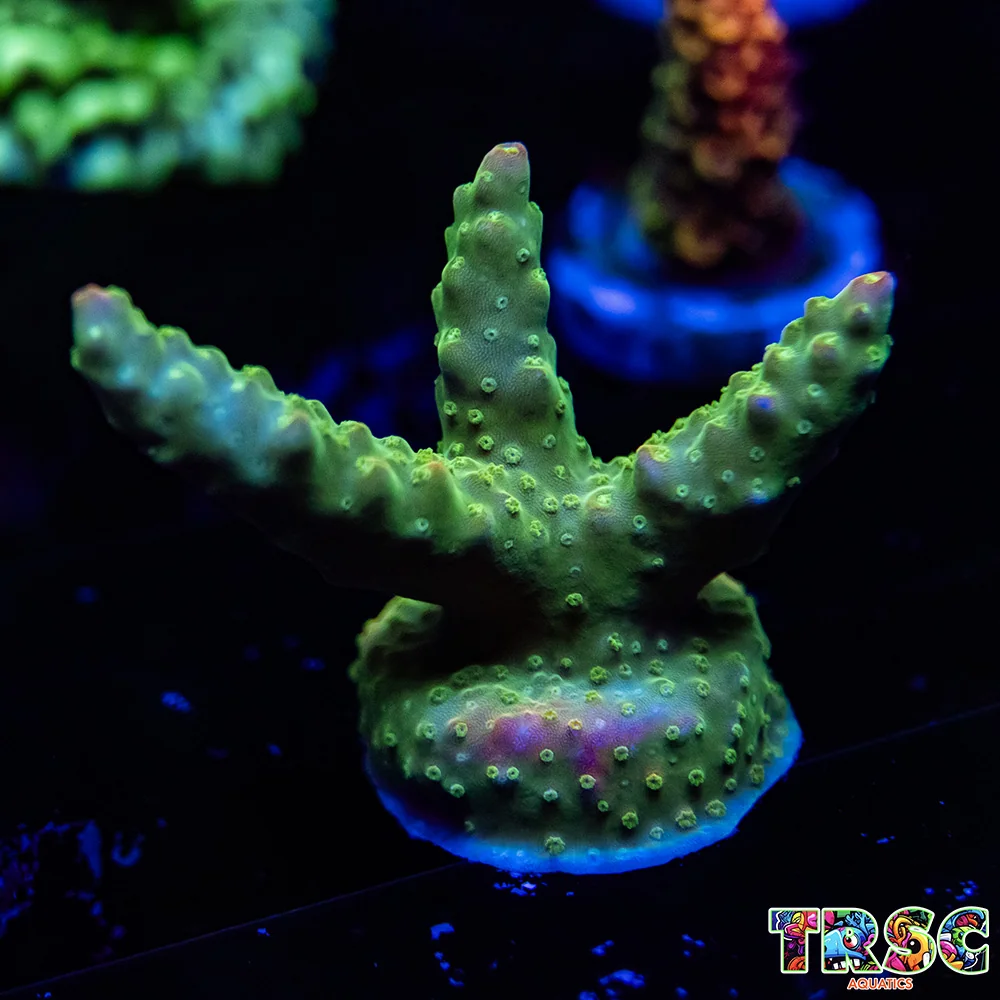
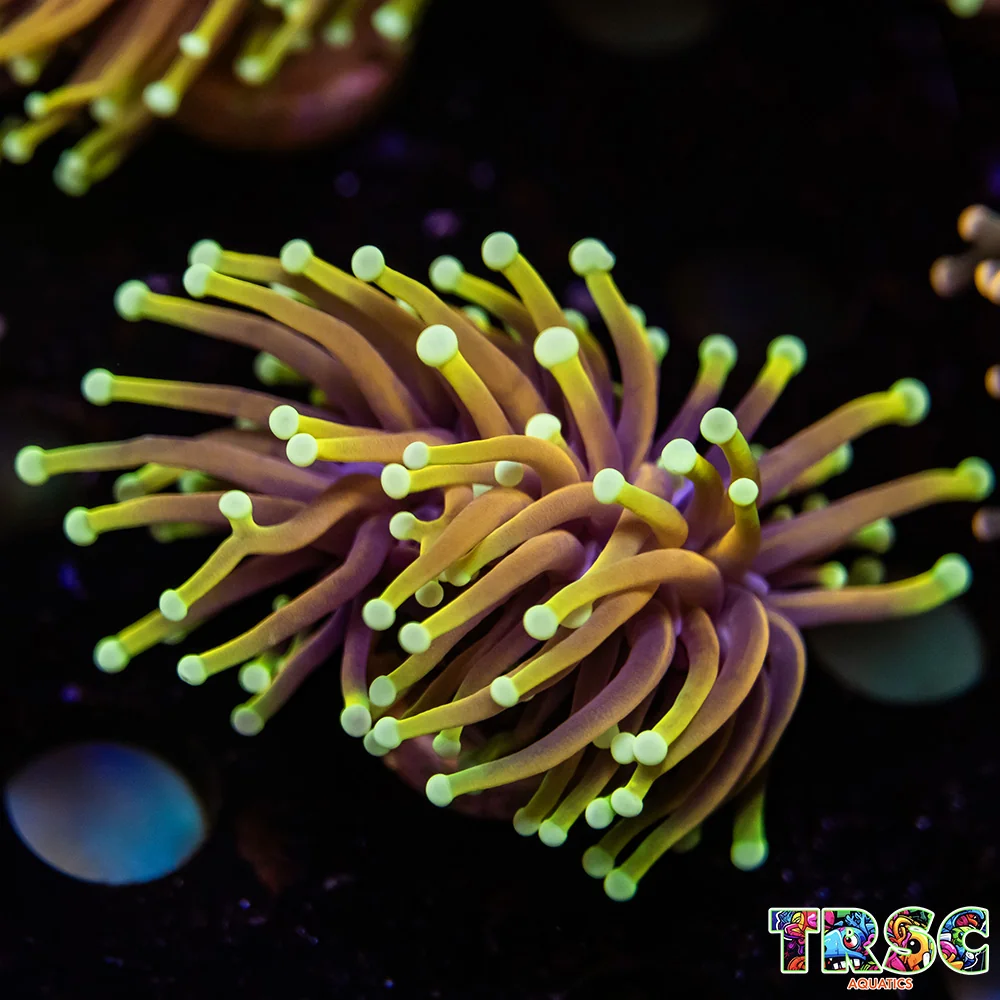
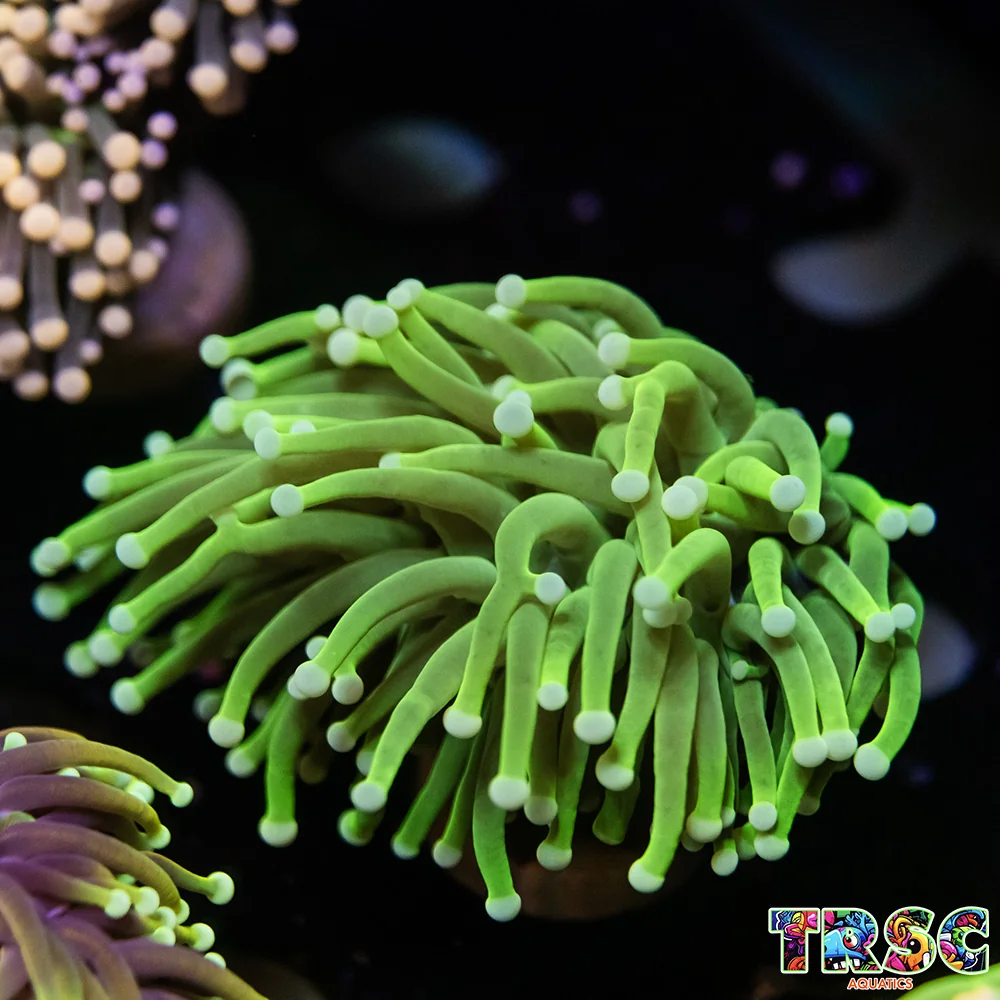
Green Starburst Acro G10
Market Intelligence
Based on 27 similar Green Star Polyps corals
Market insights from thousands of listings
About this coral
SPS Coral Care Guide (Acropora)
SPS corals (small polyp stony corals) such as Acropora are the crown jewel of the reef hobby, prized for their intense colors and fast, branching growth. They need strong light, strong flow and very stable water, and they reward that care with some of the brightest colors on the reef.
SPS Care
Acropora are the most demanding corals in the hobby and are very sensitive to changes in water chemistry. They do best in mature tanks, ideally running for a year or more, with consistent testing and dosing.
Location
Wild Acropora grow across the Indo-Pacific, from Fiji and Tonga to the Solomon Islands and the Great Barrier Reef. Our SPS frags are aquacultured on our farm, so they are already adapted to aquarium lighting and water.
Lighting
| 0 | 100 | 200 | 300 | 400 |
SPS corals need high light. Around 250–400 PAR works well for most Acropora, and many tanks run higher. Color can shift a lot with lighting, so make changes slowly and give the coral time to adjust.
Water Flow
Acropora love strong, random, turbulent flow. Good flow carries food, removes waste and helps prevent tissue loss. As colonies grow they can block flow to themselves and their neighbors, so recheck flow as your tank fills in.
Feeding
Acropora get most of their energy from light, but they benefit from fine foods such as rotifer-based or powdered coral foods and amino acids. Keep food particles very small so the tiny polyps can take them in, and feed lightly to protect water quality.
Water Chemistry
- Alkalinity: 7.5–9 dKH, as stable as possible (swings are the #1 cause of SPS loss)
- Calcium: 420–450 ppm
- Magnesium: 1300–1400 ppm
- Nitrate: 2–10 ppm
- Phosphate: 0.02–0.08 ppm
- Salinity / Temp: 1.025–1.026 SG, 76–79°F
Low but measurable nutrients and steady alkalinity matter more than hitting any exact number.
Propagation
Acropora are among the most widely aquacultured corals. Branches can be clipped with bone cutters or a saw and glued to a frag plug. Keep new frags in good flow while they heal and encrust.
Troubleshooting
- RTN / STN (tissue loss): usually triggered by alkalinity swings, temperature spikes or poor flow
- Browning: often from too much nutrient or too little light
- Paling or bleaching: too much light too fast, or nutrients bottomed out
- Pests: dip every new frag for acro-eating flatworms and red bugs
Aggression
Acropora are not very aggressive and have short sweepers, but they lose easily to LPS and soft corals with stronger stings. Keep them out of reach of Euphyllia and fast-growing neighbors, and leave room for branches to grow.
Acclimation
Shipping is stressful, so take your time. Float the bag to match temperature, slowly add tank water over 20–30 minutes, and give the SPS frag a coral dip to remove any hitchhikers. Place it lower and in gentler light than its final spot for the first 1–2 weeks, then move it up gradually as it opens fully.
Aquacultured at TRSC Aquatics in Charlotte, NC.
Care requirements

Delivery options
Nationwide delivery available
Charlotte, NC
Listing stats
Market insights from thousands of listings
Compare Similar Green Star Polyps Corals
See how this listing stacks up against 27 other options





More from TRSC Aquatics
Explore 285 listings from this seller
Dive into Meta Reef
Discover corals and build your reef — all in one place.
Already have an account? Log in