
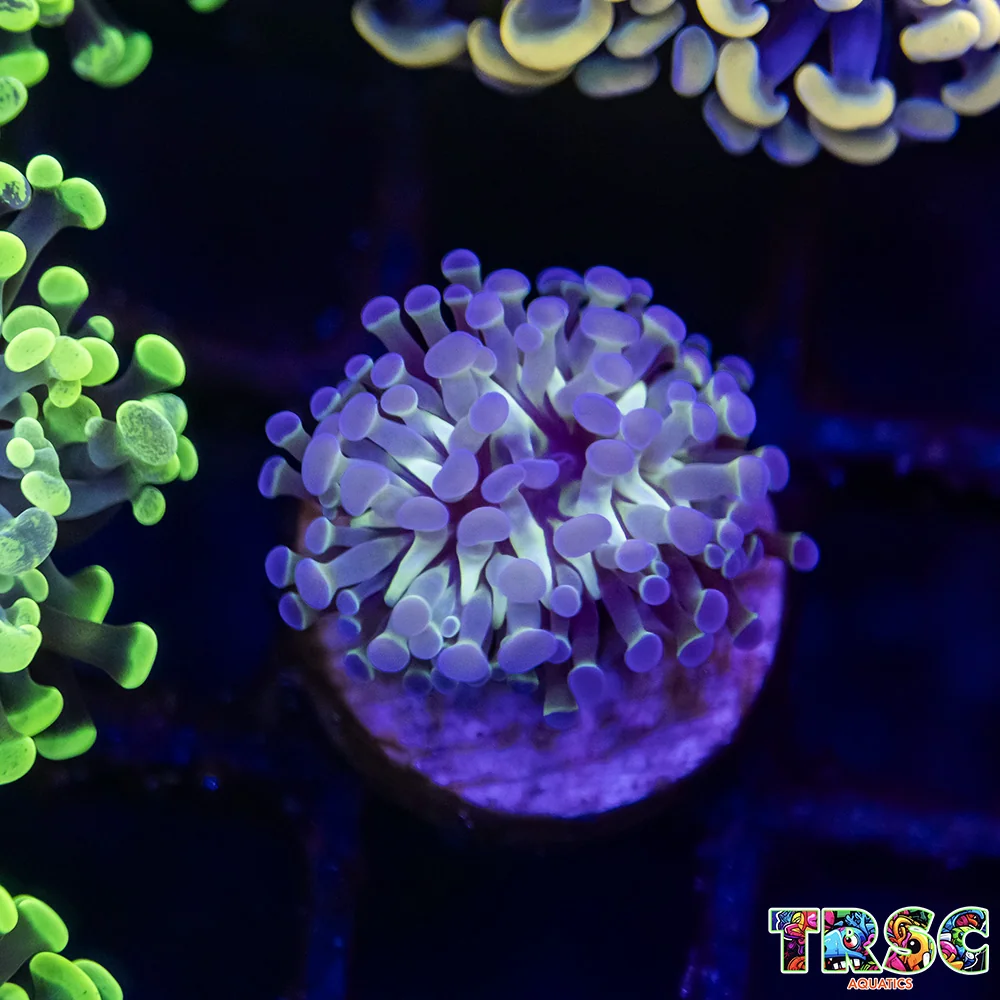
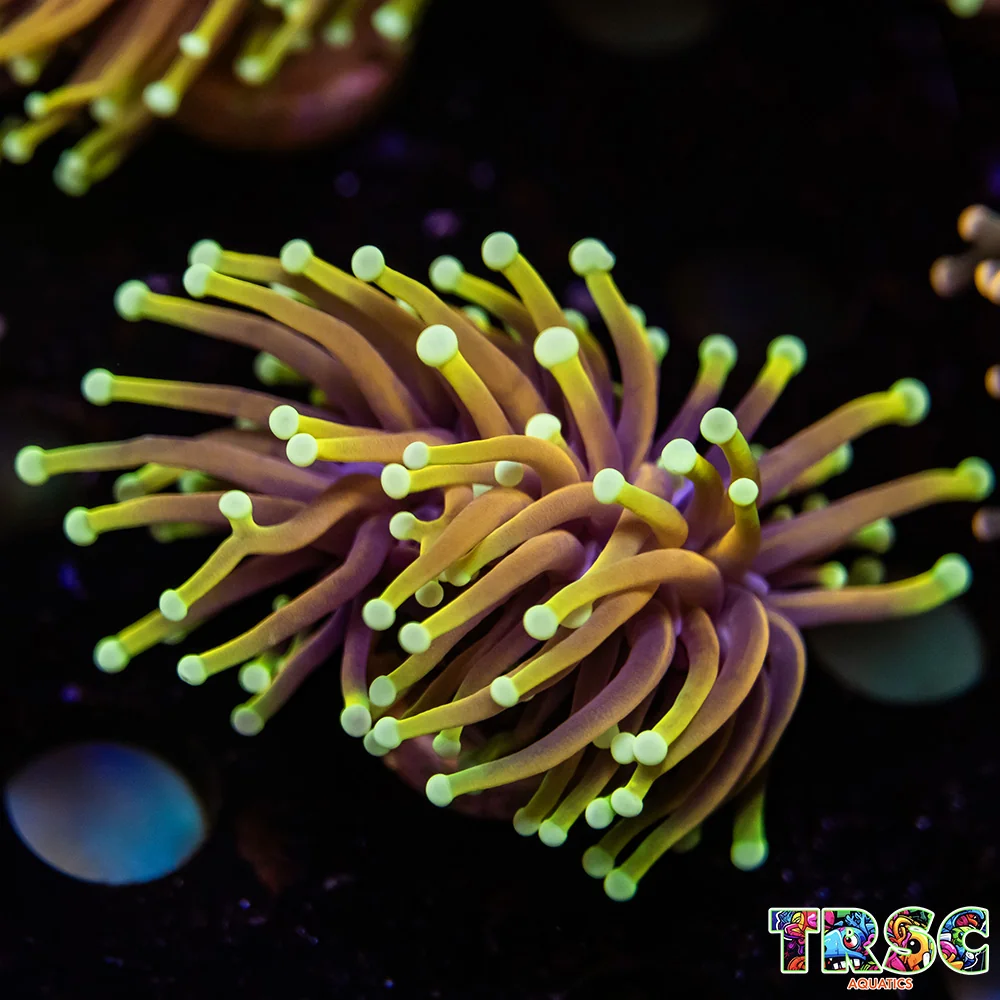
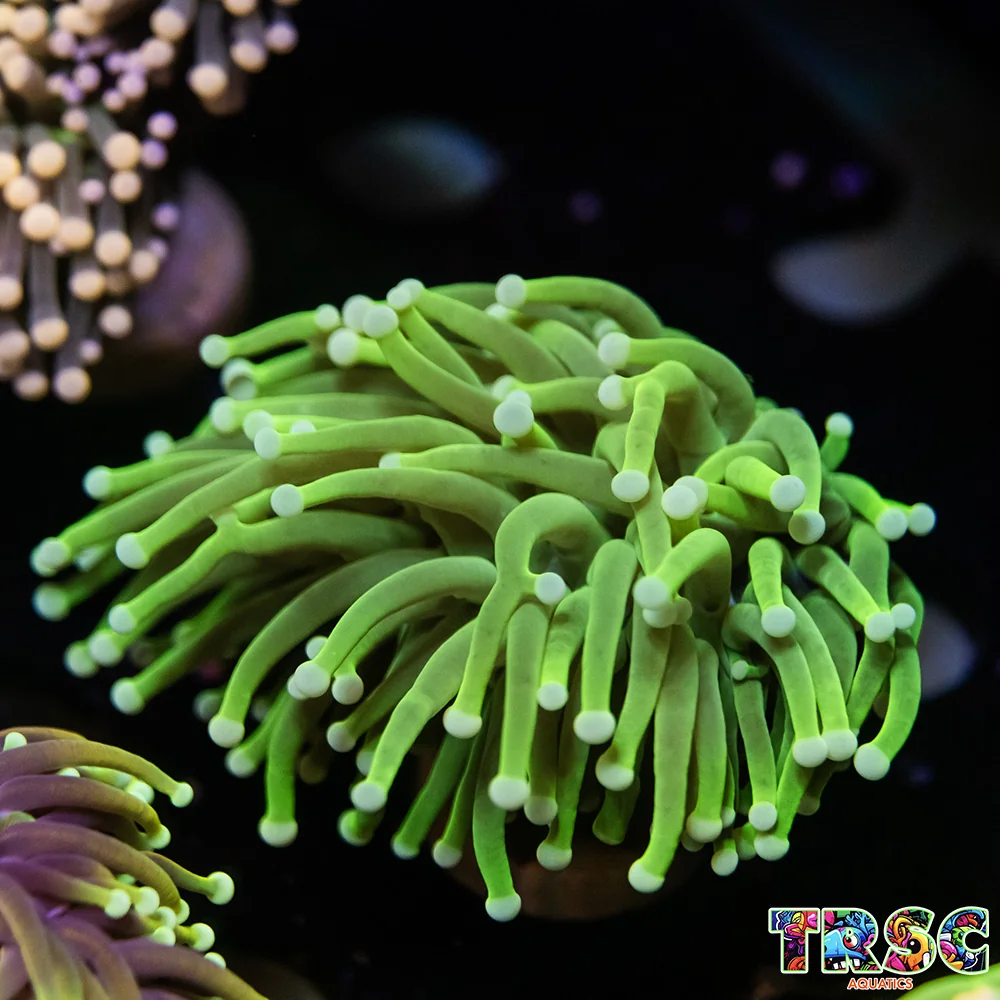
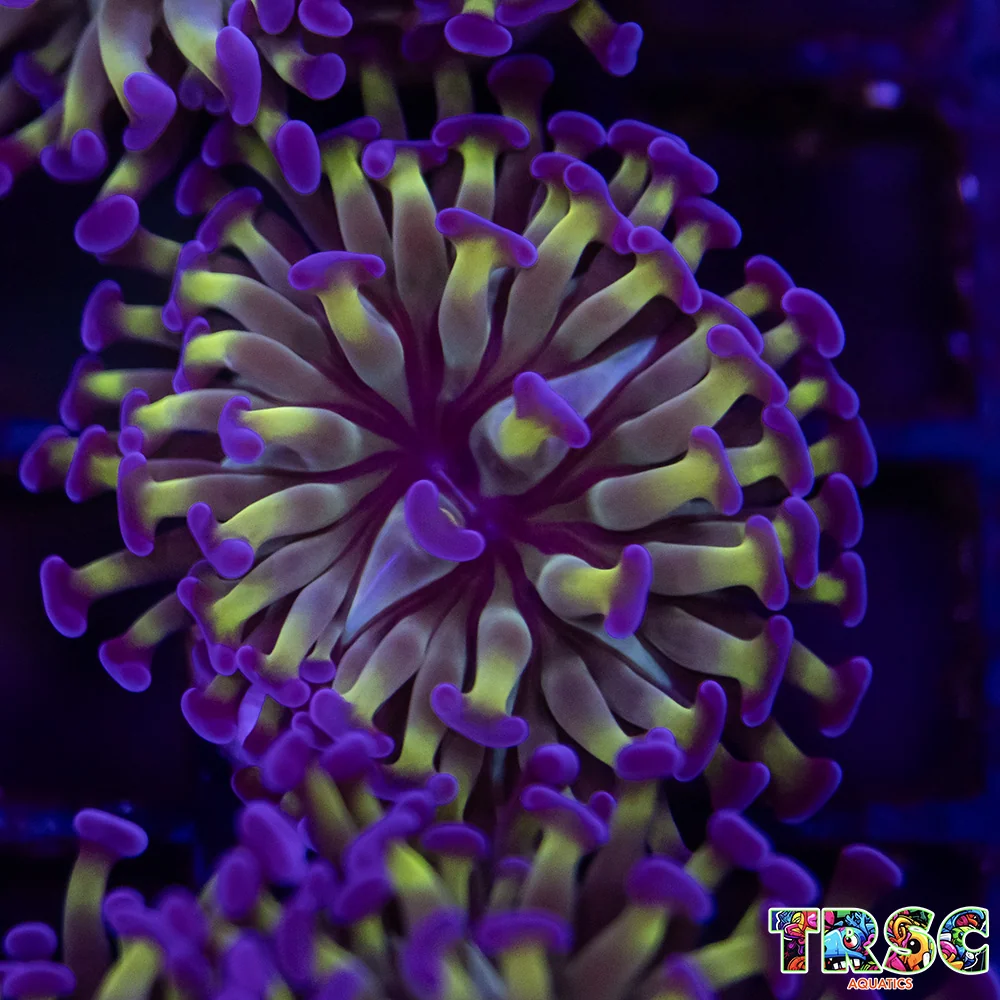
Blue Green Hologram Hammer C09
Market Intelligence
Based on 74 Hologram Hammer listings from 16 stores
Judged against Hologram Hammer listings, not all hammer corals — color morphs carry their own market.
Market insights from thousands of listings
About this coral
Hammer Coral Care Guide (Euphyllia / Fimbriaphyllia)
Hammer corals are large polyp stony (LPS) corals known for their hammer- and anchor-shaped tentacles that sway in the current. They come in both branching and wall forms, and branching hammers grow faster. With stable water and moderate light, they are a great showpiece coral for beginners and experienced reefers alike.
Hammer Care
Hammers are among the most popular LPS corals in the reef hobby. Most hobbyists keep them successfully, but problems can escalate quickly when water quality slips, so stability is the key to long-term success.
Location
Wild hammer corals come from reefs across the Indo-Pacific, including Fiji, Tonga, the Solomon Islands and Australia’s Great Barrier Reef. Ours are aquacultured on our farm, so they are already used to aquarium life.
Lighting
| 0 | 100 | 200 | 300 | 400 |
Hammers do not need intense light. They do well in low to moderate light, and often extend more under softer lighting, while stronger light brings out brighter color. A good target is 50–150 PAR.
Water Flow
Give hammers moderate, variable flow. Gentle movement keeps the coral clean and makes the tentacles sway, which is a big part of their appeal. Avoid strong direct flow that keeps the polyps pushed flat or tears the tissue.
Feeding
Hammers get most of their energy from the zooxanthellae (symbiotic algae) in their tissue. They can benefit from small, occasional feedings of mysis or a fine pellet food, but they are not aggressive eaters. If a hammer keeps rejecting food, stop target feeding and let the light do the work.
Water Chemistry
- Alkalinity: 8–11 dKH, held steady
- Calcium: 400–450 ppm
- Magnesium: 1250–1350 ppm
- Nitrate: about 5–10 ppm. Readings of 30–40 ppm can lead to tissue recession
- Phosphate: 0.03–0.1 ppm. Rising phosphate is an early sign of slipping water quality
- Salinity / Temp: 1.025–1.026 SG, 76–79°F
Hammers use calcium and alkalinity to build their skeletons, so the more stony corals you keep, the more you will need to dose. Test regularly and aim for levels close to natural seawater rather than chasing high numbers.
Propagation
Hammers are widely propagated in captivity and are excellent aquaculture corals. Branching hammers are the easiest to frag: cut between heads with bone cutters, well below the tissue. Wall hammers need a saw and more care. Under severe stress, hammers can also go through polyp bailout, where the polyp detaches from its skeleton to survive.
Troubleshooting
- Not opening fully: check for sudden light increases, too much flow or unstable alkalinity
- Tissue recession: usually caused by high nitrate, swings in parameters or a nearby aggressive coral
- Brown jelly: remove the affected head promptly and dip the rest of the colony
- Bailout: a sign of serious stress, so test your water and correct the cause right away
Aggression
Like all Euphyllia, hammers can extend long sweeper tentacles with stinging cells to defend their space. Give them at least 4–6 inches of room from other corals. Most hammers and frogspawn tolerate each other, but keep torches farther away.
Acclimation
Shipping is stressful, so take your time. Float the bag to match temperature, slowly add tank water over 20–30 minutes, and give the hammer a coral dip to remove any hitchhikers. Place it lower and in gentler light than its final spot for the first 1–2 weeks, then move it up gradually as it opens fully.
Aquacultured at TRSC Aquatics in Charlotte, NC.
Care requirements

Delivery options
Nationwide delivery available
Charlotte, NC
Listing stats
Market insights from thousands of listings
Compare Similar Hammer Corals
See how this listing stacks up against 558 other options






More from TRSC Aquatics
Explore 285 listings from this seller
Dive into Meta Reef
Discover corals and build your reef — all in one place.
Already have an account? Log in