
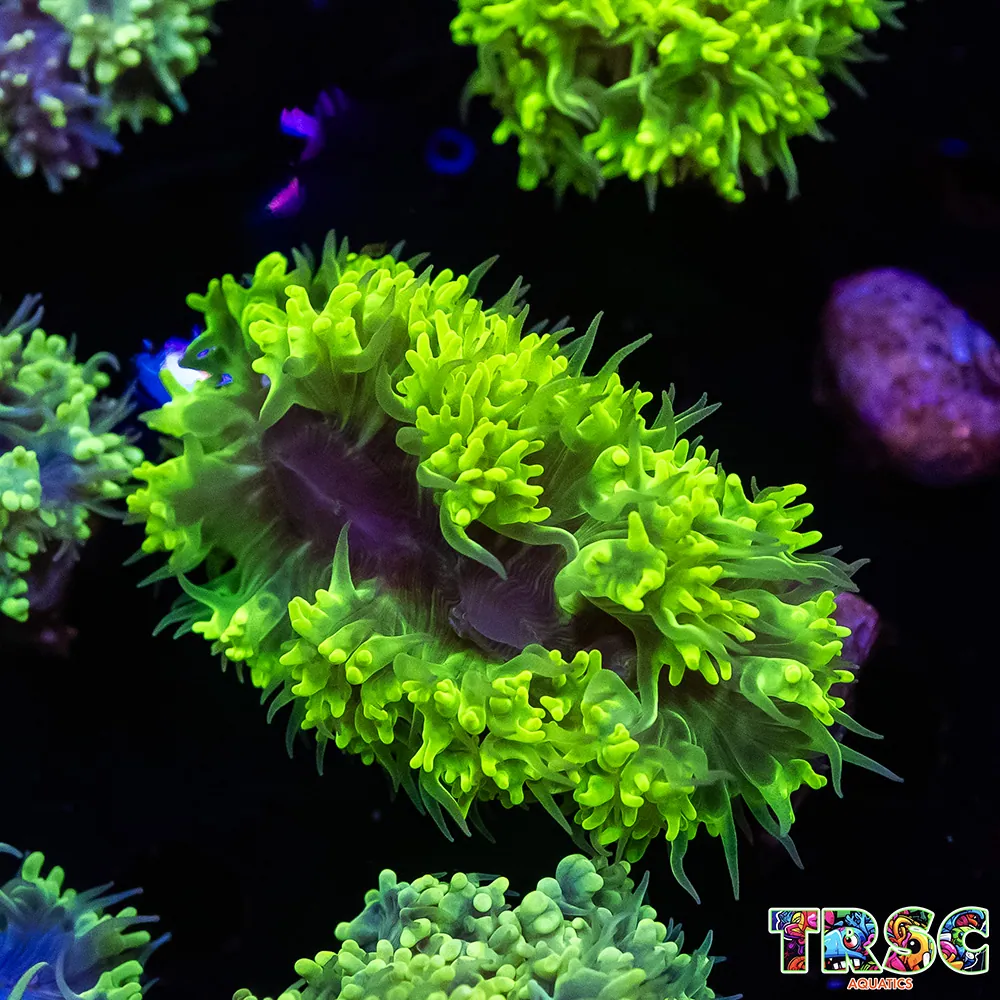
Pearl Bubble Coral (Physogyra lichtensteini) B04
Market Intelligence
Based on 44 similar Bubble corals
Market insights from thousands of listings
About this coral
Pearl Bubble Coral Care Guide (Physogyra lichtensteini)
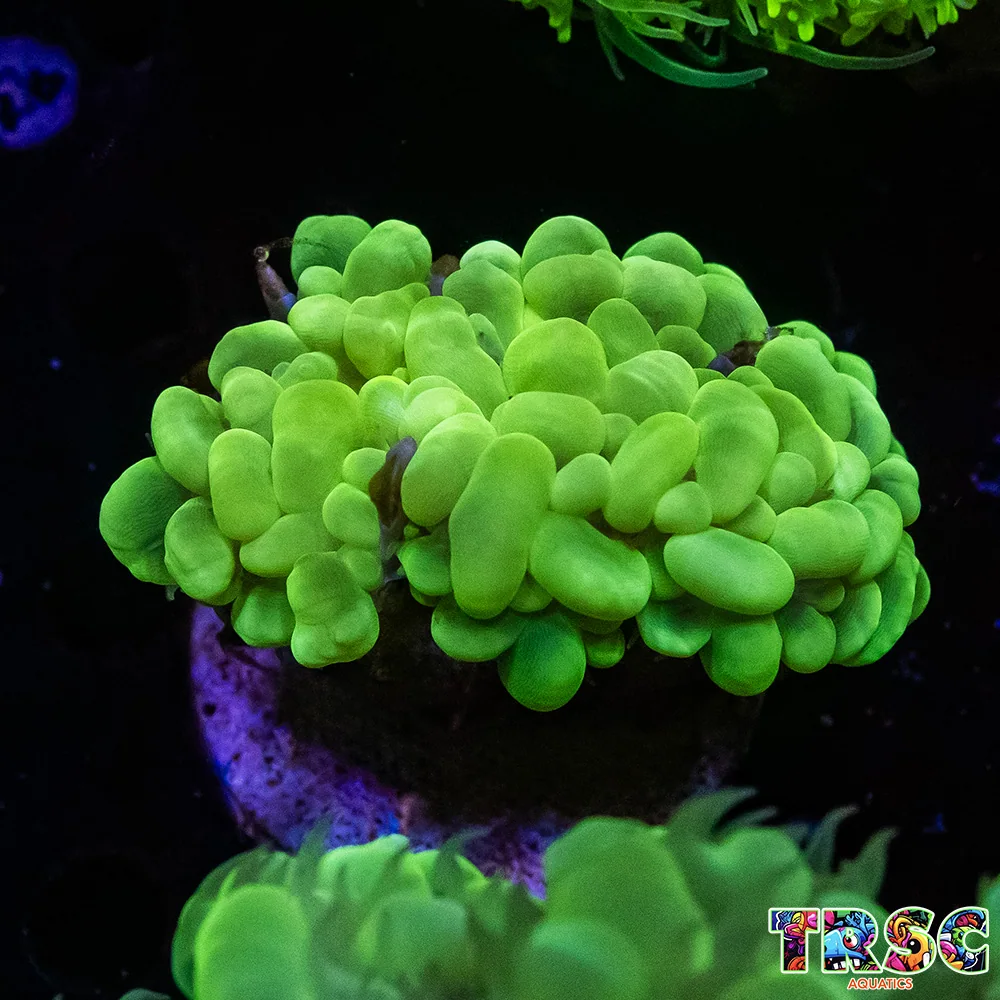
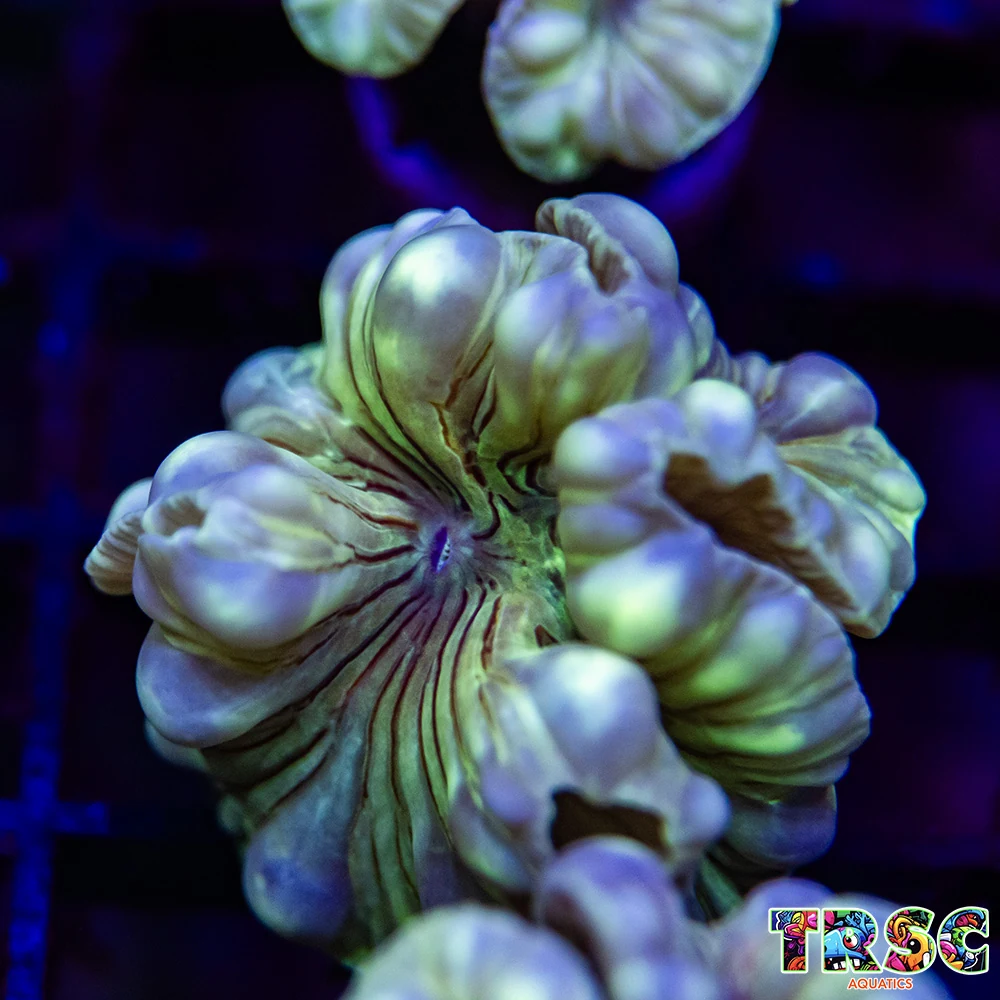
Pearl Bubble Coral (Physogyra lichtensteini), also called Octobubble or Grape Coral, is a large polyp stony coral covered in small, water-filled bubbles called vesicles. The bubbles are smaller than those of Plerogyra bubble coral and often have little pointed tips. They inflate and deflate with the light.
Pearl Bubble Coral Care
Pearl Bubble Coral is covered in small, grape-like bubbles that inflate by day and deflate at night. It is easygoing as long as it isn’t blasted with strong light or flow.
Location
Wild Pearl Bubble Coral is found on walls and overhangs in the Red Sea, Indian Ocean and West Pacific. Ours are aquacultured on our farm, so they are already used to aquarium life.
Lighting
| 0 | 100 | 200 | 300 | 400 |
Low to moderate light, about 50–120 PAR, keeps it happy. Strong light can cause the bubbles to shrink or tear. Place it on the sand or low on the rockwork in a sheltered spot with room around it. Pearl Bubbles naturally grow on walls and under overhangs.
Water Flow
Gentle, indirect flow that keeps debris off is ideal. Direct jets can tear the soft vesicles.
Feeding
It is photosynthetic but benefits from small meaty foods like mysis or chopped krill. Feed in the evening when the feeding tentacles come out.
Water Chemistry
- Alkalinity: 8–9 dKH. Keep it steady; swings matter more than the exact number
- Calcium: 400–450 ppm
- Magnesium: 1300–1400 ppm
- Nitrate: 5–10 ppm. Readings of 30–40 ppm can cause tissue recession
- Phosphate: 0.03–0.1 ppm
- Salinity / Temp: 1.025–1.026 SG, 76–79°F
Propagation
Pearl Bubbles can be fragged by cutting through the skeleton with a saw, taking care not to tear the tissue. Colonies sometimes drop small buds that grow into new corals.
Troubleshooting
- Bubbles staying deflated: Too much light, too much flow or a parameter swing
- Torn tissue: Strong flow or contact with rock or tools
Aggression
At night it puts out sweeper tentacles that can sting nearby corals. Give it a few inches of space.
Acclimation
Handle it by the skeleton and avoid touching the bubbles. Float the bag to match temperature, then slowly drip or cup in tank water over 20–30 minutes. Give it a coral dip to knock off hitchhikers like flatworms before it goes in. Start it low in the tank under gentler light and move it up over a couple of weeks if it looks happy. Expect it to stay closed for a day or two while it settles.
Aquacultured at TRSC Aquatics in Charlotte, NC.
Care requirements

Delivery options
Nationwide delivery available
Charlotte, NC
Listing stats
Market insights from thousands of listings
Compare Similar Bubble Corals
See how this listing stacks up against 44 other options


More from TRSC Aquatics
Explore 493 listings from this seller
Dive into Meta Reef
Discover corals and build your reef — all in one place.
Already have an account? Log in