
Bubble Coral Care Guide
Bubble Coral is an intermediate LPS coral known for its distinctive grape-sized vesicles that inflate during the day. This care guide covers lighting requirements, water flow needs, placement strategies, and feeding protocols to help reef keepers maintain healthy colonies and avoid common problems like deflation and tissue damage.
About Bubble
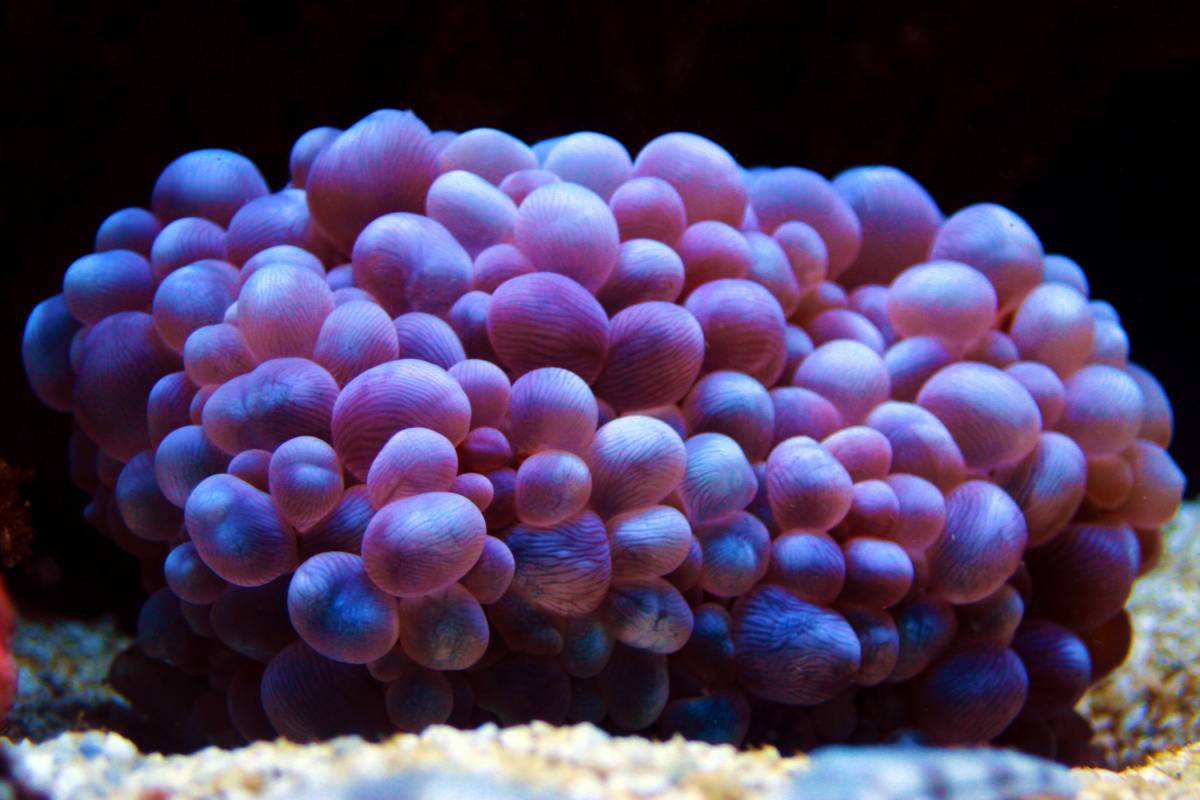
Bubble Coral (Plerogyra sinuosa) is a large polyp stony coral known for its distinctive grape-sized vesicles that inflate during the day to capture sunlight for photosynthesis. The coral displays vesicles up to 1 inch in diameter in white, green, and tan colors, with a ridged skeleton visible when deflated at night. Bubble Coral typically thrives at moderate lighting of 100-150 PAR and low indirect water flow, making it suitable for intermediate reef keepers maintaining stable conditions.
This species is sensitive to excessive flow that causes permanent deflation and requires sand bed or low rockwork placement to prevent the top-heavy colony from toppling. Bubble Coral produces aggressive sweeper tentacles extending 3-4 inches at night, requiring 4-6 inches of separation from neighboring corals to prevent stinging damage. The fragile vesicles can rupture when removed from water, necessitating careful submerged handling during maintenance and acclimation.
Care Requirements
Quick overview for keeping your coral thriving
Difficulty
Intermediate
Lighting
Moderate
Water Flow
Low
Detailed Care Guide
In-depth information for optimal care
Difficulty Level
Intermediate
Bubble Coral needs specific care conditions and is not recommended for beginning reef keepers despite some sources describing it as beginner-friendly. The species is highly sensitive to water flow levels, deflating permanently if exposed to excessive current, and the fragile vesicles rupture easily when the coral is removed from water or handled roughly. Bubble Coral tends to struggle with long-term survival in captivity without proper care including stable water parameters, appropriate lighting acclimation, and regular supplemental feeding.
This species requires careful placement on stable substrate to prevent toppling when vesicles inflate, and reef keepers must maintain low indirect flow with visible gentle bubble movement rather than constant retraction. Experienced aquarists who can provide patient acclimation, stable moderate lighting, and consistent water quality will have better success maintaining healthy colonies.
Lighting Requirements
Moderate
Bubble Coral thrives under moderate lighting in the range of 100-150 PAR, typically achieved through placement on the sand bed or lower rockwork under LED or T5 lighting systems. Starting with lower light intensity and gradually increasing over 2-4 weeks prevents shock and allows the coral to acclimate its zooxanthellae density to the new lighting conditions. Excessive lighting causes stress-related deflation and can lead to bleaching, while insufficient light results in poor polyp extension and tissue recession over time.
The coral's photosynthetic zooxanthellae provide up to 90% of its energy needs when lighting is appropriate, making consistent moderate intensity more important than peak PAR values. Color changes toward brown indicate too much light, while pale or translucent tissue suggests insufficient lighting.
Water Flow
Low
Bubble Coral thrives with low indirect water flow and gentle movement of the vesicles, as excessive flow causes the coral to deflate and remain retracted indefinitely. The ideal flow pattern shows bubbles gently swaying rather than constant compression or violent motion that forces deflation. Direct current pointed at the coral will cause tissue damage and permanent retraction, while insufficient flow can lead to detritus accumulation and poor water exchange around the colony.
Reef keepers should position the coral in areas receiving ambient tank circulation rather than direct pump output, and verify that vesicles inflate fully within 2-3 hours of lights-on as an indicator of appropriate flow levels. Too much flow may also cause the delicate vesicles to tear away from the skeleton over time.
Keep your Bubble healthy
Save photos, placement, parameters, and what you paid — and see how your Bubble changes over time.
Parameters
In range8.5 dKH
Alkalinity target 8–9 dKH · sample data
Your Bubble
just added$150 paid
value from live market
Buying Advice
What to look for when purchasing
Vesicle Inflation
Look for Bubble Coral with fully inflated vesicles during daytime viewing, indicating the coral is healthy and receiving appropriate flow and lighting conditions. Deflated or partially inflated bubbles during the day may indicate stress, excessive flow exposure, or acclimation issues. The vesicles should appear turgid and grape-like without tears, punctures, or visible damage to the delicate tissue.
Tissue Health
Inspect the coral's vesicles for signs of tissue recession, tears, or separation from the skeleton, which indicate poor health or rough handling. Healthy Bubble Coral displays intact vesicles with no exposed skeleton visible during the day when bubbles are inflated. Brown, discolored, or translucent tissue may indicate lighting stress or declining health. Avoid specimens with visible white or bare skeleton showing through damaged vesicles.
Skeleton Integrity
Examine the coral's base and skeleton for structural integrity, ensuring the vesicles are firmly attached without loose or separating tissue. The skeleton should show no signs of bleaching, disease, or degradation, and the attachment point should be solid for secure placement on rockwork or sand. Verify the colony has a stable base that will not cause toppling when vesicles inflate with water weight.
Handling and Transport
Ensure the coral remains fully submerged during bagging and transport, as removing Bubble Coral from water causes the vesicles to rupture under their own weight. Request that the seller bag the specimen with extra water and avoid draining bags during transport. Upon arrival, float the sealed bag to acclimate temperature before opening, and carefully transfer the coral while keeping vesicles submerged to prevent bubble rupture and tissue damage.
Taxonomy
Species
Reef Value
Live pricing$1,860
+$120 this month
Priced from live marketplace listings
Bubble
Just added · Frag rack
$150
Hammer Coral
8 months · Mid rock
$65
Zoa Colony
1 year · Sand bed
$40
Track Your Reef
Add your Bubble to your tank's living inventory — placement, source, and photos as it grows — next to the parameter logs and maintenance history that keep it thriving. Reef Value even shows what your collection is worth, priced from live marketplace listings.
Find Your Perfect Bubble
Compare prices from 9+ verified sellers. From budget-friendly frags to rare collector pieces.
Starting at
$40
Average Price
$150
Premium frags up to
$450
Full Price History
Trends, movers & market data
Frequently Asked
Common questions about Bubble corals
Why is my Bubble Coral deflated?
Bubble Coral deflates and remains retracted when exposed to excessive water flow, which is the most common cause of deflation in aquarium settings. The coral's vesicles naturally inflate during daytime hours to maximize light absorption and deflate at night when feeding tentacles emerge, so deflation after lights-out is normal behavior. Excessive lighting intensity, poor water quality parameters, or physical disturbance from fish or invertebrates can also cause stress-related deflation during the day.
Reef keepers should verify water flow is low and indirect, with bubbles showing gentle movement rather than constant retraction, and consider reducing lighting intensity if the coral fails to inflate within 2-3 hours of lights-on. If all parameters are correct and the coral remains deflated for multiple days, test alkalinity, calcium, and magnesium levels as this species is sensitive to parameter instability.
Do Bubble Corals sting other corals?
Bubble Coral (Plerogyra sinuosa) produces aggressive sweeper tentacles extending 3-4 inches from the colony base primarily at night, delivering powerful stings capable of damaging or killing neighboring corals. These sweeper tentacles can also sting human flesh during handling or maintenance. Reef keepers should maintain a minimum of 4-6 inches of clear space around Bubble Coral colonies to prevent contact with sweeper tentacles, though individual colonies may extend tentacles beyond this range when threatened or competing for space.
Placing Bubble Coral on isolated rockwork or the sand bed away from other specimens provides the safest arrangement. While some aquarists successfully keep Bubble Coral colonies near each other without aggression, this species will sting unrelated coral species including other LPS corals.
Where should Bubble Coral be placed in a reef tank?
Bubble Coral performs best when placed on the sand bed at the bottom of the reef aquarium or on flat, stable low rockwork in areas receiving moderate lighting of 100-150 PAR. The coral becomes top-heavy when its vesicles inflate during the day, creating risk of toppling if placed on tall or unstable rockwork, and the weight of water-filled vesicles can cause the colony to tumble and damage its fragile tissue. Placement should account for low, indirect water flow with visible gentle movement of the vesicles rather than strong direct current that causes deflation.
The coral's skeleton should not contact sharp rock edges that can chafe and tear the vesicles as they inflate. Bubble Coral requires 4-6 inches of clear space from neighboring corals to prevent sweeper tentacle contact at night, making lower tank positions ideal where aggressive tentacles have room to extend without reaching nearby specimens.
Do Bubble Corals need to be fed?
Bubble Coral (Plerogyra sinuosa) is photosynthetic and obtains up to 90% of its energy from symbiotic zooxanthellae living within its tissues, but target feeding enhances growth rate, coloration, and long-term health. Reef keepers should offer weekly feedings of mysis shrimp, brine shrimp, or finely chopped seafood using a turkey baster or pipette to gently deliver food directly onto the coral's vesicles, which will part to reveal the mouth and consume the offering. Feeding 2-3 times per week promotes faster growth and more vibrant colors compared to light-only nutrition.
The coral's feeding behavior is most active at night when the vesicles deflate and sweeper tentacles emerge to capture food, though daytime target feeding works when food is placed directly on the bubbles. Bubble Coral will capture zooplankton-sized foods that drift into contact with feeding tentacles, supplementing deliberate target feeding efforts.
Are Bubble Corals beginner friendly?
Bubble Coral (Plerogyra sinuosa) is an intermediate-level coral requiring specific care conditions and is not recommended for beginning reef keepers despite some sources describing it as beginner-friendly. The species is sensitive to water flow levels, deflating permanently if exposed to excessive current, and requires careful placement on stable substrate to prevent toppling when vesicles inflate. Bubble Coral's fragile vesicles rupture easily when the coral is removed from water or handled roughly, and the species tends to struggle with long-term survival in captivity without proper care including stable water parameters, appropriate lighting acclimation, and regular feeding.
Beginning aquarists will find more success with hardy LPS corals like Goniopora or Euphyllia species that tolerate wider parameter ranges and higher flow. Experienced reef keepers who can provide low indirect flow, moderate stable lighting, and patient acclimation will have better success maintaining healthy Bubble Coral colonies.
What is the difference between Bubble Coral and Pearl Coral?
The terms "bubble coral" and "pearl coral" are often used interchangeably in the aquarium trade, though they can refer to different species with distinct characteristics. Plerogyra sinuosa, commonly called bubble coral, features larger grape-sized vesicles up to 1 inch in diameter and a blade-like skeletal structure. Physogyra lichtensteini, often marketed as pearl coral or pearl bubble coral, displays smaller pearl-sized vesicles and a flatter skeleton compared to Plerogyra species.
Both genera belong to the family Euphyllidae and share similar care requirements including moderate lighting and low flow, though Physogyra's smaller vesicles may tolerate slightly higher flow without deflating. Many retailers use "bubble coral" and "pearl coral" as common names for both species without species-level identification, making visual identification the primary method for distinguishing between larger-bubbled Plerogyra and smaller-bubbled Physogyra varieties.
All LPS Corals
Browse the complete collection of LPS coral care guides