

Mushroom Coral Care Guide
Mushroom Corals are beginner-friendly soft corals valued for their hardiness, color variety, and low maintenance requirements. This care guide covers lighting, water flow, placement strategies, and the differences between Discosoma, Rhodactis, and Ricordea genera to help reef keepers of all experience levels maintain healthy colonies.
About Mushroom
Mushroom Corals (order Corallimorpharia) are soft corals known for their rounded, fleshy disc-shaped bodies and exceptional hardiness in reef aquariums. Mushroom Corals encompass multiple genera including Discosoma, Rhodactis, and Ricordea, each displaying distinct textures ranging from smooth and metallic to fuzzy or bubble-covered surfaces. Mushroom Corals require low to moderate lighting in the 50-150 PAR range and gentle, indirect water flow, making these corals ideal for beginners and lower light areas of established reef tanks.
Mushroom Corals reproduce readily through splitting, budding, and pedal laceration, which allows colonies to spread across rockwork over time. Reef keepers should place Mushroom Corals on isolated rock structures or dedicated areas to prevent unwanted spreading into other coral territories, as Discosoma varieties in particular can colonize large sections of aquascape within months under favorable conditions.
Care Requirements
Quick overview for keeping your coral thriving
Difficulty
Beginner Friendly
Lighting
Low to Moderate
Water Flow
Low
Detailed Care Guide
In-depth information for optimal care
Difficulty Level
Beginner Friendly
Mushroom Corals rank among the most forgiving corals for new reef keepers due to their tolerance for fluctuating water parameters and adaptability to various lighting conditions. Mushroom Corals can survive temporary dips in alkalinity, minor temperature swings, and elevated nutrient levels that would stress more sensitive species.
Rhodactis mushrooms demonstrate particularly robust hardiness, while Ricordea species require slightly more stable conditions but remain accessible to beginners with established aquariums.
Lighting Requirements
Low to Moderate
Mushroom Corals thrive under low to moderate lighting in the 50-150 PAR range, with most species performing best at 75-100 PAR. Rhodactis mushrooms tolerate the lowest light levels around 50-75 PAR, while Discosoma varieties can handle slightly higher intensities approaching 150 PAR. Excessive lighting causes Mushroom Corals to bleach, shrink, or detach from their substrate in search of shadier locations.
New Mushroom Corals should be acclimated starting at the lower end of this range and gradually moved higher over 2-3 weeks if increased light exposure is desired.
Water Flow
Low
Mushroom Corals prefer gentle, indirect water flow that allows their fleshy discs to expand fully without constant retraction or detachment from substrate. Strong direct current causes Mushroom Corals to remain contracted, which reduces photosynthesis and slows growth. Randomized flow patterns from wavemakers help prevent debris accumulation on the coral surface while avoiding the stress of laminar flow.
Reef keepers observing curled edges or persistent contraction should reduce flow intensity or redirect powerheads away from Mushroom Coral placement areas.
Keep your Mushroom healthy
Save photos, placement, parameters, and what you paid — and see how your Mushroom changes over time.
Parameters
In range8.5 dKH
Alkalinity target 8–9 dKH · sample data
Your Mushroom
just added$65 paid
value from live market
Controlling Mushroom Coral Spread
Mushroom Corals reproduce prolifically through pedal laceration, splitting, and detachment, creating colonies that can dominate entire sections of reef aquariums within months if left unchecked. Discosoma varieties spread fastest due to their thin disc structure and aggressive reproduction rate, while Rhodactis and Ricordea expand more slowly but still require management in mixed reef systems.
Reef keepers should place Mushroom Corals on isolated rock islands separated from the main aquascape by sand or open water to create natural barriers against spreading. Reducing direct target feeding slows reproduction rates, as does positioning Mushroom Corals in slightly higher flow areas that discourage pedal laceration. When colonies outgrow their designated space, fragging excess mushrooms provides trade material while controlling population density. Removing entire rocks overtaken by unwanted Mushroom Corals remains the most effective method for addressing severe overgrowth, though this approach also removes beneficial bacteria colonizing the rock surface.
Buying Advice
What to look for when purchasing
Tissue Appearance
Look for mushrooms that are fully open and attached. The surface should show no signs of melting, tears, or excessive detachment from the base.
Coloration and Pattern
Healthy mushrooms have rich, even coloration. Variants like Ricordea or Bounce should show vibrant pigments and clearly visible vesicles or bumps.
Foot Attachment
Make sure the mushroom is securely attached (not glued) to a plug or rock. Loose mushrooms can be harder to acclimate and may drift away in your tank before anchoring.
Taxonomy
Species
Reef Value
Live pricing$1,860
+$120 this month
Priced from live marketplace listings
Mushroom
Just added · Frag rack
$65
Hammer Coral
8 months · Mid rock
$65
Zoa Colony
1 year · Sand bed
$40
Track Your Reef
Add your Mushroom to your tank's living inventory — placement, source, and photos as it grows — next to the parameter logs and maintenance history that keep it thriving. Reef Value even shows what your collection is worth, priced from live marketplace listings.
Find Your Perfect Mushroom
Compare prices from 26+ verified sellers. From budget-friendly frags to rare collector pieces.
Starting at
$1
Average Price
$65
Premium frags up to
$800
Full Price History
Trends, movers & market data
Frequently Asked
Common questions about Mushroom corals
Are Mushroom Corals good for beginners?
Mushroom Corals rank among the most beginner-friendly corals in the reef aquarium hobby due to their exceptional hardiness and tolerance for imperfect water conditions. Mushroom Corals thrive under low lighting of 50-150 PAR, accept fluctuating water parameters that would stress other coral species, and require minimal supplemental feeding since they derive most nutrition from photosynthesis.
Discosoma mushrooms offer the easiest entry point for new reef keepers, while Rhodactis and Ricordea provide colorful options once basic husbandry skills are established.
Are Mushroom Corals aggressive?
Mushroom Corals possess stinging nematocysts along their disc surfaces that can damage neighboring corals on contact, though direct aggression is less concerning than their tendency to spread aggressively across rockwork. Mushroom Corals reproduce rapidly through splitting, budding, and pedal laceration, allowing colonies to overtake slower-growing species within months. Discosoma varieties spread fastest and may release chemical compounds that irritate sensitive corals sharing the same water.
Reef keepers should place Mushroom Corals on isolated rock islands or dedicated sections of the aquascape to prevent unwanted colonization of prime coral real estate.
Why is my Mushroom Coral shrinking?
Mushroom Corals shrink or remain retracted primarily due to excessive lighting, strong water flow, or sudden changes in water chemistry. Mushroom Corals exposed to PAR levels above 150 will bleach and contract, while direct powerhead flow causes persistent retraction and potential detachment from substrate. Alkalinity swings exceeding 1 dKH per day or temperature fluctuations beyond 2-3 degrees stress Mushroom Corals and trigger defensive shrinking.
Reef keepers observing shrinking Mushroom Corals should first reduce lighting intensity, then verify flow is gentle and indirect, and finally test water parameters for stability over several days.
How do Mushroom Corals spread?
Mushroom Corals reproduce through multiple asexual methods including fission (splitting in half), budding (growing new polyps from the parent), and pedal laceration (leaving tissue fragments behind as they move that develop into new individuals). Mushroom Corals can also detach their oral disc and drift to new locations, settling where conditions suit them.
Discosoma mushrooms spread fastest due to their thinner discs and aggressive reproduction rate, potentially covering entire rocks within 6-12 months. Reef keepers wanting to slow Mushroom Coral spread should reduce direct feeding and place colonies in higher-flow areas with limited adjacent rock surfaces.
What is the difference between Discosoma, Rhodactis, and Ricordea?
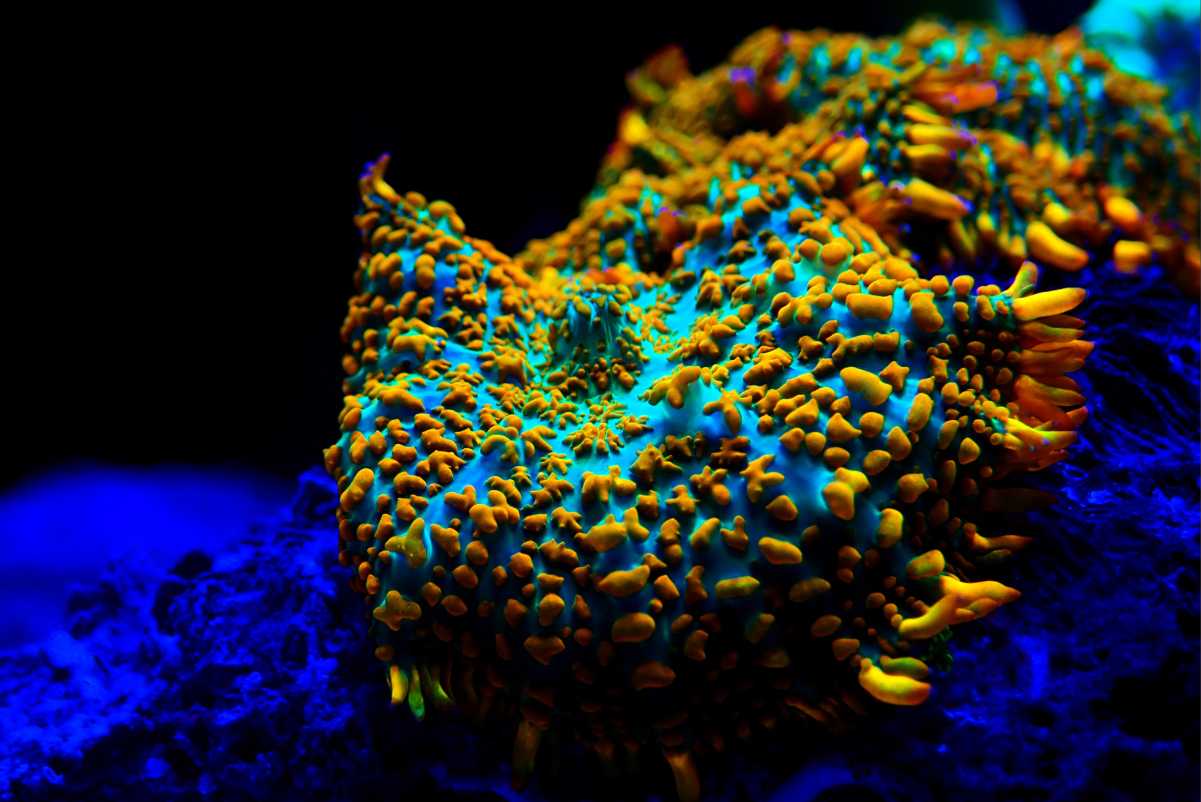
Discosoma mushrooms feature smooth or lightly textured discs with metallic sheens and spread fastest of all mushroom genera, making them the most affordable but also most invasive variety. Rhodactis mushrooms display fuzzy, hair-like tentacles covering their surface and include the prized Bounce Mushroom morphs with enlarged bubble tentacles that command premium prices.
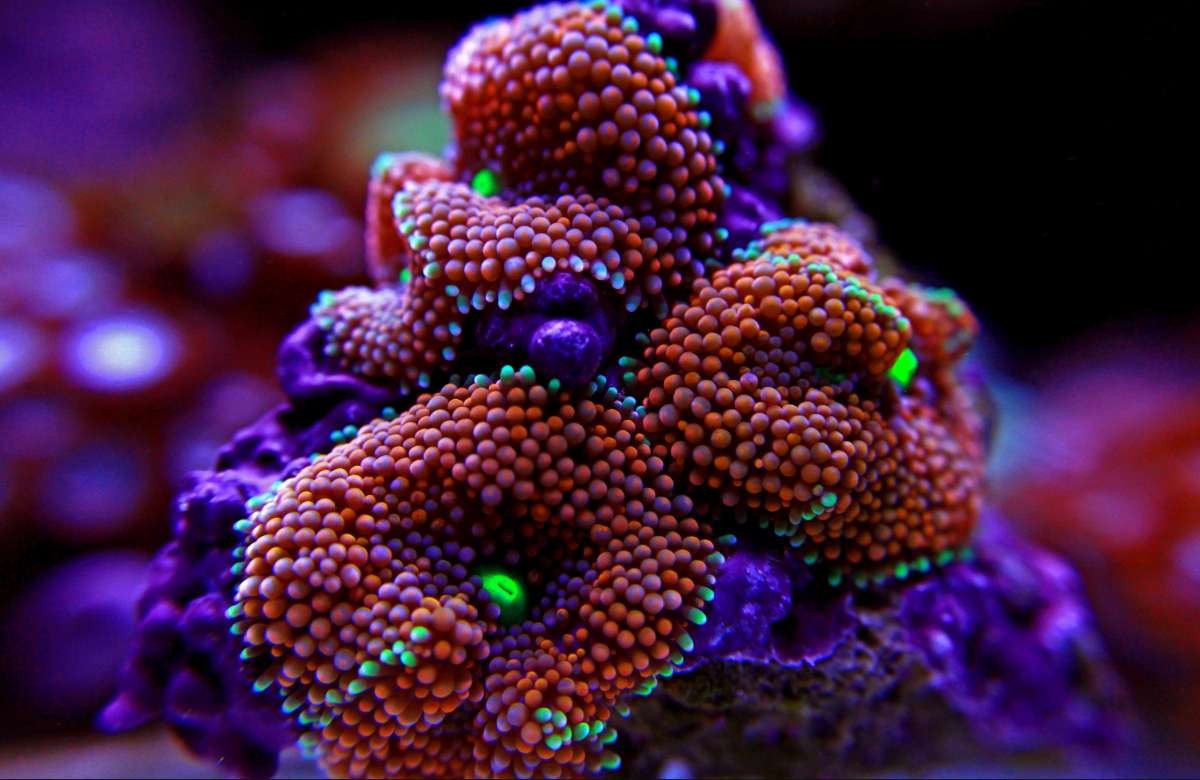
Ricordea mushrooms are covered in small, round bubble-like tentacles and come in two species: Ricordea florida from the Caribbean with randomly-sized tentacles, and Ricordea yuma from the Indo-Pacific with more orderly tentacle arrangements and brighter coloration.
Do Mushroom Corals need to be fed?
Mushroom Corals derive most of their nutritional requirements from photosynthesis through symbiotic zooxanthellae algae within their tissues, making supplemental feeding optional rather than necessary. Mushroom Corals will accept small meaty foods like mysis shrimp, brine shrimp, or reef-specific coral foods when offered, and target feeding once or twice weekly can enhance growth rates and color intensity.
Reef keepers maintaining Mushroom Corals in nutrient-rich systems with regular fish feeding typically see adequate growth without direct coral feeding, while those in ultra-low-nutrient tanks may benefit from occasional supplementation.
All Soft Corals
Browse the complete collection of Soft coral care guides