
Palythoa Coral Care Guide
Palythoa corals are hardy soft corals known for their larger polyps and rapid spreading growth. This care guide covers lighting, water flow, placement, and critical safety information about palytoxin to help reef keepers maintain healthy Palythoa colonies while minimizing handling risks.
About Palythoa
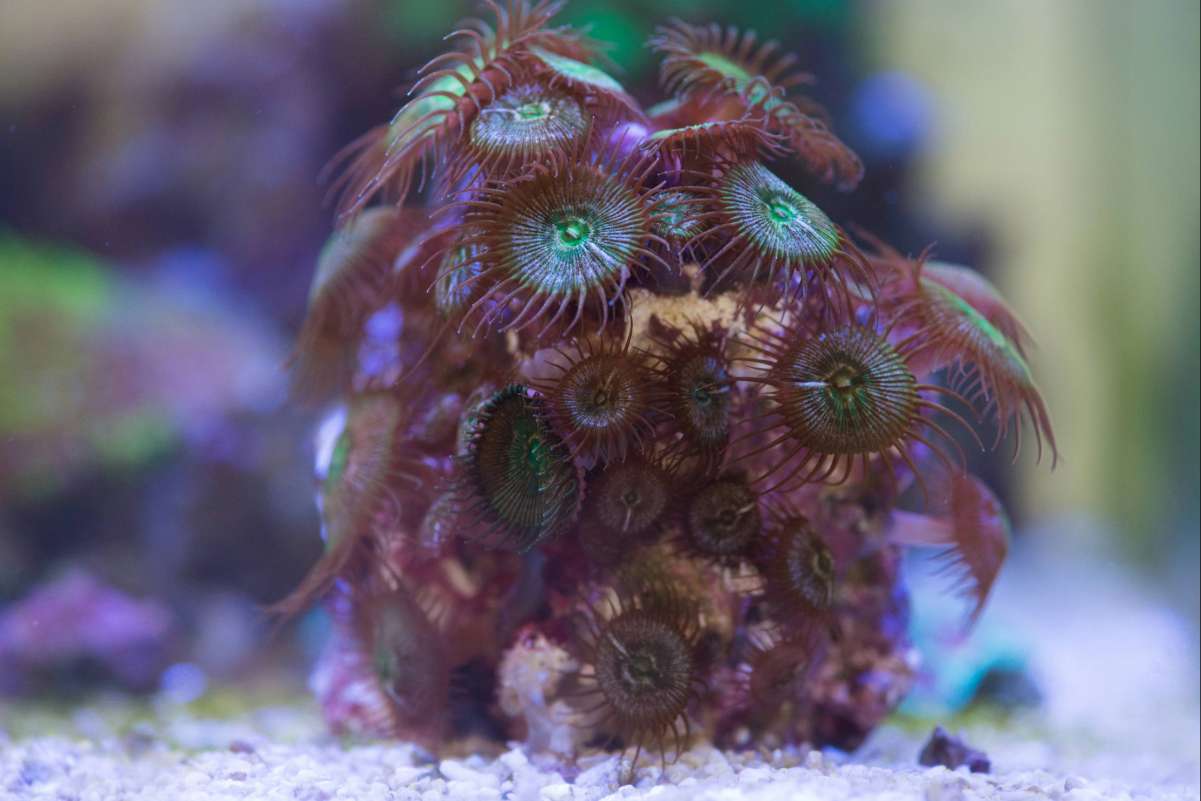
Palythoa coral is a colonial soft coral known for its larger polyps compared to closely related Zoanthids, featuring a distinctive slit-shaped mouth and tissue that incorporates sand and sediment particles into its structure. Palythoa colonies display colors ranging from brown, cream, and green to vibrant fluorescent morphs, with polyps measuring 0.5-1 inch in diameter connected by a thick mat of tissue called coenenchyme. Palythoa coral thrives under low to moderate lighting between 50-150 PAR and moderate water flow, making Palythoa one of the hardiest corals available for beginner reef keepers.
Palythoa coral grows aggressively across rock surfaces and can overtake slower-growing corals if left unchecked, requiring strategic placement on isolated rock or removable frag plugs. Palythoa species contain palytoxin, one of the most potent natural toxins known, and reef keepers must wear gloves and eye protection when handling Palythoa to prevent potentially serious poisoning through skin contact or inhalation of aerosolized toxin.
Care Requirements
Quick overview for keeping your coral thriving
Difficulty
Beginner Friendly
Lighting
Low to Moderate
Water Flow
Moderate
Detailed Care Guide
In-depth information for optimal care
Difficulty Level
Beginner Friendly
Palythoa coral tolerates a wide range of water parameters and lighting conditions, making Palythoa forgiving for new reef keepers still learning to maintain stable aquarium chemistry. The species does not require calcium and alkalinity supplementation since Palythoa lacks a calcium carbonate skeleton, and Palythoa thrives in both pristine and nutrient-rich water conditions.
Palythoa coral's primary care challenge involves managing aggressive spreading growth and safe handling due to palytoxin content, which requires planning placement to prevent the coral from overgrowing neighboring specimens.
Lighting Requirements
Low to Moderate
Palythoa coral performs well under low to moderate lighting between 50-150 PAR, with some species like Palythoa grandis preferring the lower end of this range around 50-100 PAR. Palythoa coral placed under intense lighting may close during peak intensity hours and can bleach under prolonged high-light exposure.
Reef keepers should acclimate new Palythoa specimens by placing them in a dimmer area of the tank initially, then gradually moving the coral to the desired location over 1-2 weeks. Palythoa benefits from at least 8-12 hours of lighting per day for optimal photosynthesis.
Water Flow
Moderate
Palythoa coral thrives in moderate indirect water flow that keeps detritus from accumulating on polyps without causing tissue damage or preventing feeding. Palythoa tolerates a wide range of flow conditions from near-still water to strong current, though moderate flow between 10-20x tank turnover per hour produces optimal polyp extension.
Excessive direct flow causes Palythoa polyps to remain closed, while insufficient flow allows debris to smother polyps and promotes algae growth on the colony mat.
Keep your Palythoa healthy
Save photos, placement, parameters, and what you paid — and see how your Palythoa changes over time.
Parameters
In range8.5 dKH
Alkalinity target 8–9 dKH · sample data
Your Palythoa
just added$35 paid
value from live market
Palytoxin Safety
Palythoa coral contains palytoxin, the second most toxic non-protein substance known to science, which can cause severe illness or death through skin absorption, eye contact, or inhalation of aerosolized particles. The CDC documented cases of aquarists hospitalized with symptoms including respiratory distress, chest pain, muscle breakdown (rhabdomyolysis), fever, and cardiac complications after Palythoa exposure, with some cases requiring intensive care treatment.
Palytoxin releases when Palythoa polyps are stressed, damaged, or exposed to air, and becomes especially dangerous when aerosolized through boiling water, scrubbing, or fragging above the waterline. Reef keepers must always wear nitrile gloves and safety glasses when handling Palythoa, work only with fully submerged specimens, ensure adequate ventilation, and never boil or scrub rocks containing Palythoa colonies. There is no antidote for palytoxin poisoning, and anyone experiencing symptoms after exposure should seek immediate emergency medical care and inform medical staff about potential palytoxin exposure.
Aggressive Growth Management
Palythoa coral spreads aggressively across flat surfaces including live rock, back glass, and overflow boxes, with some species capable of doubling colony size within weeks under optimal conditions. Palythoa mats can smother and kill slower-growing corals in their path, making containment planning essential before adding Palythoa to established reef aquariums.
Reef keepers should place Palythoa colonies on isolated rock islands surrounded by sand gaps, keep specimens on removable frag plugs or disks rather than attaching directly to the main aquascape, and trim spreading edges regularly while wearing protective gloves. Removing established Palythoa mats from live rock becomes extremely difficult and hazardous due to the thick tissue and palytoxin content, so preventing unwanted spreading is far easier than attempting removal after the coral becomes established.
Buying Advice
What to look for when purchasing
Polyp Extension
Healthy Palythoa displays fully extended polyps with visible tentacles during store lighting hours. Avoid specimens with persistently closed polyps, which may indicate stress, pests, or declining health that could worsen after transport.
Mat Tissue Health
Examine the coenenchyme (mat tissue) connecting polyps for complete coverage without exposed areas or recession. Healthy Palythoa mat tissue appears thick and intact, while deteriorating specimens show thinning tissue or gaps between polyps.
Pest Inspection
Inspect Palythoa colonies for sundial snails, zoanthid-eating nudibranchs, and zoa spiders hiding between polyps or on the underside of frag plugs. Quarantine and dip all new Palythoa specimens before adding to the display tank, wearing gloves during the dipping process.
Secure Attachment
Select Palythoa specimens firmly attached to their frag plug or rock rather than loose or peeling colonies. Poorly attached specimens may have been recently fragged and need additional healing time before transport stress.
Taxonomy
Species
Reef Value
Live pricing$1,860
+$120 this month
Priced from live marketplace listings
Palythoa
Just added · Frag rack
$35
Hammer Coral
8 months · Mid rock
$65
Zoa Colony
1 year · Sand bed
$40
Track Your Reef
Add your Palythoa to your tank's living inventory — placement, source, and photos as it grows — next to the parameter logs and maintenance history that keep it thriving. Reef Value even shows what your collection is worth, priced from live marketplace listings.
Find Your Perfect Palythoa
Compare prices from 14+ verified sellers. From budget-friendly frags to rare collector pieces.
Starting at
$10
Average Price
$35
Premium frags up to
$250
Full Price History
Trends, movers & market data
Frequently Asked
Common questions about Palythoa corals
Is Palythoa coral dangerous to handle?
Palythoa coral contains palytoxin, one of the most potent natural toxins known to science, which can cause serious illness through skin contact, eye exposure, or inhalation of aerosolized particles. The CDC documented multiple cases of aquarists hospitalized with symptoms including respiratory distress, muscle pain, fever, and cardiac complications after handling Palythoa without protection or boiling live rock containing Palythoa colonies.
Reef keepers must always wear nitrile gloves and safety glasses when handling Palythoa, work only with submerged specimens to prevent aerosolization, and never boil, scrub, or use hot water on rocks containing Palythoa polyps. Anyone experiencing symptoms after Palythoa exposure should seek immediate emergency medical care.
What is the difference between Palythoa and Zoanthids?
Palythoa coral has larger polyps measuring 0.5-1 inch in diameter with a slit-shaped mouth, while Zoanthid polyps are smaller with a round mouth surrounded by a distinct sphincter muscle. Palythoa tissue incorporates sand and sediment particles into its structure creating a coarse texture, whereas Zoanthid tissue remains smooth and tears more easily.
Palythoa colonies typically display more muted colors like brown, cream, and green compared to the vibrant rainbow patterns common in Zoanthids, though fluorescent Palythoa morphs do exist. Both genera require similar care conditions and contain varying levels of palytoxin, so identification primarily matters for aesthetic preferences rather than husbandry adjustments.
How do I control Palythoa coral spreading?
Palythoa coral spreads aggressively across rock surfaces and can overtake entire aquascapes if left unchecked, with some species capable of covering overflow boxes and back glass within weeks. Reef keepers should place Palythoa colonies on isolated rock islands or removable frag plugs rather than directly on the main aquascape to prevent uncontrollable spreading.
Trimming Palythoa colonies regularly with scissors while wearing protective gloves prevents overgrowth, and maintaining physical gaps between Palythoa and slower-growing corals protects valuable specimens from being smothered. Planning for eventual removal is essential since large Palythoa mats become extremely difficult and hazardous to extract safely.
Why is my Palythoa coral not opening?
Palythoa coral remaining closed typically indicates lighting that is too intense, excessive direct water flow, water parameter fluctuations, or the natural mucus-shedding process that occurs periodically. Palythoa grandis in particular prefers lower lighting and will close when lights reach peak intensity, reopening during dimmer periods of the photoperiod.
Reef keepers should check for pests including sundial snails, zoanthid-eating nudibranchs, and zoa spiders that can irritate Palythoa polyps. Palythoa colonies sometimes remain closed for several days while shedding their outer mucus layer, which is normal behavior that resolves without intervention.
Do Palythoa corals need to be fed?
Palythoa coral obtains nutrition primarily through photosynthesis but actively captures food particles from the water column when tentacles are extended. Supplemental feeding with powdered coral foods like Reef-Roids, frozen cyclops, or liquid coral foods accelerates Palythoa growth and enhances color vibrancy, though feeding is not required for survival.
Palythoa coral feeds most readily when polyps are fully extended, typically during evening hours or when food is detected in the water. Target feeding individual polyps with a pipette produces better results than broadcast feeding, which can contribute to excess nutrients and algae growth.
What lighting does Palythoa coral need?
Palythoa coral thrives under low to moderate lighting between 50-150 PAR, making Palythoa suitable for lower and mid-tank placement where light-demanding corals would struggle. Some Palythoa species like Palythoa grandis prefer lighting at the lower end around 50-100 PAR and will remain closed under intense illumination.
Reef keepers should position Palythoa colonies where they receive consistent indirect lighting without exposure to the strongest areas directly under LED pucks or metal halide bulbs. Palythoa adapts to various lighting spectrums and does not require specific color temperatures for health, though blue-heavy spectrums enhance fluorescent coloration in some morphs.

All Soft Corals
Browse the complete collection of Soft coral care guides