
Zoanthid Coral Care Guide
Zoanthid corals offer reef keepers an incredible variety of colors and patterns while remaining one of the most forgiving corals to keep. This care guide covers lighting, water flow, feeding, propagation, and the critical safety precautions needed when handling these potentially toxic soft corals.
About Zoanthid
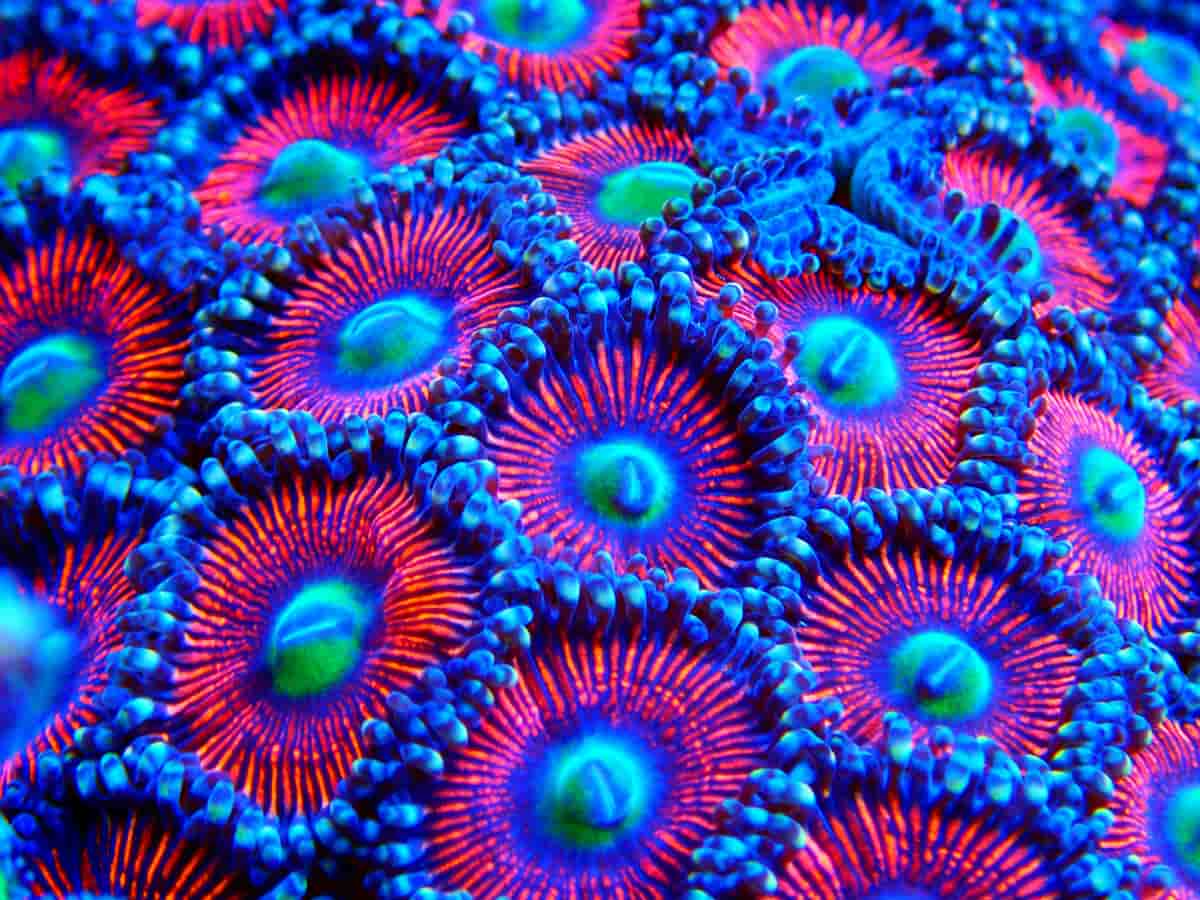
Zoanthid corals (Zoanthus sp.) are soft corals known for their incredible color variety and reputation as one of the best beginner reef corals available. These colonial polyps grow in encrusting mats with individual polyps ranging from under half an inch to over an inch depending on species, displaying hundreds of color combinations including bright greens, oranges, reds, purples, and rainbow multi-color patterns that make them highly collectible. Zoanthids adapt to a wide range of lighting conditions, though 100-150 PAR is a good target for most varieties, and prefer gentle to moderate flow while tolerating parameter swings that would stress more sensitive corals. The corals spread rapidly across rockwork when happy, with some varieties doubling in size in under six months, making regular fragging necessary to control growth. Zoanthid species can contain palytoxin, requiring careful handling with protective equipment to prevent serious poisoning.
Care Requirements
Quick overview for keeping your coral thriving
Difficulty
Beginner Friendly
Lighting
Moderate
Water Flow
Low to Moderate
Detailed Care Guide
In-depth information for optimal care
Difficulty Level
Beginner
Zoanthids are among the easiest reef corals to keep, tolerating wider parameter fluctuations than most species. Colonies survive temporary swings in temperature, salinity, and alkalinity that would stress or kill more sensitive corals, making them ideal first additions for new reef keepers.
Lighting Requirements
Moderate
Zoanthid lighting requirements vary by color morph, with most varieties thriving in 80-120 PAR for optimal growth and coloration. Lower-light morphs including browns, greens, and some purples can tolerate 50-80 PAR in shadier tank areas, while high-light designer varieties often prefer 100-150 PAR to maintain vibrant colors. Zoanthids adapt to lighting gradually over 1-2 weeks, making slow acclimation critical when moving colonies to brighter zones. Excessive lighting above 150-200 PAR can cause bleaching in many varieties, while insufficient lighting below 50 PAR results in stretched polyps, faded colors, and slow growth.
Water Flow
Low to Moderate
Zoanthid polyps thrive in gentle to moderate water flow that creates slight movement without forcing them to bend excessively. Flow rates of 5-15 times tank volume per hour work well for most varieties, with polyps fully extending in areas where they experience gentle, random flow patterns. Excessive direct flow from powerheads causes polyps to remain partially or fully closed, while insufficient flow leads to detritus accumulation on the mat and reduced extension. Reef keepers can observe ideal flow when polyps are fully open and gently waving, with the mat remaining clean of debris.
Keep your Zoanthid healthy
Save photos, placement, parameters, and what you paid — and see how your Zoanthid changes over time.
Parameters
In range8.5 dKH
Alkalinity target 8–9 dKH · sample data
Your Zoanthid
just added$40 paid
value from live market
Palytoxin Safety
Zoanthid corals can contain palytoxin, one of the most toxic substances known to science with no antidote or specific treatment available. Public health authorities have documented serious poisoning cases from aquarium exposure, with affected individuals experiencing severe symptoms including muscle pain, respiratory distress, fever, and in extreme cases, hospitalization or death. Palytoxin enters the body through cuts in skin, inhalation of aerosolized droplets when scrubbing or fragging, or contact with eyes and mouth.
Activities that create aerosols—such as boiling rocks to remove colonies, using hot water, or scrubbing with brushes—pose particularly high risks for exposure through inhalation. Reef keepers should wear gloves and safety glasses when handling Zoanthids, work in well-ventilated areas, never touch face or eyes during maintenance, and seek immediate emergency care for any suspected exposure. Since there is no way to visually identify which colonies contain palytoxin, exercise caution with all Zoanthids.
Buying Advice
What to look for when purchasing
Look for Open Polyps
Healthy Zoanthids should be fully open with their colorful oral discs and tentacles visible when lights are on. If polyps stay closed for a prolonged period, that's a red flag for pests, stress, or disease. Pass on colonies that show signs of stress—you want ones that are happy and acclimated, not ones that are struggling.
Check the Mat
The tissue mat connecting the polyps should look clean and free of algae, brown junk, or debris. A healthy mat is smooth and consistent in color without holes, pale patches, or areas where tissue is pulling away. If the mat looks dirty, covered in algae, or has visible damage, the colony was probably not well cared for and may have ongoing issues.
Watch Out for Pests
Grab a flashlight and inspect closely for Zoanthid-eating nudibranchs (they mimic the color of the colonies they're eating), tiny white sea spiders, and pyramid-shaped Sundial snails hiding in crevices. These pests can wipe out entire colonies and spread to your other corals. Check the polyp bases, mat surface, and underside of frag plugs carefully—if you see anything moving that shouldn't be there, walk away or negotiate a steep discount.
Always Dip New Corals
No matter how clean a colony looks, dip it in CoralRX, Revive, or Bayer before it goes in your display tank. You'll be amazed what crawls out. Drip acclimate for 30-60 minutes to match temperature and salinity, then start the colony in lower light and gradually move it to its permanent spot over 1-2 weeks to avoid shocking it.
Taxonomy
Species
Reef Value
Live pricing$1,860
+$120 this month
Priced from live marketplace listings
Zoanthid
Just added · Frag rack
$40
Hammer Coral
8 months · Mid rock
$65
Zoa Colony
1 year · Sand bed
$40
Track Your Reef
Add your Zoanthid to your tank's living inventory — placement, source, and photos as it grows — next to the parameter logs and maintenance history that keep it thriving. Reef Value even shows what your collection is worth, priced from live marketplace listings.
Find Your Perfect Zoanthid
Compare prices from 26+ verified sellers. From budget-friendly frags to rare collector pieces.
Starting at
$10
Average Price
$40
Premium frags up to
$500
Full Price History
Trends, movers & market data
Frequently Asked
Common questions about Zoanthid corals
Why are my Zoanthids not opening?
Zoanthid polyps close or fail to open due to pests, flow issues, lighting stress, or counterintuitively, nutrient levels that are too low. Zoanthid-eating nudibranchs are the most common culprit—these tiny predators camouflage themselves by mimicking the color of the colonies they eat, making them nearly invisible until inspected closely with a flashlight. Sea spiders (pycnogonids) and Sundial snails also devastate colonies but hide within closed polyps. Wrasses including Six Line, Leopard, and Melanurus effectively control nudibranch populations.
Flow problems occur when direct powerhead output forces polyps closed or when insufficient flow allows debris to accumulate on the mat. Many reefers discover that zero nitrates actually prevents polyp opening—Zoanthids need some nutrients (5-15 ppm nitrates) and will stay closed in ultra-low nutrient systems. Newly introduced colonies can remain closed for 2-7 days during normal acclimation.
How fast do Zoanthids spread?
Zoanthid growth rate varies significantly by species, lighting, feeding, and water quality. Some larger colonies can add 5-20 new polyps per month under the right conditions. Well-fed colonies in stable reef systems with moderate lighting and nutrient availability spread rapidly across adjacent rockwork, with the encrusting mat extending outward as new polyps form. Some aggressive-spreading varieties can double in size within 3-6 months, while slower-growing species or colonies in suboptimal conditions may add only one or two polyps per month.
Zoanthids spread faster when target-fed small meaty foods like frozen mysis shrimp or zooplankton, and when provided with stable parameters including alkalinity around 8-9 dKH and nitrates in the 5-15 ppm range. Reef keepers concerned about overgrowth can control spread by regular fragging or creating physical barriers between colonies and other corals.
Do Zoanthids need to be fed?
Zoanthid corals are photosynthetic and receive most of their nutritional needs from zooxanthellae algae living in their tissues, but target feeding accelerates growth and color intensity. Reef keepers can feed colonies small meaty foods including frozen mysis shrimp, frozen cyclops, reef roids, or specialized coral foods 1-2 times per week by spot-feeding individual polyps or broadcasting food when polyps are open. Well-fed colonies display brighter coloration, faster spreading, and better resilience to stress compared to unfed colonies relying solely on photosynthesis.
Target feeding is particularly beneficial for Zoanthids in low-nutrient systems or under lower lighting where photosynthesis alone may not provide optimal nutrition. Overfeeding should be avoided as excess nutrients can lead to algae growth on the mat, which can inhibit polyp opening and health.
How do you frag Zoanthids?
Zoanthid propagation involves cutting or peeling a section of the colony mat with several polyps attached and securing it to new rockwork or frag plugs using gel superglue or rubber bands. Reef keepers should wear protective gloves and eyewear due to palytoxin risk, use a sharp razor blade or scissors to make clean cuts along the mat between polyps, and minimize time out of water to reduce stress. The fragged section can be glued directly to dry frag plugs or rock using gel superglue, which cures quickly underwater and forms a strong bond.
Expect newly fragged colonies to be closed for at least 1-3 days, though most usually open and show signs of healing quickly if water conditions are good.
Where should Zoanthids be placed in the tank?
Zoanthid placement depends on the specific variety and lighting, with most species thriving in the bottom third to middle of the reef tank where PAR levels range from 80-120. Lower-light varieties like browns and greens perform well in shadier spots receiving 50-80 PAR, while high-light designer morphs often need 100-150 PAR in mid-tank areas for their best coloration. Colonies should be placed where they receive gentle to moderate flow that creates slight polyp movement without bending them over, typically away from direct powerhead blast.
Allow plenty of room to spread since healthy colonies expand rapidly across adjacent rock—avoid placing them next to slow-growing or delicate corals that could get overgrown. Start new colonies in lower light and gradually move them to their permanent spot over 1-2 weeks to prevent bleaching from light shock.

All Soft Corals
Browse the complete collection of Soft coral care guides