
Leather Coral Care Guide
Leather corals are beginner-friendly soft corals known for their hardiness, flowing polyps, and forgiving care requirements in reef aquariums. This care guide covers lighting requirements, water flow needs, placement strategies, and the natural shedding behavior that helps reef keepers maintain healthy colonies.
About Leather
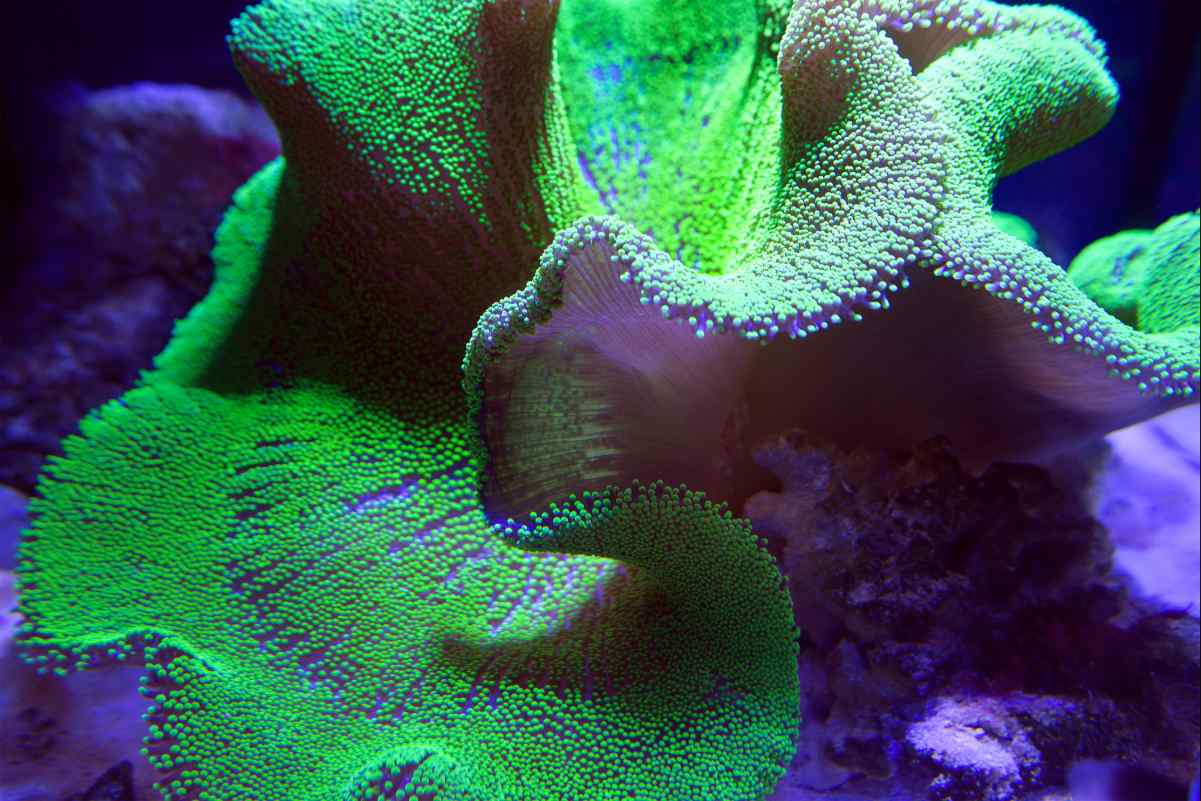
Leather corals encompass multiple genera of soft corals, including Sarcophyton (toadstool leathers), Sinularia (finger leathers), Lobophytum (devil's hand), and Cladiella (colt corals), characterized by leathery tissue texture and eight-tentacled polyps. These soft corals display flowing movement in water currents, with colors ranging from tan and brown to vibrant greens and yellows, and feature dense polyp coverage that creates a fuzzy appearance when fully extended.
Most leather corals require moderate lighting of 100-200 PAR and moderate, indirect water flow, making them suitable for beginner reef aquarists. Unlike stony corals, Leather corals lack calcium carbonate skeletons, reducing the need for strict calcium and alkalinity maintenance while supporting growth of approximately one inch every four months.
Leather coral colonies periodically shed a waxy mucus coating to remove algae and detritus, during which polyps retract for several days to two weeks, and the shed mucus contains chemical compounds capable of harming neighboring corals through allelopathy.
Care Requirements
Quick overview for keeping your coral thriving
Difficulty
Beginner Friendly
Lighting
Low to Moderate
Water Flow
Moderate
Detailed Care Guide
In-depth information for optimal care
Difficulty Level
Beginner
Leather corals are highly forgiving for reef aquarists, making them an excellent choice for beginners. Leathers tolerate a wide range of lighting conditions, from lower intensity budget lights to high-output LED systems, and adapt well to various flow patterns. Leather corals are highly resilient to parameter fluctuations that would stress many stony corals, including moderate swings in temperature, pH, and salinity.
As leather corals do not build calcium carbonate skeletons, they do not require precise calcium and alkalinity management, removing a major source of complexity for beginners. The primary challenge for new aquarists is understanding the natural shedding cycle. During this process, leather corals can remain closed for several days as they shed their outer layer, which can alarm those unfamiliar with the behavior.
Lighting Requirements
Low to Moderate
Leather corals are highly adaptable photosynthetic corals that do well under lighting levels of approximately 100–200 PAR. Many leather coral specimens can tolerate lower or higher light intensities when properly acclimated. Leather corals contain symbiotic zooxanthellae algae that produce energy through photosynthesis. The presence of zooxanthellae allows leather corals to thrive under a wide range of lighting, including T5, and low powered LED reef lighting systems.
When introducing leather corals to new lighting conditions, reef keepers should begin with reduced light intensity or shaded placement. Light exposure should be increased gradually over a period of two to three weeks to prevent photo shock. Sudden increases in light intensity after purchase or after upgrading lighting system can cause tissue stress and prolonged polyp retraction.
Water Flow
Moderate
Leather corals thrive in moderate, indirect water flow of approximately 10–20 times total tank volume per hour. Proper flow causes leather coral polyps to wave gently without excessive bending of the coral structure. Water movement for leather corals should be turbulent and non-linear rather than direct laminar flow. Strong, direct flow can damage tissue and prevent polyps from fully extending. Adequate water flow is essential for the natural shedding process in leather corals. Turbulent flow helps lift and remove the waxy mucus coating as the coral sheds its outer layer. Insufficient flow allows detritus to accumulate on the surface of leather corals. Excessive or direct flow causes leather corals to remain contracted with polyps retracted, which can lead to tissue damage or death over time.
Keep your Leather healthy
Save photos, placement, parameters, and what you paid — and see how your Leather changes over time.
Parameters
In range8.5 dKH
Alkalinity target 8–9 dKH · sample data
Your Leather
just added$85 paid
value from live market
Mucus Shedding Behavior
Leather coral colonies periodically shed a thin, waxy mucus layer as a self-cleaning mechanism to remove settled algae, detritus, and parasites from their tissue surface. The shedding process begins with complete polyp retraction, followed by the development of a shiny, film-like coating over 1-3 days, and concludes with the mucus layer peeling away over the following 4-14 days depending on species and water flow. Sarcophyton species typically complete shedding within 7 days, while Lobophytum (devil's hand) may require several weeks to fully shed. This behavior occurs naturally (frequency can vary depending on environment - every 1-2 months, as an example) and is not a sign of illness or stress, though sudden environmental changes can trigger emergency shedding. The shed mucus contains toxic compounds that can harm sensitive corals and fish, requiring reef keepers to remove loose mucus with a turkey baster or net and run activated carbon to absorb released toxins. Water flow is critical during shedding, as inadequate circulation prevents the mucus from lifting away, potentially hardening on the surface and blocking polyp extension.
Chemical Warfare Capability
Leather coral species are among the most aggressive chemical warriors in reef aquariums, releasing terpenoid toxins through their mucus coating that inhibit the growth and health of nearby corals, particularly stony corals and other soft coral species. Unlike corals with physical sweeper tentacles, Leather corals wage chemical warfare passively through continuous low-level toxin release and more intensely during mucus shedding events. Research published in marine biology literature has identified Sarcophyton species as particularly noxious, with toxins capable of causing tissue recession, polyp closure, and growth suppression in neighboring specimens. Reef keepers should maintain at least 6-8 inches of clear space around Leather Coral colonies and position them downstream from sensitive SPS corals to minimize toxin exposure. Running activated carbon continuously or during shedding events helps remove dissolved toxins from the water column, protecting other coral inhabitants. Despite their chemical aggression, Leather corals are often successfully kept in mixed reef aquariums when proper spacing and chemical filtration practices are maintained.
Buying Advice
What to look for when purchasing
Polyp Extension
Healthy Leather coral specimens display full polyp extension with fuzzy, densely packed polyps covering the entire surface area, indicating good health and proper acclimation at the seller's facility. Avoid corals with few or no extended polyps unless they show clear signs of recent shedding (waxy coating present), as prolonged retraction may indicate stress, disease, or poor husbandry. The coral tissue should appear firm and full, not deflated or thin.
Tissue Integrity
Examine the Leather Coral for any signs of tissue damage, holes, tears, or areas of tissue recession that expose the internal structure. Healthy specimens have intact, uniformly textured surfaces without discoloration, dark spots, or pale bleached areas. Minor surface imperfections may heal after acclimation, but avoid corals with significant tissue loss or spreading lesions.
Color and Appearance
Quality Leather Coral specimens display vibrant, consistent coloration ranging from tan and brown to green, yellow, or bi-color morphs, depending on species and lighting history. Avoid corals with unnatural pale or white coloration suggesting bleaching, or dark brown/black areas indicating tissue necrosis. Some specimens may appear darker or lighter than expected due to lighting differences between the seller's system and your aquarium, which typically adjusts over 2-4 weeks after placement.
Base Attachment
Check that the Leather Coral is firmly attached to its rock or plug, as loose or freshly cut specimens may struggle to reattach in your system and can be carried by flow into other corals or powerheads. Well-attached colonies have established bases with visible tissue connection spreading onto the rock surface. Freshly fragged specimens should show evidence of healing and initial attachment rather than raw, fresh cuts.
Pest Inspection
Inspect the Leather Coral closely for signs of common pests including flatworms, nudibranchs, or parasitic snails that may be feeding on tissue or hiding in crevices. Look for small bite marks, trails on the tissue surface, or unusual polyp retraction in specific areas that may indicate pest activity. Dipping new Leather coral specimens in a coral dip solution (following manufacturer instructions) before introduction helps eliminate hitchhiking pests and reduces the risk of introducing problems to your display tank.
Taxonomy
Species
Reef Value
Live pricing$1,860
+$120 this month
Priced from live marketplace listings
Leather
Just added · Frag rack
$85
Hammer Coral
8 months · Mid rock
$65
Zoa Colony
1 year · Sand bed
$40
Track Your Reef
Add your Leather to your tank's living inventory — placement, source, and photos as it grows — next to the parameter logs and maintenance history that keep it thriving. Reef Value even shows what your collection is worth, priced from live marketplace listings.
Find Your Perfect Leather
Compare prices from 15+ verified sellers. From budget-friendly frags to rare collector pieces.
Starting at
$24
Average Price
$85
Premium frags up to
$325
Full Price History
Trends, movers & market data
Frequently Asked
Common questions about Leather corals
Why is my Leather Coral closed up and not opening its polyps?
Leather coral colonies close their polyps and remain contracted for several days to two weeks during the natural mucus shedding process, which can occur every 1-2 months as a self-cleaning mechanism to remove algae and debris. Shedding begins with complete polyp retraction, followed by the appearance of a shiny, waxy coating that the coral will eventually peel away. This behavior is completely normal and healthy, and the coral will emerge with fuller polyp extension and improved appearance after completing the shed. If the coral remains closed for longer than two weeks without visible mucus coating, you should investigate environmental causes including unstable water parameters (temperature, pH, salinity fluctuations), inadequate water flow preventing normal tissue function, sudden lighting changes causing photo shock, or poor water quality from elevated nutrients. Leather corals are also known for occasional "mood swings" where they close temporarily without obvious cause, typically reopening within a few days once conditions stabilize.
Do Leather Corals release toxins that can harm other corals?
Leather coral species release terpenoid toxins through their mucus coating that can significantly harm neighboring corals, making them among the most aggressive chemical warriors in reef aquariums. These toxins cause tissue recession, growth suppression, and polyp closure in nearby stony corals and other soft coral species, particularly during mucus shedding events when toxin release intensifies. Reef keepers should maintain at least 6-8 inches of clear space around Leather Coral colonies and avoid placing sensitive SPS corals directly downstream in the water flow path. Running activated carbon continuously or at minimum during shedding events helps absorb dissolved toxins from the water column, providing protection for other coral inhabitants. Despite this chemical aggression, Leather corals succeed in mixed reef aquariums when proper spacing, strategic placement, and chemical filtration practices are maintained.
Where should I place Leather Coral in my reef tank?
Leather coral colonies thrive when placed on rockwork in the bottom to middle third of the reef aquarium where they receive moderate lighting of 100-200 PAR and moderate, indirect water flow. The bottom of the tank provides excellent conditions for most Leather coral species, though specimens can also be mounted on exposed rock ledges or islands in the middle zone for display purposes. You should position Leather corals with adequate space to expand, as these corals can double in size within days of acclimation and will continue growing quickly when happy. It's possible for Leather corals to grow one inch every four months. Leave at least 6-8 inches of clear space around the colony to prevent chemical warfare toxins from affecting neighboring corals, and avoid placing Leather corals directly upstream from sensitive SPS species. Consider that larger Leather coral colonies can shade corals positioned below them as they expand, so plan placement along the back or sides of the aquarium where their height won't create problematic shadows.
Do Leather Corals need to be fed, or do they get energy from light?
Leather coral species are photosynthetic corals that derive most of their nutritional needs from zooxanthellae symbiotic algae living in their tissues, which produce energy through photosynthesis under appropriate lighting. These corals capture microplankton, dissolved organic matter, and nutrients directly from the aquarium water without requiring target feeding, making them exceptionally easy to maintain. Leather corals grow quickly in established reef aquariums with adequate fish populations and feeding, as fish waste and uneaten food provide sufficient dissolved nutrients. Some reef keepers choose to occasionally broadcast feed phytoplankton or extremely fine coral foods to enhance growth and coloration, though this is optional rather than necessary for coral health. The photosynthetic capability combined with passive filter feeding allows Leather corals to thrive in a wide range of reef aquarium systems without dedicated feeding protocols.
How fast do Leather Corals grow, and how large can they get?
Leather coral colonies growth rate varies depending on species and environment. As a rough estimate, you could plan on approximately one inch in diameter every four months under optimal aquarium conditions of moderate lighting, adequate water flow, and stable parameters. Growth rates vary by species, with Sarcophyton (toadstool) and Sinularia generally showing faster expansion than the thicker Lobophytum (devil's hand) species. In reef aquariums, well-maintained Leather coral specimens commonly reach 8-12 inches in diameter over several years, requiring periodic fragging to prevent overgrowth and shading of neighboring corals. Wild Leather coral colonies can achieve massive size, with some Sarcophyton species documented at over 30 inches in diameter, though aquarium specimens normally requiring intervention long before that size. Leather corals often appear to grow in spurts, remaining relatively stable for weeks then expanding noticeably after completing a mucus shedding cycle.
Can I frag or propagate Leather Corals?
Leather coral species are among the easiest corals to propagate through fragging, making them excellent candidates for reef aquarists interested in coral farming and sharing. Fragging involves using a sharp blade or scissors to cut sections from the parent colony, then attaching the fragments to rocks or frag plugs using super glue gel or rubber bands until the coral attaches naturally. Leather corals respond to fragging by closing temporarily for 3-7 days while healing the cut edges, then resuming normal polyp extension without additional intervention. The parent colony and frags both release mucus during the healing process, requiring removal of excess slime and activated carbon use to protect other tank inhabitants from elevated toxins. Successful frags should be placed in moderate flow and lighting identical to the parent colony's conditions, avoiding intense direct flow that could prevent attachment or damage healing tissue. Most Leather coral frags attach and begin growing within 2-4 weeks, eventually developing into full-sized colonies over the following months to years.

All Soft Corals
Browse the complete collection of Soft coral care guides