
Ricordea Coral Care Guide
Ricordea mushrooms are colorful corallimorphs available in two distinct species with different care requirements. This guide covers lighting, flow, feeding, and the key differences between beginner-friendly Ricordea florida and the more demanding Ricordea yuma to help reef keepers select and maintain healthy specimens.
About Ricordea
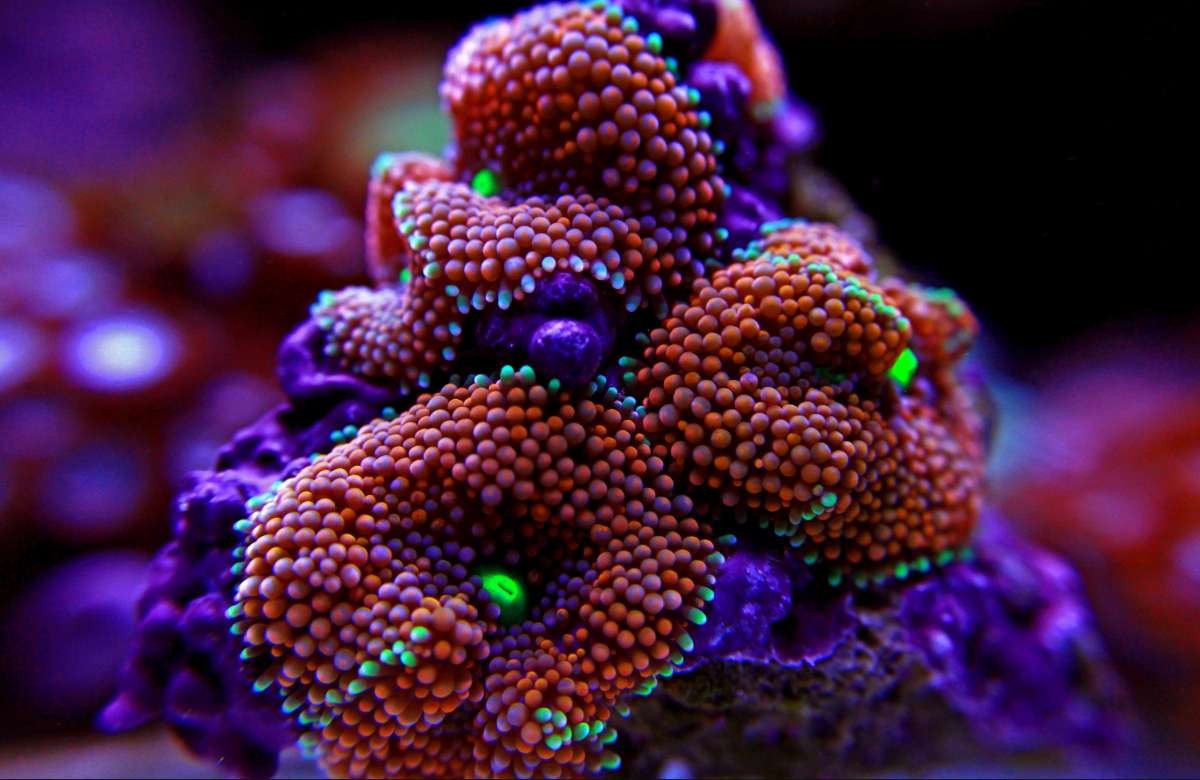
Ricordea mushrooms are highly desirable corallimorphs prized for their distinctive bubble-like tentacles and vibrant coloration ranging from orange and green to rare rainbow patterns. Ricordea mushrooms exist as two species: Ricordea florida from the Caribbean and Ricordea yuma from the Indo-Pacific, each with distinct care requirements and appearance. Ricordea florida displays randomly distributed tentacles around a small isolated mouth and reaches approximately 1 inch in diameter, while Ricordea yuma features alternating rows of tentacles radiating from a tentacle-surrounded mouth and grows up to 5-7 inches.
Ricordea mushrooms require low to moderate lighting of 80-150 PAR and gentle water flow, with placement on lower rockwork or stable substrate producing best results. Ricordea florida tolerates a wide range of conditions making it suitable for beginners, while Ricordea yuma demands stable water chemistry and careful acclimation, presenting intermediate-level challenges.
Care Requirements
Quick overview for keeping your coral thriving
Difficulty
Intermediate
Lighting
Low to Moderate
Water Flow
Low to Moderate
Detailed Care Guide
In-depth information for optimal care
Difficulty Level
Beginner to Intermediate
Ricordea difficulty varies significantly between the two species. Ricordea florida is hardy and forgiving, tolerating parameter fluctuations and recovering well from stress, making it excellent for beginners. Ricordea yuma requires stable water chemistry with consistent salinity, temperature, and nutrient levels, presenting intermediate-level challenges that reward experienced reef keepers.
Both species benefit from patient acclimation to new lighting conditions, as rapid changes cause stress responses including detachment and tissue recession.
Lighting Requirements
Low to Moderate
Ricordea mushrooms thrive at 80-150 PAR, with most successful hobbyists keeping specimens in the 100-150 PAR range for optimal coloration. Light overexposure causes Ricordea to detach, bleach, or melt, so new specimens should be placed in shaded areas and gradually acclimated over 2-3 weeks. Ricordea mushrooms growing in shallow Caribbean and Indo-Pacific waters naturally tolerate moderate light once properly adjusted.
The most vibrant Ricordea coloration develops under moderate lighting combined with occasional feeding, while excessive light causes colors to fade and tissue to deteriorate.
Water Flow
Low to Moderate
Ricordea mushrooms prefer gentle, indirect water flow that allows full tentacle extension without causing the coral to retract or detach. Excessive flow strains the delicate tentacles and prevents Ricordea from expanding, as these corallimorphs lack a protective skeleton. Ricordea mushrooms exposed to high flow will detach from their substrate and drift until finding a more suitable location.
Reef keepers should provide enough flow to prevent detritus accumulation on the coral surface while avoiding direct powerhead output aimed at Ricordea specimens.
Keep your Ricordea healthy
Save photos, placement, parameters, and what you paid — and see how your Ricordea changes over time.
Parameters
In range8.5 dKH
Alkalinity target 8–9 dKH · sample data
Your Ricordea
just added$60 paid
value from live market
Florida vs Yuma Species
Choosing the Right Ricordea
Ricordea florida and Ricordea yuma differ substantially in appearance, size, price, and care requirements despite belonging to the same genus. Ricordea florida from the Caribbean features randomly distributed bubble-like tentacles around a small isolated mouth, typically reaching only 1 inch in diameter with attractive but less intense coloration. Ricordea yuma from the Indo-Pacific displays alternating rows of large and small tentacles radiating outward from a tentacle-surrounded mouth, growing up to 5-7 inches with dramatically vibrant colors including rare rainbow morphs.
Ricordea florida costs approximately $25 per polyp, reproduces readily through mouth splitting, and tolerates a wide range of tank conditions making it ideal for beginners and propagation projects. Ricordea yuma commands significantly higher prices for colorful specimens, requires stable water chemistry with consistent temperature and nutrients, and presents greater challenges during acclimation. Reef keepers new to corallimorphs should start with Ricordea florida before attempting the more demanding Ricordea yuma.
Reproduction and Fragging
Ricordea mushrooms reproduce through mouth splitting rather than producing small offspring like Discosoma or Rhodactis mushrooms. Ricordea will develop multiple mouths over time, then pinch at the mouth area and divide into separate specimens. Splitting frequency depends on lighting, water quality, flow, and feeding, with healthy specimens typically splitting every few months under optimal conditions.
Reef keepers can encourage Ricordea splitting by maintaining stable parameters and providing regular feeding with meaty foods like mysis shrimp. Manual fragging involves cutting through or between mouths with a razor blade, ensuring each piece receives part of the mouth tissue for faster recovery. Ricordea frags cannot be glued directly to substrate and must be placed in containers with rubble until they attach naturally over 7-10 days.
Buying Advice
What to look for when purchasing
Species Identification
Ricordea buyers should identify whether specimens are Ricordea florida or Ricordea yuma before purchase, as care requirements differ significantly. Ricordea florida displays randomly distributed tentacles around a small isolated mouth, while Ricordea yuma features alternating rows of tentacles surrounding the mouth opening.
Tissue Expansion
Healthy Ricordea should appear fully expanded with inflated bubble-like tentacles visible across the entire surface. Ricordea that appears deflated, shrunken, or has visible recession at the edges may be stressed or declining.
Attachment Status
Ricordea mushrooms should be firmly attached to their substrate rather than loose or detached. Detached specimens are not necessarily dying but indicate recent stress and require careful acclimation.
Coloration
Ricordea coloration should appear vibrant and consistent without bleached or faded patches. Dull colors may indicate light stress, poor water quality, or declining health that could be difficult to reverse.
Taxonomy
Species
Reef Value
Live pricing$1,860
+$120 this month
Priced from live marketplace listings
Ricordea
Just added · Frag rack
$60
Hammer Coral
8 months · Mid rock
$65
Zoa Colony
1 year · Sand bed
$40
Track Your Reef
Add your Ricordea to your tank's living inventory — placement, source, and photos as it grows — next to the parameter logs and maintenance history that keep it thriving. Reef Value even shows what your collection is worth, priced from live marketplace listings.
Find Your Perfect Ricordea
Compare prices from 17+ verified sellers. From budget-friendly frags to rare collector pieces.
Starting at
$15
Average Price
$60
Premium frags up to
$600
Full Price History
Trends, movers & market data
Frequently Asked
Common questions about Ricordea corals
What is the difference between Ricordea florida and Ricordea yuma?
Ricordea florida and Ricordea yuma differ in geographic origin, size, coloration, and care requirements. Ricordea florida from the Caribbean reaches approximately 1 inch in diameter with randomly distributed tentacles around a small isolated mouth and tolerates a wide range of tank conditions. Ricordea yuma from the Indo-Pacific grows up to 5-7 inches with alternating rows of tentacles radiating from a tentacle-surrounded mouth, displaying more vibrant coloration but requiring stable water chemistry.
Ricordea florida is recommended for beginners due to its hardiness and lower price around $25 per polyp, while Ricordea yuma suits experienced reef keepers willing to maintain precise water parameters for its dramatic colors.
How much light does Ricordea need?
Ricordea mushrooms thrive at 80-150 PAR, with most successful hobbyists maintaining specimens around 100-150 PAR for optimal coloration. Ricordea mushrooms should be placed in lower to mid-tank areas and gradually acclimated to lighting over 2-3 weeks, as rapid light increases cause detachment, bleaching, or tissue melting. Ricordea exposed to excessive lighting will detach and drift until finding a shaded location.
Reef keepers achieve the best Ricordea coloration under moderate lighting combined with occasional feeding rather than high-intensity illumination.
Why is my Ricordea detaching from the rock?
Ricordea mushrooms detach from substrate when exposed to excessive lighting, high water flow, or unsuitable conditions, drifting until finding a more appropriate location. Ricordea lacking a protective skeleton cannot tolerate the same flow and light intensity as stony corals and will release from rockwork as a stress response. Detached Ricordea mushrooms are not necessarily dying and will reattach once conditions improve.
Reef keepers with detached Ricordea should place specimens in a low-flow container with rubble pieces, allowing the coral to naturally attach over 7-10 days before relocating to permanent placement.
Do Ricordea need to be fed?
Ricordea mushrooms are photosynthetic and can meet their nutritional needs through aquarium lighting alone, though supplemental feeding enhances growth rate, coloration, and overall health. Ricordea benefit from occasional target feeding with small meaty foods such as mysis shrimp, brine shrimp, or coral foods like Reef Roids delivered directly to the coral surface with pumps temporarily disabled.
Reef keepers who feed Ricordea report faster splitting, more vibrant colors, and better tissue expansion compared to specimens relying solely on photosynthesis.
How fast do Ricordea grow and split?
Ricordea mushrooms grow slowly compared to other mushroom corals, with splitting occurring every few months under optimal conditions rather than weeks. Ricordea reproduce by developing multiple mouths then dividing through pinching at the mouth area, a process influenced by lighting, water quality, flow, and feeding frequency. Healthy Ricordea florida specimens typically split faster than Ricordea yuma due to their hardier nature.
Reef keepers can encourage faster Ricordea splitting by maintaining stable parameters, providing moderate lighting around 100-150 PAR, and feeding meaty foods regularly.
Why is my Ricordea melting or shrinking?
Ricordea melting or tissue recession typically results from rapid environmental changes, excessive lighting, high flow, or poor water quality. Ricordea yuma is particularly sensitive to water chemistry fluctuations including temperature swings, salinity changes, and nutrient spikes. Ricordea exposed to incompatible conditions will shrink, lose color, and eventually dissolve if the stress continues.
Reef keepers with declining Ricordea should verify stable water parameters, reduce lighting intensity, ensure gentle indirect flow, and check for chemical warfare from nearby corals. Some aquariums cannot support certain Ricordea specimens despite optimal parameters due to unknown incompatibilities.
Explore Related Corals
Popular corals you might also be interested in

All Soft Corals
Browse the complete collection of Soft coral care guides