
Rhodactis Coral Care Guide
Rhodactis mushrooms are hardy soft corals known for their fuzzy, textured appearance and remarkable size diversity ranging from 1-inch Bullseye varieties to 18-inch Elephant Ear specimens. This care guide covers lighting, water flow, placement strategies, and the differences between standard Rhodactis and the highly prized Bounce mushroom morphs to help reef keepers maintain healthy colonies.
About Rhodactis
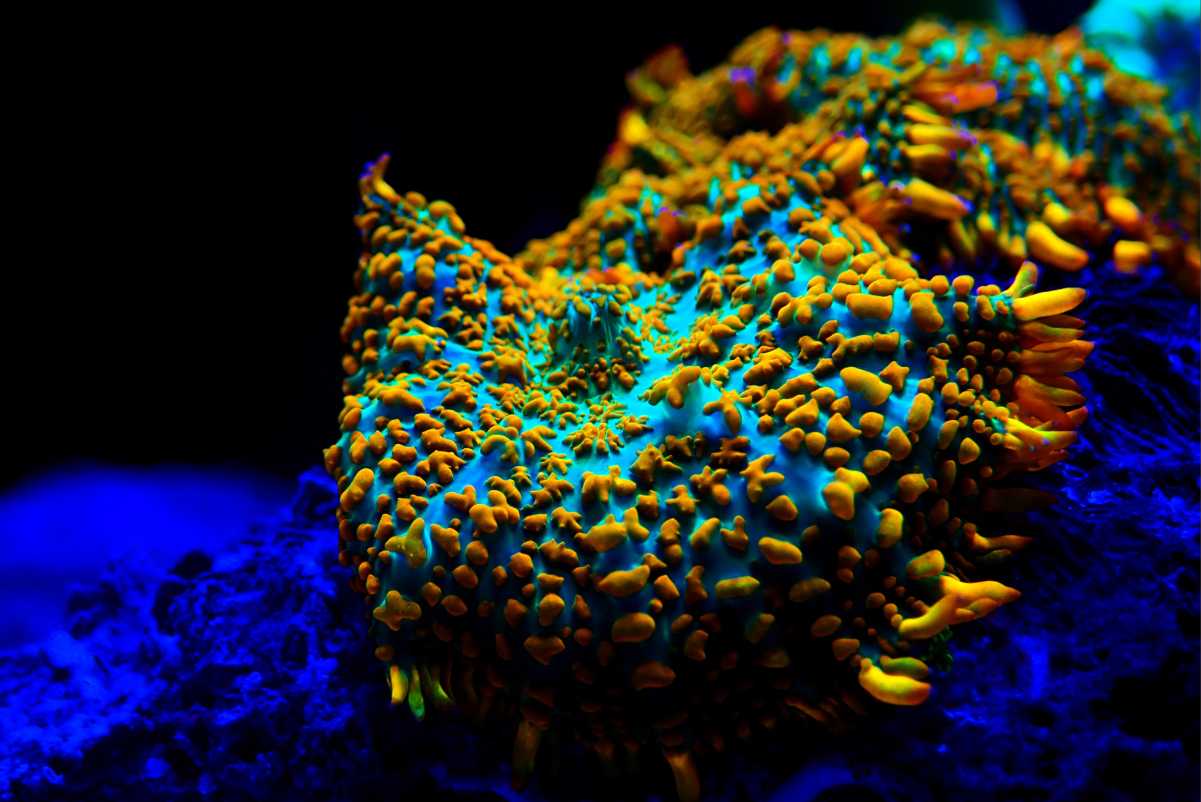
Rhodactis mushrooms (genus Rhodactis) are soft corals within the order Corallimorpharia known for their distinctive hair-like tentacles covering the disc surface and exceptional size range spanning from 1-inch Bullseye specimens to 18-inch Elephant Ear varieties. Rhodactis mushrooms display diverse color combinations including green, brown, purple, red, and orange, with premium Bounce morphs featuring enlarged bubble-like vesicles that command collector-level prices. Rhodactis mushrooms require low to moderate lighting in the 75-150 PAR range and gentle water flow, making these corals suitable for beginners and ideal for lower light areas of established reef tanks.
Rhodactis mushrooms reproduce through longitudinal fission, splitting down the middle to form two separate individuals over time. Reef keepers should provide adequate spacing between Rhodactis and other corals, as these mushrooms possess stinging nematocysts and release allelopathic chemicals that can inhibit neighboring coral growth, particularly affecting zoanthids, palythoas, and sensitive SPS species.
Care Requirements
Quick overview for keeping your coral thriving
Difficulty
Beginner Friendly
Lighting
Low to Moderate
Water Flow
Low
Detailed Care Guide
In-depth information for optimal care
Difficulty Level
Beginner Friendly
Rhodactis mushrooms rank among the hardiest corals available to reef keepers due to their tolerance for fluctuating water parameters and adaptability across a wide lighting spectrum. Rhodactis mushrooms can survive temporary nutrient spikes, minor temperature fluctuations, and alkalinity swings that would stress more sensitive species.
Standard Rhodactis varieties prove extremely forgiving for beginners, while premium Bounce morphs benefit from more stable conditions to maintain their distinctive bubble formations.
Lighting Requirements
Low to Moderate
Rhodactis mushrooms thrive under low to moderate lighting in the 75-150 PAR range, with most varieties performing well toward the lower end around 75-100 PAR. Excessive lighting causes Rhodactis mushrooms to bleach, shrink, or migrate to shadier locations within the aquarium.
Bounce mushroom morphs often display better bubble inflation and coloration under slightly lower light conditions of 50-100 PAR, while standard Rhodactis tolerate the full 75-150 PAR range without issue.
Water Flow
Low
Rhodactis mushrooms prefer gentle, indirect water flow that allows their textured discs to expand fully without damage to the delicate hair-like tentacles covering their surface. Strong direct current causes Rhodactis mushrooms to remain contracted or detach from substrate, reducing photosynthesis and slowing growth.
Reef keepers should position Rhodactis in calmer areas of the tank where flow is diffused or randomized, avoiding placement directly in powerhead streams or high-flow zones.
Keep your Rhodactis healthy
Save photos, placement, parameters, and what you paid — and see how your Rhodactis changes over time.
Parameters
In range8.5 dKH
Alkalinity target 8–9 dKH · sample data
Your Rhodactis
just added$62 paid
value from live market
Bounce Mushroom Varieties
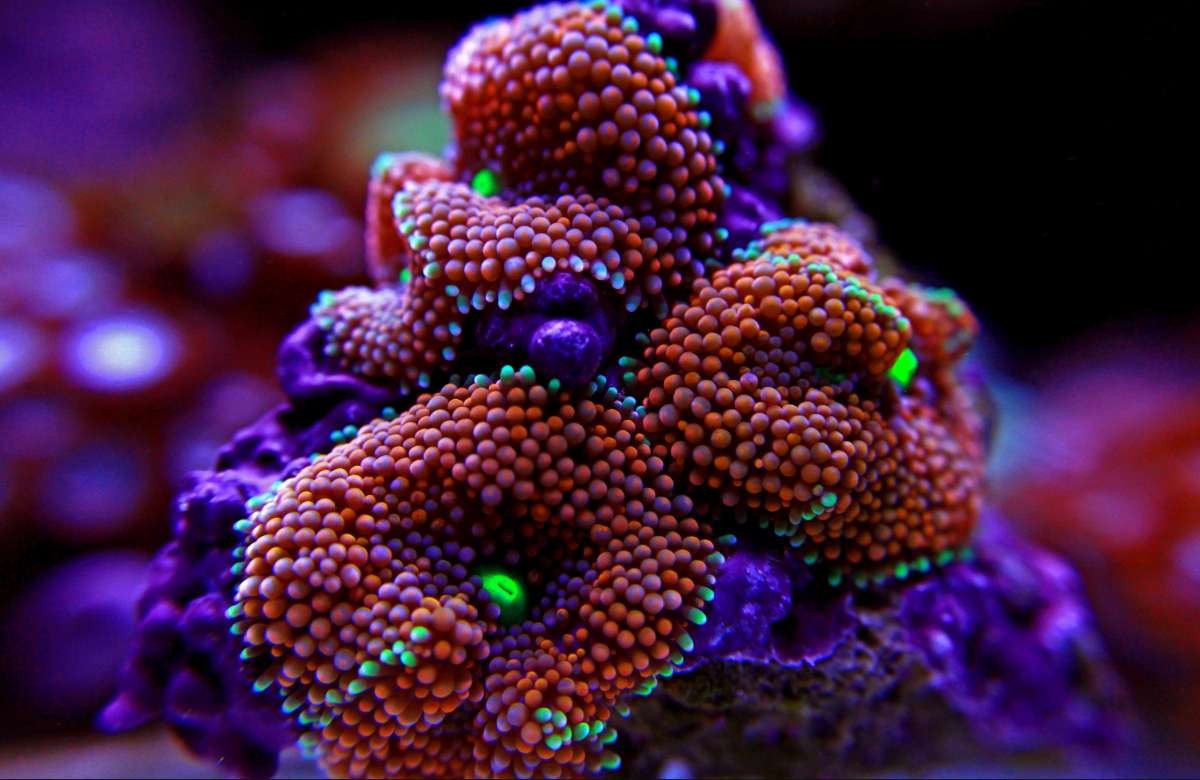
Bounce Mushrooms represent the pinnacle of Rhodactis collecting, featuring exaggerated bubble-like vesicles that distinguish them from standard hairy mushroom varieties and command premium prices ranging from hundreds to several thousand dollars per polyp. Named Bounce strains including OG Bounce, Sunkist Bounce, Biohazard, Jawbreaker, and Neptune Bounce have been selectively propagated by coral farms and collectors to maintain their distinctive traits across generations.
Bounce Mushrooms require slightly more stable conditions than standard Rhodactis to maintain optimal bubble inflation, with lower lighting around 50-100 PAR and minimal flow producing the best vesicle development. Reef keepers pursuing Bounce mushrooms should quarantine new specimens to verify health before adding to display tanks, as these high-value corals represent significant investment. Bounce characteristics can diminish under suboptimal conditions, with bubbles deflating when exposed to excessive light or flow, though they typically recover once environmental stressors are corrected.
Elephant Ear Mushrooms
Elephant Ear Mushrooms (primarily Rhodactis mussoides) represent the largest varieties within the Rhodactis genus, capable of reaching 12-18 inches in diameter and dominating substantial portions of reef aquariums. Elephant Ear Mushrooms display broad, leathery discs with subdued coloration typically in brown, green, or purple tones, lacking the bright colors of smaller Rhodactis varieties but offering impressive visual impact through sheer size.
Reef keepers maintaining Elephant Ear Mushrooms must plan for their eventual adult size when selecting placement, as these corals will shade out and potentially overgrow nearby specimens as they expand. Elephant Ear Mushrooms prove extremely hardy and tolerate the lowest light levels of any Rhodactis variety, thriving at 50-75 PAR where other corals struggle. These mushrooms make excellent choices for filling large, shaded areas of mature reef systems where their size becomes an asset rather than a management challenge.
Buying Advice
What to look for when purchasing
Tentacle Extension
Healthy Rhodactis display fully extended hair-like tentacles across their disc surface. Avoid specimens with retracted or missing tentacles, which may indicate stress, damage during shipping, or underlying health issues.
Disc Attachment
Verify the Rhodactis is firmly attached to its frag plug or rock substrate. Detached mushrooms drift through aquariums and may settle in undesirable locations or fail to reattach, especially larger specimens.
Bounce Bubble Quality
When purchasing Bounce morphs, examine bubble size, color, and inflation under the seller's lighting conditions. Photograph the specimen for comparison after acclimation, as bubbles may temporarily deflate during shipping stress.
Size Verification
Confirm the variety and expected adult size before purchase. Bullseye varieties stay small at 1-3 inches, while Elephant Ear types can exceed 12 inches and require dedicated space in the aquarium.
Taxonomy
Species
Reef Value
Live pricing$1,860
+$120 this month
Priced from live marketplace listings
Rhodactis
Just added · Frag rack
$62
Hammer Coral
8 months · Mid rock
$65
Zoa Colony
1 year · Sand bed
$40
Track Your Reef
Add your Rhodactis to your tank's living inventory — placement, source, and photos as it grows — next to the parameter logs and maintenance history that keep it thriving. Reef Value even shows what your collection is worth, priced from live marketplace listings.
Find Your Perfect Rhodactis
Compare prices from 22+ verified sellers. From budget-friendly frags to rare collector pieces.
Starting at
$20
Average Price
$62
Premium frags up to
$800
Full Price History
Trends, movers & market data
Frequently Asked
Common questions about Rhodactis corals
What is a Bounce Mushroom?
Bounce Mushrooms are a premium variety of Rhodactis mushroom coral featuring enlarged, bubble-like vesicles on their disc surface that give them a distinctive "bouncy" appearance prized by collectors. Bounce Mushrooms occur naturally and through selective aquaculture, with named strains like OG Bounce, Sunkist Bounce, Jawbreaker, and Neptune Bounce commanding prices from hundreds to thousands of dollars depending on coloration and bubble development.
Standard Rhodactis mushrooms may develop bounce characteristics over time under optimal low-light, low-flow conditions, though true Bounce morphs typically maintain their bubble formations more consistently than mushrooms that spontaneously develop similar traits.
Are Rhodactis Mushrooms aggressive?
Rhodactis mushrooms possess stinging nematocysts within their tentacles and release allelopathic chemicals into the water that can inhibit neighboring coral growth, making proper spacing essential in mixed reef systems. Rhodactis mushrooms will outcompete zoanthids, palythoas, and sensitive SPS corals when placed too close, winning territorial disputes through both direct stinging contact and chemical warfare.
Reef keepers should maintain at least 3-4 inches of clearance between Rhodactis and other coral species, run activated carbon to reduce allelopathic compounds in systems with multiple mushroom colonies, and monitor for encroachment as Rhodactis spread across available substrate.
How big do Rhodactis Mushrooms get?
Rhodactis mushrooms display the widest size range of any mushroom coral genus, spanning from 1-inch Tonga Bullseye varieties to 18-inch Elephant Ear specimens that can dominate large sections of reef aquariums. Most common Rhodactis varieties reach 3-6 inches in diameter under typical aquarium conditions, while Elephant Ear types (Rhodactis mussoides) routinely grow to 8-12 inches when given adequate space and stable conditions.
Reef keepers should research the specific Rhodactis variety before purchase to understand expected adult size and plan placement accordingly, as large specimens require significant dedicated space.
How do Rhodactis Mushrooms reproduce?
Rhodactis mushrooms reproduce asexually through longitudinal fission, a process where the coral develops two mouths and gradually splits down the middle to form two separate individuals over several weeks to months. Rhodactis mushrooms can also reproduce through pedal laceration, leaving tissue fragments behind as they move that develop into new polyps.
Reef keepers can accelerate propagation by carefully cutting healthy Rhodactis down the middle with a sharp blade, ensuring both halves remain attached to substrate. Fragging Rhodactis requires patience as cut pieces may take 2-4 weeks to fully heal and resume normal expansion.
What is the difference between Rhodactis and Discosoma?
Rhodactis mushrooms feature fuzzy, hair-like tentacles covering their disc surface that give them a textured or "hairy" appearance, while Discosoma mushrooms display smooth or slightly bumpy discs with a metallic sheen. Rhodactis mushrooms grow larger than Discosoma, with Elephant Ear varieties reaching 18 inches compared to Discosoma's typical 3-4 inch maximum size.
Discosoma mushrooms spread faster and cost less than Rhodactis, but Rhodactis offers greater size diversity and includes the premium Bounce morphs that rank among the hobby's most valuable corals. Both genera share similar care requirements of low light and gentle flow.
Why is my Rhodactis Mushroom not opening?
Rhodactis mushrooms remain contracted or fail to fully expand primarily due to excessive water flow, lighting that exceeds their tolerance, or recent environmental changes during acclimation. Rhodactis mushrooms exposed to direct powerhead flow will stay retracted to protect their delicate tentacles, while PAR levels above 150 cause defensive contraction and potential migration to shadier areas.
Reef keepers observing persistently closed Rhodactis should first verify flow is gentle and indirect, then check lighting levels and reduce intensity if above 150 PAR. New Rhodactis specimens may take 1-2 weeks to fully acclimate and display normal expansion behavior.

All Soft Corals
Browse the complete collection of Soft coral care guides