Bounce Mushroom Coral Care Guide
Bounce Mushroom corals are collector-grade soft corals prized for their distinctive bubble-like vesicles and vibrant coloration. This care guide covers lighting, water flow, placement, and the unique conditions that maintain the signature "bounce" appearance to help reef keepers successfully keep these sought-after Rhodactis morphs.
About Bounce Mushroom
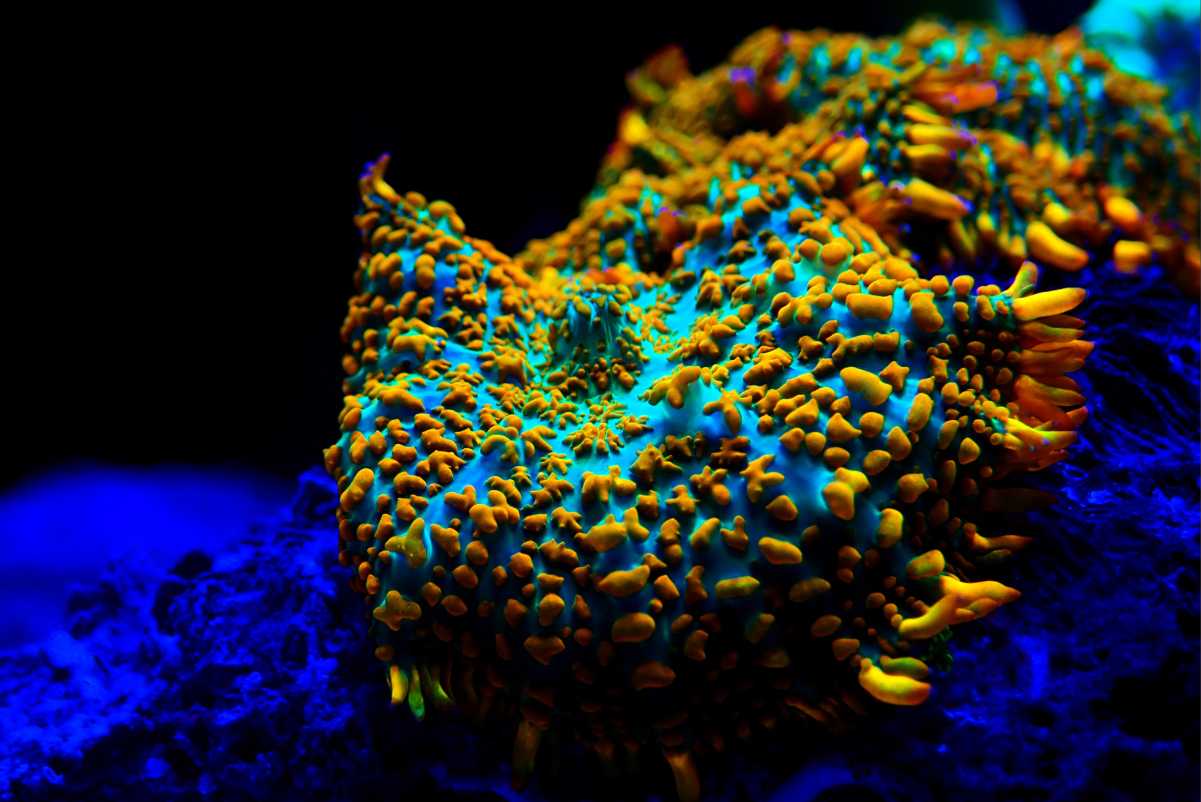
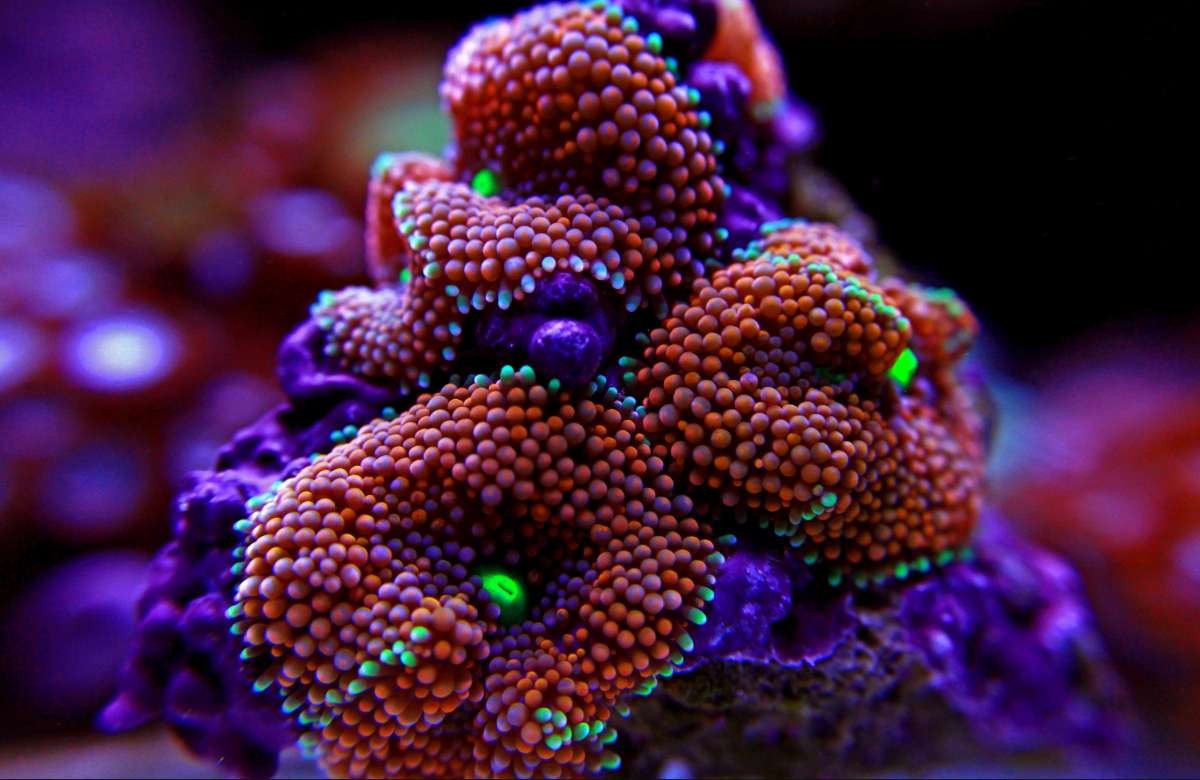
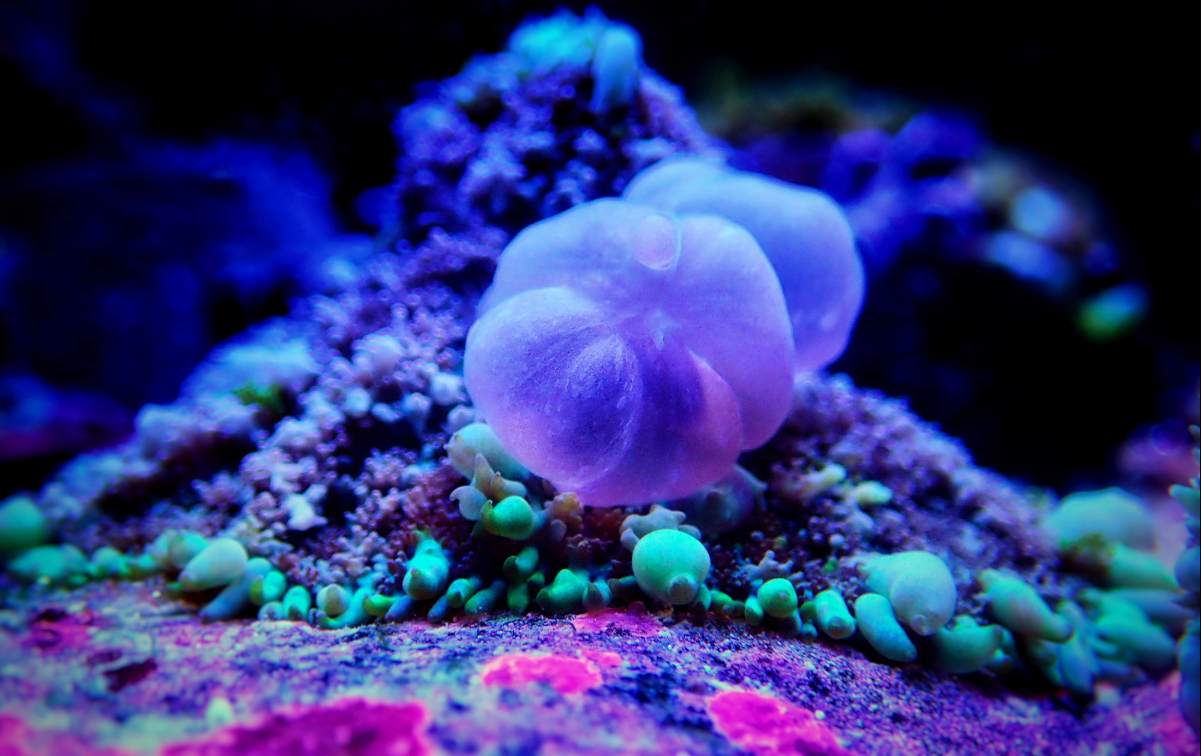
Bounce Mushroom (Rhodactis sp.) is a highly prized soft coral known for its distinctive enlarged vesicles that create a bubble-like appearance across the disc surface. Bounce Mushroom colonies display vibrant colors including orange, red, green, blue, and purple, with rare multicolor specimens commanding premium prices in the collector market. Bounce Mushroom thrives under low to moderate lighting between 50-150 PAR and gentle indirect water flow, making the species suitable for intermediate reef keepers who can maintain stable water conditions.
Bounce Mushroom corals are sensitive to environmental changes that can cause vesicle shrinkage, requiring consistent parameters and gradual acclimation to new tank conditions. The coral reproduces slowly through longitudinal fission and can take months or years before splitting, contributing to the high market value of established specimens.
Care Requirements
Quick overview for keeping your coral thriving
Difficulty
Intermediate
Lighting
Low
Water Flow
Low
Detailed Care Guide
In-depth information for optimal care
Difficulty Level
Intermediate
Bounce Mushroom corals are hardy once established but require stable water conditions to maintain their signature inflated vesicles. The coral tolerates a range of parameters but vesicles can shrink or deflate permanently when exposed to sudden lighting changes, excessive flow, or declining water quality.
Reef keepers should acclimate Bounce Mushroom specimens slowly over 2-4 weeks, starting with lower lighting and gradually increasing intensity while monitoring vesicle response.
Lighting Requirements
Low
Bounce Mushroom thrives under low to moderate lighting with PAR values between 50-150, with intense blue spectrum lighting (420-480nm) appearing to enhance vesicle development and coloration. Higher lighting intensity can cause vesicle shrinkage and bleaching, particularly in newly introduced specimens.
Reef keepers should position Bounce Mushroom in the lower to middle regions of the tank on flat rock surfaces or the sand bed, avoiding placement directly under intense LED fixtures without gradual acclimation.
Water Flow
Low
Bounce Mushroom corals require low to moderate indirect water flow that allows the disc to remain expanded without causing vesicle retraction. Direct or laminar flow causes the inflated bubbles to deflate and can prevent proper nutrient absorption.
Randomized or alternating flow patterns work best, providing gentle movement that prevents debris accumulation while avoiding constant directional pressure on the coral tissue.
Keep your Bounce Mushroom healthy
Save photos, placement, parameters, and what you paid — and see how your Bounce Mushroom changes over time.
Parameters
In range8.5 dKH
Alkalinity target 8–9 dKH · sample data
Your Bounce Mushroom
just added$150 paid
value from live market
Vesicle Development
Bounce Mushroom vesicles develop through a process that remains not fully understood by the reef keeping community, though aquarium conditions appear to trigger enlargement that rarely occurs in wild specimens. The characteristic inflated bubbles are modified pseudotentacles that expand under specific lighting and water chemistry conditions, with heavy blue spectrum LED lighting (420-480nm) consistently associated with enhanced vesicle development.
Bounce Mushroom specimens may arrive with minimal vesicle inflation and develop pronounced bounce characteristics over weeks to months as they acclimate to new tank conditions. Conversely, stressed specimens can lose their bounce appearance and revert to standard Rhodactis morphology, sometimes permanently. Reef keepers report that tanks with moderate nutrient levels and stable parameters support better vesicle maintenance than ultra-low nutrient systems.
Buying Advice
What to look for when purchasing
Vesicle Condition
Examine the inflated vesicles for full, firm bubbles that indicate healthy tissue and proper environmental conditions. Deflated, wrinkled, or absent vesicles suggest stress from shipping, lighting issues, or water quality problems that may persist after purchase.
Disc Expansion
Look for a fully expanded disc with visible texture and coloration across the entire surface. Retracted or curled edges indicate stress, while healthy specimens display their full disc diameter with vesicles evenly distributed.
Color Intensity
Assess color vibrancy under both white and blue lighting to verify the specimen matches advertised photos. Faded or brownish coloration can indicate zooxanthellae issues that may require extended recovery time under proper lighting.
Attachment Point
Verify the mushroom is firmly attached to substrate, frag plug, or rubble with no signs of tissue separation at the base. Detached or loosely attached specimens are more prone to damage during transport and may struggle to reattach in new environments.
Taxonomy
Species
Reef Value
Live pricing$1,860
+$120 this month
Priced from live marketplace listings
Bounce Mushroom
Just added · Frag rack
$150
Hammer Coral
8 months · Mid rock
$65
Zoa Colony
1 year · Sand bed
$40
Track Your Reef
Add your Bounce Mushroom to your tank's living inventory — placement, source, and photos as it grows — next to the parameter logs and maintenance history that keep it thriving. Reef Value even shows what your collection is worth, priced from live marketplace listings.
Find Your Perfect Bounce Mushroom
Compare prices from 14+ verified sellers. From budget-friendly frags to rare collector pieces.
Starting at
$25
Average Price
$150
Premium frags up to
$800
Full Price History
Trends, movers & market data
Frequently Asked
Common questions about Bounce Mushroom corals
Why are Bounce Mushrooms so expensive?
Bounce Mushroom corals command high prices due to their rarity and the unpredictable nature of vesicle development, with premium specimens selling for hundreds to thousands of dollars per polyp. The coral grows slowly and reproduces infrequently, with some specimens taking years to split, severely limiting supply while collector demand remains high.
Bounce Mushroom frags do not always retain the enlarged vesicle trait from the parent colony, meaning purchased offspring may never develop the characteristic bounce appearance. This genetic unpredictability combined with slow propagation rates keeps prices elevated compared to standard Rhodactis mushrooms.
What makes a Rhodactis mushroom bounce?
Bounce Mushroom develops its characteristic inflated vesicles in response to specific aquarium conditions, with intense blue spectrum lighting (420-480nm) appearing to be the primary trigger for vesicle enlargement. Standard Rhodactis specimens have been observed developing bounce characteristics after extended exposure to heavy blue LED lighting, though the exact mechanism remains unknown.
Bounce Mushroom specimens rarely display enlarged vesicles in wild reef environments, suggesting that modern aquarium lighting technology plays a significant role in the bounce phenomenon. Stable water parameters with moderate nutrient levels also appear to support vesicle development and maintenance.
What lighting do Bounce Mushrooms need?
Bounce Mushroom thrives under low to moderate lighting intensity with PAR values between 50-150, positioned in the lower to middle tank regions away from direct high-intensity light. Blue spectrum lighting in the 420-480nm range appears to enhance vesicle development and maintain the coral's vibrant fluorescent coloration.
Reef keepers should avoid placing Bounce Mushroom directly under intense LED fixtures, as excessive PAR causes vesicle shrinkage and potential bleaching. Gradual acclimation over 2-4 weeks allows the coral to adjust to new lighting conditions without losing the bounce characteristic.
Why is my Bounce Mushroom shrinking?
Bounce Mushroom vesicles shrink in response to environmental stress, with excessive lighting, strong water flow, and declining water quality being the most common causes. The coral may also temporarily close and shrink as normal daily behavior, particularly when lights first turn on or during nighttime hours.
Reef keepers experiencing persistent vesicle shrinkage should reduce lighting intensity, ensure flow is gentle and indirect, and verify water parameters are stable. Chemical treatments such as algae medications can cause Bounce Mushroom to shrink or lose vesicles permanently, and the coral may require months of stable conditions before recovering its bounce appearance.
Do Bounce Mushrooms need to be fed?
Bounce Mushroom obtains most nutrition through photosynthesis via symbiotic zooxanthellae but benefits from supplemental feeding for enhanced growth and coloration. The coral can absorb dissolved organic matter directly from the water column and will capture small food particles that drift across its disc surface.
Target feeding with phytoplankton, amino acids, or finely minced meaty foods once weekly can accelerate growth, though Bounce Mushroom thrives in tanks with moderate nutrient levels without direct feeding. Broadcast feeding during regular tank feedings provides sufficient supplemental nutrition for most established specimens.
Explore Related Corals
Popular corals you might also be interested in