
Anacropora Coral Care Guide
Anacropora corals are branching SPS corals within the Acroporidae family that offer an accessible entry point into stony coral keeping for reef aquarists not yet ready for demanding Acropora species. This care guide covers lighting, water flow, the key differences between Anacropora and Acropora, and why these hardy corals deserve more attention in the reef hobby.
About Anacropora
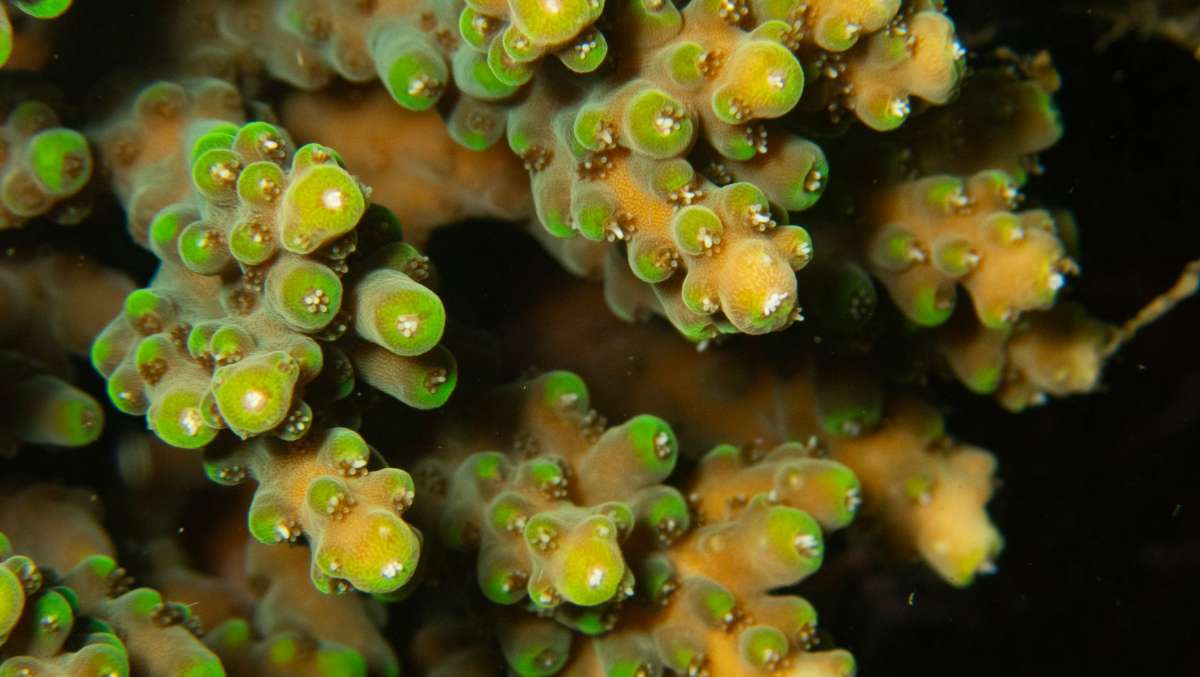
Anacropora corals (genus Anacropora) are small polyp stony corals within the family Acroporidae known for their thin, branching growth form and distinctive lack of axial corallites at branch tips that distinguishes them from closely related Acropora species. Anacropora corals display colors including green, cream, brown, and golden yellow, with branches typically measuring 3-15mm in diameter that grow in tangled, briar-like patterns as colonies mature. Anacropora corals thrive under moderate to high lighting in the 100-300 PAR range and adapt well to varying flow conditions, making these corals more forgiving than Acropora for reef keepers transitioning to SPS.
Anacropora corals tolerate higher nutrient levels and turbid water conditions better than most SPS species, reflecting their natural habitat on soft substrates in lagoon environments. Reef keepers should handle Anacropora carefully due to their thin, fragile skeletons that break more easily than Acropora during shipping and fragging, making aquacultured specimens the preferred choice for home aquariums.
Care Requirements
Quick overview for keeping your coral thriving
Difficulty
Intermediate
Lighting
Moderate to High
Water Flow
Moderate
Detailed Care Guide
In-depth information for optimal care
Difficulty Level
Intermediate
Anacropora corals rank among the easier SPS corals to maintain, sitting between beginner-friendly Montipora and demanding Acropora in terms of care requirements. Anacropora corals tolerate parameter fluctuations and elevated nutrient levels better than most stony corals, making them suitable for reef keepers with established tanks looking to expand into SPS without the precision required for Acropora.
Standard SPS water chemistry applies with alkalinity of 7.5-9 dKH, calcium of 400-450 ppm, and magnesium of 1250-1350 ppm, though Anacropora proves more forgiving of minor deviations than its Acropora relatives.
Lighting Requirements
Moderate to High
Anacropora corals thrive under moderate to high lighting in the 100-300 PAR range, with most specimens performing well around 150-200 PAR. Anacropora corals can be placed lower in the tank than Acropora while still maintaining good coloration and growth, making them versatile additions to mixed reef systems.
New Anacropora specimens should be acclimated starting at lower light levels around 100 PAR and gradually moved higher over 2-3 weeks to prevent bleaching from sudden intensity increases.
Water Flow
Moderate
Anacropora corals adapt to a wide range of flow conditions, from the gentle currents of their natural lagoon habitats to moderate turbulent flow in reef aquariums. Medium flow allows polyp extension and nutrient delivery while preventing detritus accumulation within the branching colony structure.
Reef keepers should monitor mature Anacropora colonies for interior die-off as the tangled briar-like growth pattern can restrict flow to inner branches, potentially requiring increased circulation or strategic fragging to maintain colony health throughout.
Keep your Anacropora healthy
Save photos, placement, parameters, and what you paid — and see how your Anacropora changes over time.
Parameters
In range8.5 dKH
Alkalinity target 8–9 dKH · sample data
Your Anacropora
just added$49 paid
value from live market
Anacropora vs Acropora Identification
Anacropora corals are frequently confused with Acropora due to their similar branching growth forms and shared family classification within Acroporidae, but reliable identification requires examining branch tips for the presence or absence of axial corallites. Acropora branches terminate in distinct axial corallites—enlarged polyp structures that drive rapid tip growth and often display different coloration than the rest of the colony. Anacropora branches lack these terminal polyps entirely, instead tapering to points with uniformly-sized radial corallites distributed along the entire branch length.
Additional identification features include branch diameter (Anacropora branches measure 3-15mm versus Acropora's often thicker branches), corallite spacing (Anacropora corallites sit further apart), and overall colony density (Anacropora develops tangled, briar-like growth versus Acropora's more organized branching patterns). When purchasing, requesting close-up photos of branch tips provides the most reliable method for confirming genus identification before committing to a specimen.
Fragile Skeleton Considerations
Anacropora corals possess thinner, more delicate skeletons than Acropora species, making them more prone to breakage during shipping, handling, and fragging operations. Wild-collected Anacropora specimens frequently arrive with broken branches and stress damage from transport, leading many experienced reef keepers to recommend aquacultured specimens from facilities like ORA that ship established, acclimated frags with intact structures.
Reef keepers fragging Anacropora should use sharp bone cutters or a Dremel tool to make clean cuts rather than snapping branches, which can cause crushing damage that introduces infection risk. Frag plugs or small rocks work well as mounting surfaces, though Anacropora rarely attaches firmly to its base—a natural characteristic rather than a health concern. The fragile nature that complicates shipping becomes an advantage for propagation, as even small broken pieces can develop into new colonies when provided stable conditions.
Buying Advice
What to look for when purchasing
Branch Integrity
Examine Anacropora specimens for intact branch tips and minimal breakage. The thin skeleton breaks easily during shipping, so some damage is common—avoid specimens with extensive fragmentation or crushed branch sections that may introduce bacterial infection.
Polyp Extension
Healthy Anacropora display small polyps extended along branch surfaces during daytime hours. Specimens with fully retracted polyps or visible tissue recession between corallites may be stressed or declining.
Aquacultured Preference
Aquacultured Anacropora from established coral farms ship better than wild-collected specimens due to pre-acclimation to aquarium conditions and more careful handling during propagation and packaging.
Color Verification
Anacropora colors can shift significantly under different lighting spectrums. Request photos under both white and blue lighting to understand the specimen's true coloration before purchase.
Taxonomy
Species
Reef Value
Live pricing$1,860
+$120 this month
Priced from live marketplace listings
Anacropora
Just added · Frag rack
$49
Hammer Coral
8 months · Mid rock
$65
Zoa Colony
1 year · Sand bed
$40
Track Your Reef
Add your Anacropora to your tank's living inventory — placement, source, and photos as it grows — next to the parameter logs and maintenance history that keep it thriving. Reef Value even shows what your collection is worth, priced from live marketplace listings.
Find Your Perfect Anacropora
Compare prices from 12+ verified sellers. From budget-friendly frags to rare collector pieces.
Starting at
$20
Average Price
$49
Premium frags up to
$400
Full Price History
Trends, movers & market data
Frequently Asked
Common questions about Anacropora corals
What is the difference between Anacropora and Acropora?
Anacropora corals lack the axial corallites (terminal polyps) at branch tips that define Acropora species, making branch tip examination the easiest identification method between these closely related genera. Acropora branches feature a distinct, often differently-colored growth tip where the axial corallite drives rapid extension, while Anacropora branches taper to points with uniformly-sized corallites throughout.
Anacropora corals also grow thinner branches (3-15mm diameter), tolerate higher nutrients, and prove generally hardier than Acropora, making them better suited for reef keepers not yet ready for the demanding care Acropora requires.
Is Anacropora good for beginners?
Anacropora corals rank among the best SPS options for beginners due to their tolerance for imperfect water conditions and adaptability across a range of lighting and flow parameters. Anacropora corals survive nutrient levels and parameter fluctuations that would stress or kill Acropora, providing a forgiving introduction to stony coral keeping.
Reef keepers transitioning from soft corals and LPS to SPS should consider Anacropora alongside Montipora, Pocillopora, and Seriatopora (Birdsnest) as starter species before attempting more demanding Acropora varieties.
How fast does Anacropora grow?
Anacropora corals display variable growth rates depending on species and conditions, with some aquarists reporting fast growth comparable to Birdsnest corals while others observe slower development than typical Acropora. Anacropora forbesi generally grows faster than other species in the genus, producing new branches readily once established in stable conditions.
The thin, fragile skeleton of Anacropora means visual colony size can increase quickly even when actual calcification rates remain moderate. Maintaining stable alkalinity, calcium, and magnesium levels supports consistent growth without the precise dosing demanded by faster-growing Acropora species.
Why is my Anacropora turning white?
Anacropora corals bleach and turn white primarily due to excessive lighting, rapid parameter changes, or elevated temperatures that cause zooxanthellae expulsion from coral tissue. Anacropora corals exposed to PAR levels significantly above 300 or sudden increases in light intensity will bleach from the tips downward as a stress response.
Reef keepers observing bleaching should immediately reduce lighting intensity, verify temperature stability between 76-80°F, and test alkalinity and calcium levels for abnormal readings. Anacropora can recover from partial bleaching if stressors are corrected promptly, though severely bleached specimens may not survive.
Can Anacropora touch other corals?
Anacropora corals possess limited aggressive capabilities compared to many SPS species and generally lose territorial battles against more aggressive corals like Acropora, Pocillopora, and most LPS species. Anacropora corals should be given adequate spacing of 2-3 inches from neighboring corals to prevent damage from more aggressive species extending sweeper tentacles or mesenterial filaments.
Reef keepers can safely allow multiple Anacropora colonies to grow together and even fuse, as intraspecific aggression is minimal, though different color morphs touching may result in one eventually overgrowing the other.
What is Briar Coral?
Briar Coral is the common name for Anacropora species, derived from the tangled, thorny growth pattern mature colonies develop that resembles a briar patch or bramble thicket. Anacropora forbesi most commonly receives this designation due to its chaotic branching structure where multiple branches fuse and interweave as the colony expands.
The "Briar Coral" name remains less commonly used than the scientific genus name Anacropora in the reef aquarium hobby, where most specimens are simply sold under their Latin designation regardless of species.
Explore Related Corals
Popular corals you might also be interested in
All SPS Corals
Browse the complete collection of SPS coral care guides