
Tortuosa Coral Care Guide
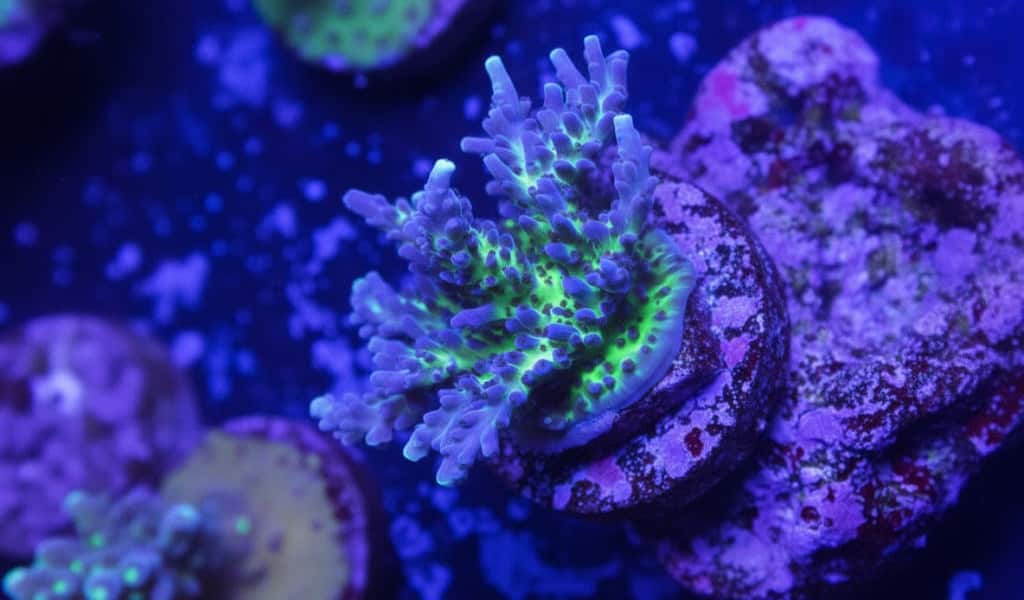
Acropora tortuosa is an advanced SPS coral prized for its deep blue coloration and distinctive twisted branch growth. This care guide covers lighting, water flow, placement, and morph selection to help experienced reef keepers maintain thriving Tortuosa colonies.
About Tortuosa
Acropora tortuosa (Dana, 1846) is a small polyp stony coral renowned for its striking blue and purple coloration and characteristic twisted, tapered branch structure with irregular tubular corallites. Acropora tortuosa displays colors ranging from deep navy blue to blue-green and purple depending on the cultivar, with popular aquarium strains including Oregon Tort (deep navy blue), Cali Tort (blue-green), and Miyagi Tort (purple-blue). Acropora tortuosa typically thrives under high-intensity lighting of 300-450 PAR and strong turbulent water flow, demanding the stable parameters and pristine water quality expected of advanced SPS corals.
Acropora tortuosa grows slower than many other Acropora species, with Oregon Tort particularly noted for gradual growth rates compared to the faster-growing Cali Tort strain. Acropora tortuosa colonies develop their deepest blue coloration under high lighting with proper alkalinity stability, rewarding patient reef keepers who provide established systems running at least one year with specimens considered among the most beautiful blue corals in the hobby.
Care Requirements
Quick overview for keeping your coral thriving
Difficulty
Advanced
Lighting
High
Water Flow
High
Detailed Care Guide
In-depth information for optimal care
Difficulty Level
Advanced
Acropora tortuosa ranks among the more demanding Acropora species, requiring pristine water quality with stable calcium (420-440 ppm), alkalinity (8-9.5 dKH), and magnesium (1260-1350 ppm) to maintain health and coloration. Acropora tortuosa responds negatively to parameter fluctuations, nutrient spikes, or inadequate flow, making the species unsuitable for newer reef systems or aquarists still developing stable husbandry practices.
Acropora tortuosa thrives in established aquariums running at least one year where parameters have stabilized and the reef keeper has demonstrated successful maintenance of other SPS corals. Despite demanding requirements, well-established Tortuosa colonies prove surprisingly hardy once acclimated, particularly the Oregon Tort strain known for resilience despite slow initial growth.
Lighting Requirements
High
Acropora tortuosa thrives under high-intensity lighting between 300-450 PAR for optimal growth and coloration, with some specimens tolerating 600+ PAR when provided stable alkalinity and adequate nutrition. Acropora tortuosa displays its deepest blue coloration under high PAR with a 14-20K color spectrum, while insufficient lighting causes color loss and reduced polyp extension.
Acropora tortuosa should be placed in the upper third of the aquarium where lighting intensity peaks, though newly acquired frags benefit from starting at moderate positions around 200-250 PAR before gradual acclimation upward over 3-4 weeks. Higher lighting intensity generally produces more vibrant blue coloration in established Oregon Tort and Cali Tort specimens.
Water Flow
High
Acropora tortuosa thrives with strong, turbulent water flow delivered indirectly to prevent tissue damage while ensuring adequate nutrient delivery and waste removal from the colony surface. Acropora tortuosa polyps retract when exposed to excessive direct flow or laminar currents, requiring randomized flow patterns from wavemakers or gyre pumps positioned to create chaotic water movement.
Acropora tortuosa benefits from high flow turnover with the colony positioned where currents converge indirectly, promoting clean growth and healthy tip development. Insufficient flow allows detritus accumulation that can trigger tissue necrosis in this sensitive species.
Keep your Tortuosa healthy
Save photos, placement, parameters, and what you paid — and see how your Tortuosa changes over time.
Parameters
In range8.5 dKH
Alkalinity target 8–9 dKH · sample data
Your Tortuosa
just added$60 paid
value from live market
Popular Tortuosa Morphs
Acropora tortuosa circulates in the reef aquarium hobby through several distinct cultivated strains, each displaying characteristic coloration and growth patterns developed through years of captive propagation. Oregon Tort remains the most sought-after morph, displaying deep navy blue coloration often described as appearing "painted on" with soft baby blue corallites contrasting against darker branch tissue.
Cali Tort represents the most prevalent Tortuosa strain, featuring brighter blue-green coloration with more elongated branch structures and faster growth rates that make it more forgiving for reef keepers new to demanding Acropora species. Miyagi Tort displays purple-blue coloration with distinctive spiral growth patterns, while various tricolor variations show combinations of blue, green, and purple pigmentation. Oregon Tort and Cali Tort originated from different geographic sources within the United States before spreading coast to coast through the coral trade network.
Buying Advice
What to look for when purchasing
Coloration Depth
Select Acropora tortuosa frags displaying deep, saturated coloration consistent with the strain—navy blue for Oregon Tort, blue-green for Cali Tort. Pale or washed-out specimens may indicate stress, inadequate lighting at source, or specimens unlikely to develop characteristic intense coloration.
Growth Tips
Examine branch tips for pale or white coloration indicating active growth, and verify polyp extension during store lighting hours. Healthy Tortuosa displays small polyps extended from corallites during daytime, while retracted polyps may indicate stress or inadequate flow at the source facility.
Tissue Coverage
Choose frags with complete tissue coverage and no exposed white skeleton at the base or along branches. Avoid specimens showing tissue recession, bleaching, or signs of RTN/STN, as Acropora tortuosa proves difficult to recover once tissue loss begins.
Encrusting Base
Tortuosa frags that have begun encrusting onto their mounting plug demonstrate successful acclimation to captive conditions and are more likely to thrive after transfer to a new system. Fresh cuts without encrusting require longer acclimation periods and carry higher risk during the establishment phase.
Taxonomy
Species
Reef Value
Live pricing$1,860
+$120 this month
Priced from live marketplace listings
Tortuosa
Just added · Frag rack
$60
Hammer Coral
8 months · Mid rock
$65
Zoa Colony
1 year · Sand bed
$40
Track Your Reef
Add your Tortuosa to your tank's living inventory — placement, source, and photos as it grows — next to the parameter logs and maintenance history that keep it thriving. Reef Value even shows what your collection is worth, priced from live marketplace listings.
Find Your Perfect Tortuosa
Compare prices from 9+ verified sellers. From budget-friendly frags to rare collector pieces.
Starting at
$30
Average Price
$60
Premium frags up to
$650
Full Price History
Trends, movers & market data
Frequently Asked
Common questions about Tortuosa corals
Is Acropora tortuosa hard to keep?
Acropora tortuosa ranks among the more demanding SPS corals, requiring stable water chemistry, high lighting, and strong flow that challenge even experienced reef keepers. Acropora tortuosa needs established aquariums running at least one year with proven parameter stability, as the species responds poorly to the fluctuations common in newer systems still cycling through maturation.
Acropora tortuosa rewards patient aquarists who provide optimal conditions with stunning blue coloration unavailable in easier coral species. Many reef keepers report that once established, Acropora tortuosa colonies prove surprisingly hardy despite their demanding initial requirements, particularly the Oregon Tort strain known for resilience.
What is the difference between Oregon Tort and Cali Tort?
Oregon Tort and Cali Tort represent two distinct cultivated strains of Acropora tortuosa with notable differences in coloration and growth rate. Oregon Tort displays deep navy blue coloration often described as the bluest Acropora available, while Cali Tort shows brighter blue-green coloration with more elongated branch structures.
Cali Tort grows considerably faster than Oregon Tort, making it more suitable for aquarists wanting quicker colony development, while Oregon Tort's slower growth produces denser, more compact branching patterns prized by collectors. Oregon Tort originated from Upscales pet store in Oregon, while Cali Tort spread throughout California before both strains became widely distributed across the hobby.
How fast does Acropora tortuosa grow?
Acropora tortuosa grows slower than many popular Acropora species, with growth rates varying significantly between cultivated strains. Oregon Tort grows particularly slowly during initial establishment, often showing minimal visible growth for several months before accelerating once colonies reach approximately three inches in size.
Cali Tort grows noticeably faster than Oregon Tort while still remaining slower than rapid-growing Acropora like tenuis or millepora. Acropora tortuosa growth requires stable alkalinity above 8 dKH, calcium at 420-440 ppm, and consistent high lighting, with impatient aquarists often achieving better results by selecting the faster-growing Cali Tort strain.
What PAR does Acropora tortuosa need?
Acropora tortuosa thrives under high PAR levels between 300-450 for optimal coloration and growth, with the species tolerating up to 600-800 PAR when provided stable alkalinity and adequate nutrition. Acropora tortuosa placement should target the upper regions of the aquarium where lighting intensity peaks, with most reef keepers finding success at 300-400 PAR.
Acropora tortuosa coloration responds dramatically to lighting intensity, with higher PAR producing deeper blue tones in Oregon Tort specimens and brighter blue-green in Cali Tort. New Tortuosa frags should begin at moderate PAR around 200-250 before gradual acclimation upward over several weeks to prevent bleaching stress.
Why is my Tortuosa losing color?
Acropora tortuosa loses color when lighting intensity drops below optimal levels, water parameters fluctuate, or nutrient levels rise above acceptable ranges for SPS corals. Acropora tortuosa color loss commonly occurs when specimens are placed too low in the aquarium where PAR falls below 250, as the species benefits from high lighting to maintain its characteristic blue and purple pigmentation.
Acropora tortuosa may also fade when alkalinity swings significantly or when nutrient levels become elevated. Reef keepers experiencing Tortuosa color loss should verify placement provides 300-400+ PAR and confirm stable alkalinity, calcium, and magnesium levels before considering other factors like flow or pest infestation.
Can beginners keep Acropora tortuosa?
Acropora tortuosa is not recommended for beginning reef keepers due to its demanding requirements for parameter stability, high lighting, and water quality that exceed typical beginner capabilities. Acropora tortuosa requires established aquariums with mature biological filtration and proven parameter stability, conditions rarely achieved in systems less than one year old or maintained by aquarists still learning fundamental husbandry.
Beginning SPS enthusiasts should develop experience with hardier species like Montipora, Stylophora, or Seriatopora before attempting Acropora tortuosa. Reef keepers who rush into demanding Acropora species without adequate system maturity or husbandry skills typically experience frustrating losses that could have been avoided with patient progression through easier corals first.
All SPS Corals
Browse the complete collection of SPS coral care guides