
Tenuis Coral Care Guide
Acropora tenuis is a highly sought-after SPS coral known for its stunning coloration and tabletop to bushy growth forms. This care guide covers lighting, water flow, placement, and husbandry tips to help reef keepers maintain healthy, colorful colonies.
About Tenuis
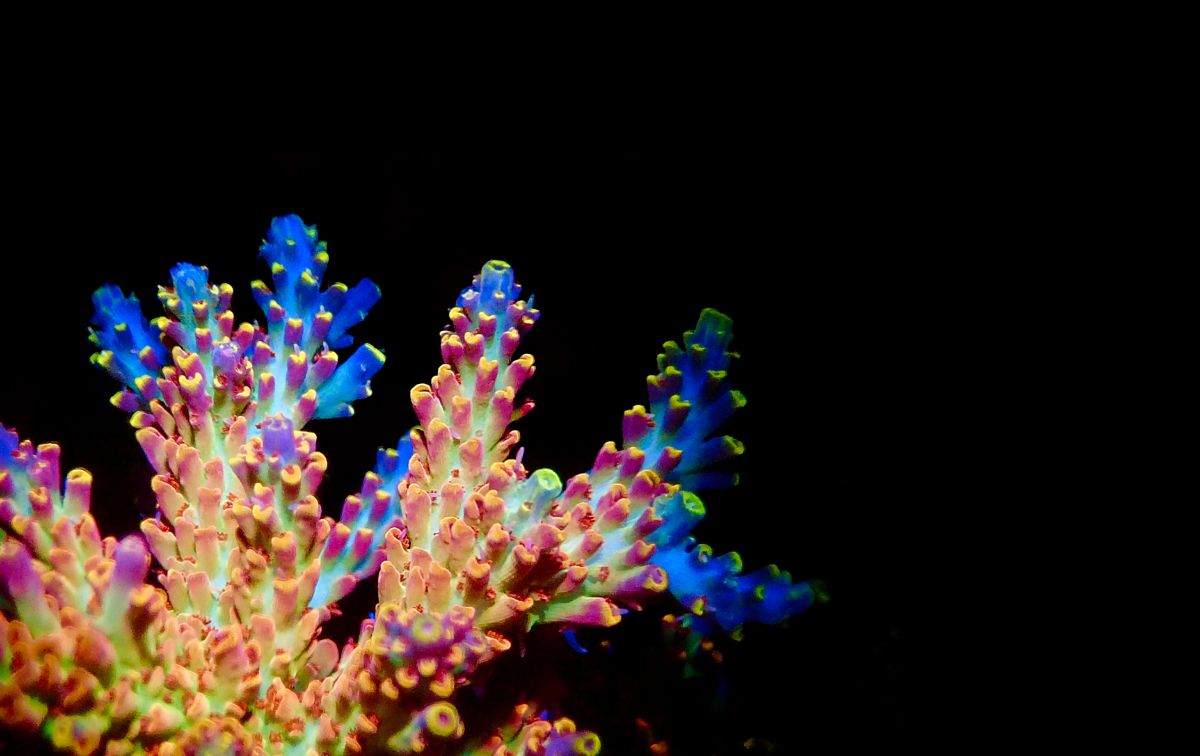
Acropora tenuis is a small polyp stony coral prized for its vibrant color morphs and elegant tabletop to bushy growth forms with thin, tightly-spaced branches. Acropora tenuis displays colors ranging from deep blues, purples, and greens to oranges and multicolor combinations, with branch tips often showing distinct purple or blue fluorescence under actinic lighting. Acropora tenuis typically thrives under high-intensity lighting of 300-400 PAR and strong turbulent indirect flow, making this species suitable only for advanced reef keepers with mature, stable aquariums at least one year old.
Acropora tenuis is sensitive to alkalinity fluctuations and responds poorly to elevated nutrients, with browning often occurring within weeks of parameter instability. Acropora tenuis colonies can reach impressive sizes over several years under optimal conditions, though this species remains highly susceptible to rapid tissue necrosis and Acropora-eating flatworms.
Care Requirements
Quick overview for keeping your coral thriving
Difficulty
Advanced
Lighting
High
Water Flow
High
Detailed Care Guide
In-depth information for optimal care
Difficulty Level
Advanced
Acropora tenuis is not recommended for beginning reef keepers or tanks less than one year old. Acropora tenuis responds very poorly to sweeping changes in water chemistry, and alkalinity fluctuations can cause persistent browning that takes months to recover even after parameters stabilize.
Acropora tenuis performs best with consistent calcium supplementation, low nutrient levels, and stable pH to maintain vibrant coloration. Many experienced hobbyists consider Acropora tenuis more challenging than other Acropora species due to its thin tissue and heightened sensitivity to parameter swings.
Lighting Requirements
High
Acropora tenuis thrives at 300-400 PAR, with placement in the upper half of the aquarium where lighting intensity is highest. When using LED fixtures, keeping PAR closer to 300-350 may help prevent bleaching compared to metal halide or T5 lighting at equivalent PAR readings.
Acropora tenuis collected from shallow water adapts more quickly to high aquarium lighting, while specimens from deeper collection sites should be placed lower initially and acclimated gradually over several weeks. Too little light causes Acropora tenuis to turn brown from zooxanthellae overgrowth, while excessive light causes bleaching and tissue lightening.
Water Flow
High
Acropora tenuis thrives with strong turbulent water movement with indirect flow patterns created by wave makers or gyres simulating natural reef conditions. Direct laminar flow pointed at Acropora tenuis can cause tissue damage, so powerheads should create randomized flow that moves polyps vigorously without constant direct current.
Acropora tenuis colonies reshape flow patterns as they grow, so reef keepers should audit flow regularly and consider adding circulation or pruning colonies to prevent inner branches from being choked off. High flow turnover rates are common in successful Acropora tenuis systems.
Keep your Tenuis healthy
Save photos, placement, parameters, and what you paid — and see how your Tenuis changes over time.
Parameters
In range8.5 dKH
Alkalinity target 8–9 dKH · sample data
Your Tenuis
just added$149 paid
value from live market
Acropora-Eating Flatworms
AEFW Detection and Treatment
Acropora tenuis is susceptible to Acropora-eating flatworms (Amakusaplana acroporae), microscopic parasites that feed on coral tissue and leave distinctive circular bite marks near branch bases. AEFW are extremely difficult to detect because their bodies mimic the exact color and texture of the host Acropora tenuis colony, often only becoming visible when the coral shows unexplained browning or pale patches.
Reef keepers can test for AEFW by placing Acropora tenuis in a white container with tank water and a few drops of Lugol's solution, then using a turkey baster to blast the coral after one minute. Flat oval disks dislodging from the coral indicate AEFW infestation requiring immediate treatment.
Acropora tenuis infested with AEFW should be dipped twice weekly for 6-8 weeks using products like Coral Rx, Revive, or Bayer insecticide diluted appropriately, as dipping kills adult flatworms but not eggs that hatch after 21 days. Adding Halichoeres wrasses or leopard wrasses provides ongoing biological control, as these fish actively hunt AEFW adults between dipping sessions.
Buying Advice
What to look for when purchasing
Coloration
Look for vibrant, intense coloration with clear, distinct colors. A. tenuis is available in amazing color morphs—blue, purple, green, orange, red, and multicolor variations. Healthy frags should show consistent coloration throughout. Pale or white growing tips are normal and indicate active growth.
Tissue Health
Choose frags with complete tissue coverage and no exposed white skeleton. Avoid pieces showing tissue recession, necrosis, or bare spots at the base. Healthy A. tenuis should have full, intact tissue extending to all branch tips.
Encrusting Base
If mounted on a plug or rock, check for signs of encrusting growth at the base. Encrusting indicates the coral has been established for some time and is actively growing. Fresh frags may not show significant encrusting yet, which is ok if tissue appears healthy.
Polyp Extension
While A. tenuis has small polyps typical of SPS, healthy colonies should show some polyp extension during the day, giving branches a fuzzy appearance. Good polyp extension is a sign of health and proper acclimation.
Taxonomy
Species
Reef Value
Live pricing$1,860
+$120 this month
Priced from live marketplace listings
Tenuis
Just added · Frag rack
$149
Hammer Coral
8 months · Mid rock
$65
Zoa Colony
1 year · Sand bed
$40
Track Your Reef
Add your Tenuis to your tank's living inventory — placement, source, and photos as it grows — next to the parameter logs and maintenance history that keep it thriving. Reef Value even shows what your collection is worth, priced from live marketplace listings.
Find Your Perfect Tenuis
Compare prices from 9+ verified sellers. From budget-friendly frags to rare collector pieces.
Starting at
$15
Average Price
$149
Premium frags up to
$1300
Full Price History
Trends, movers & market data
Frequently Asked
Common questions about Tenuis corals
What makes Acropora tenuis different from other Acropora species?
Acropora tenuis is distinguished by thin, tightly-spaced branches that grow in horizontal tabletop plates or compact bushy clusters, compared to the open branching patterns seen in species like Acropora millepora. Acropora tenuis corallites feature a distinctive small dip or point in the lip that helps differentiate this species from similar Acropora varieties.
Acropora tenuis is particularly prized for its exceptional color variety and strong fluorescence under actinic lighting, with morphs like Walt Disney, Doctor Manhattan, and Homewrecker commanding premium prices among collectors. Acropora tenuis colonies typically encrust at the base before developing upward branching structure.
How fast does Acropora tenuis grow?
Acropora tenuis exhibits faster growth than many Acropora species, with colonies capable of reaching 30 centimeters in diameter within 3-5 years under optimal conditions. Visible growth including new branch tips and expanding table structure can often be observed within weeks when Acropora tenuis receives stable parameters, 300-400 PAR lighting, and adequate calcium and alkalinity supplementation.
Acropora tenuis growth rates vary significantly based on lighting intensity, flow patterns, feeding regimen, and overall system stability. Higher alkalinity levels can accelerate Acropora tenuis skeletal growth but may reduce coloration intensity, so many hobbyists balance growth speed against color quality.
Why is my Acropora tenuis losing color or turning brown?
Acropora tenuis turns brown when zooxanthellae overpopulate the coral tissue, typically caused by insufficient lighting below 250 PAR, elevated nutrients with phosphate above 0.05 ppm or nitrate above 10 ppm, or stress from alkalinity fluctuations. Acropora tenuis responds poorly to parameter swings and may remain brown for months even after water chemistry stabilizes.
Acropora tenuis collected from deeper water or shaded environments may brown temporarily during acclimation to higher aquarium lighting levels. Reef keepers should gradually increase light intensity over 2-4 weeks and maintain phosphate between 0.03-0.05 ppm for optimal Acropora tenuis coloration recovery.
What PAR level does Acropora tenuis need?
Acropora tenuis thrives at 300-400 PAR, with most hobbyists reporting best coloration and growth in the 300-350 PAR range when using LED lighting. Acropora tenuis tolerates higher PAR levels of 400-500 under metal halide or T5 fixtures but may bleach at equivalent intensities under certain LED spectrums.
Acropora tenuis placement should be in the upper half of the aquarium where lighting intensity is highest. New Acropora tenuis frags should be acclimated starting at lower PAR around 180-200 and gradually moved higher over several weeks to prevent light shock and tissue damage.
Where should Acropora tenuis be placed in a reef tank?
Acropora tenuis should be mounted on exposed rock or ledges in the upper third of the aquarium where this species receives both high light intensity and strong indirect flow. Acropora tenuis placement requires adequate spacing from neighboring corals because Acropora species can become aggressive when other corals invade their territory.
Acropora tenuis grows best when attached directly to rockwork rather than remaining on frag plugs, as encrusting onto natural substrate promotes stronger attachment and healthier growth. Reef keepers should position Acropora tenuis where turbulent flow reaches all sides of the colony without direct laminar current pointed at the coral.
Is Acropora tenuis good for beginners?
Acropora tenuis is not recommended for beginning reef keepers and should only be attempted in mature aquariums at least one year old with proven stability. Acropora tenuis performs best with extremely consistent water parameters, specific high lighting and flow conditions, and responds poorly to the fluctuations common in newer reef systems.
Reef keepers new to Acropora should consider hardier species like Acropora nana, Bali Slimer, or tank-raised specimens before attempting Acropora tenuis. Aquacultured Acropora tenuis frags are generally more forgiving than wild-collected specimens and provide better success rates for intermediate hobbyists working toward advanced SPS keeping.
Explore Related Corals
Popular corals you might also be interested in
All SPS Corals
Browse the complete collection of SPS coral care guides