
Staghorn Coral Care Guide
Staghorn corals are branching Acropora species recognized by their distinctive antler-like growth pattern resembling deer antlers. This care guide covers lighting, water flow, placement, and husbandry tips to help reef keepers maintain healthy, fast-growing staghorn colonies.
About Staghorn
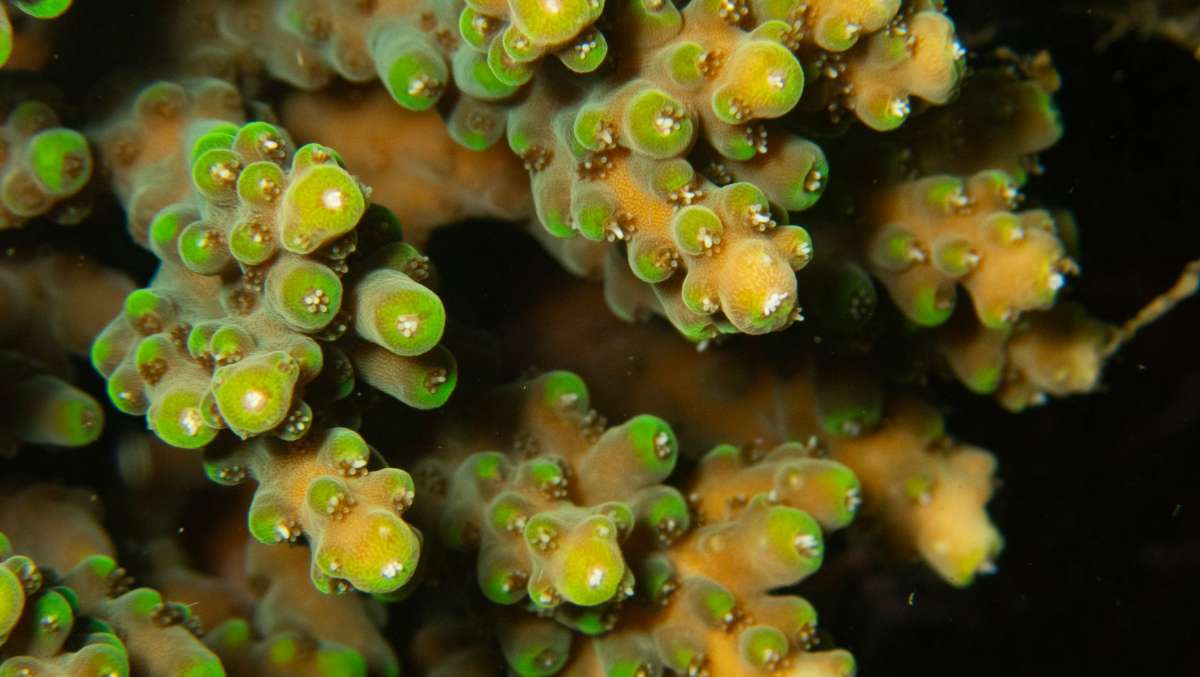
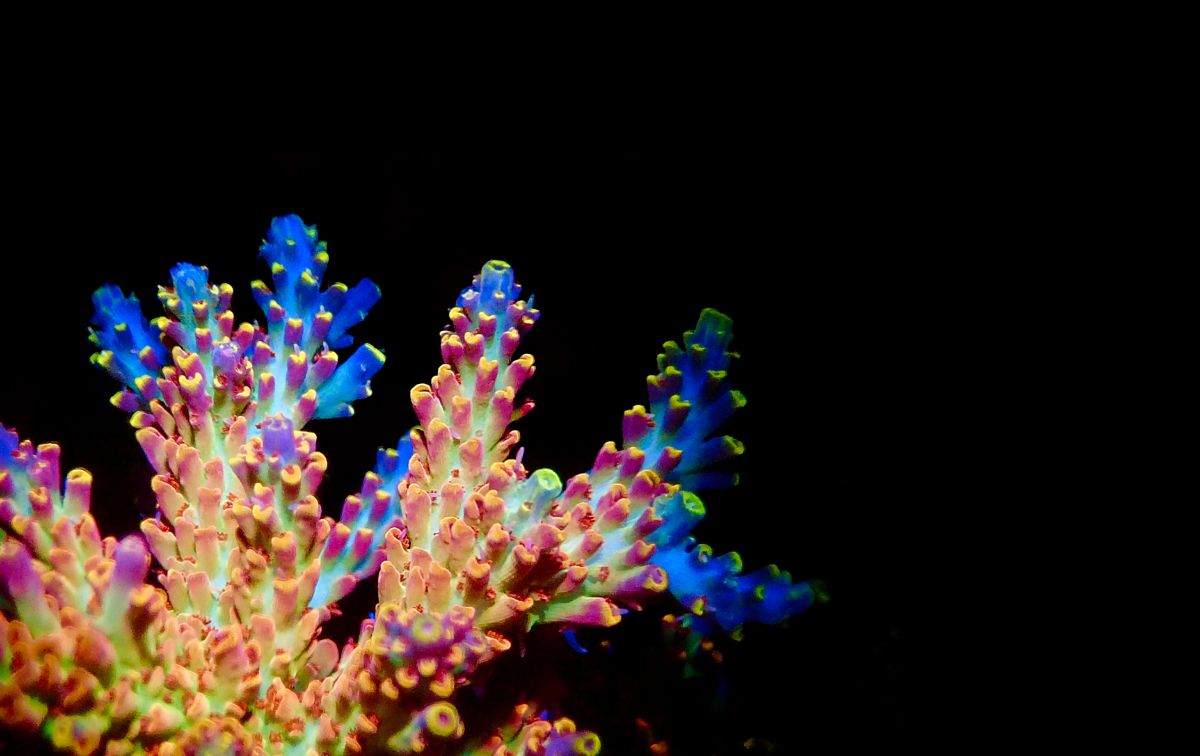
Staghorn coral refers to multiple Acropora species characterized by cylindrical branches that grow upward in antler-like formations, including Acropora cervicornis in the Caribbean and Acropora formosa, Acropora muricata, and Acropora yongei in the Indo-Pacific. Staghorn Acropora displays colors ranging from tan, brown, and green to blue, purple, and pink, with branch tips often showing contrasting coloration under actinic lighting. Staghorn coral typically thrives under high-intensity lighting of 300-450 PAR and strong turbulent indirect flow, making most staghorn species suitable for intermediate to advanced reef keepers with stable, mature aquariums.
Staghorn Acropora exhibits some of the fastest growth rates among reef corals under optimal conditions. Staghorn coral colonies are highly susceptible to rapid tissue necrosis, white band disease, and Acropora-eating flatworms, requiring pristine water quality and vigilant pest monitoring to maintain healthy specimens.
Care Requirements
Quick overview for keeping your coral thriving
Difficulty
Intermediate
Lighting
High
Water Flow
High
Detailed Care Guide
In-depth information for optimal care
Difficulty Level
Intermediate
Staghorn Acropora difficulty varies significantly by species, with thin-branching varieties like the Green Slimer (Acropora yongei) considered among the hardiest beginner Acropora, while smooth-skinned and deep-water collected staghorns require advanced husbandry skills. Staghorn coral benefits greatly from aquariums established at least one year with proven parameter stability.
Staghorn Acropora performs best with consistent calcium, alkalinity, and magnesium levels typical of SPS systems. Aquacultured staghorn frags from local hobbyists with documented captive growth history tend to be more forgiving of parameter variations than wild-collected specimens.
Lighting Requirements
High
Staghorn Acropora thrives at 300-450 PAR, with placement in the upper half of the aquarium where lighting intensity is highest. Staghorn coral can tolerate PAR levels up to 600-800 when alkalinity and nutrition are properly maintained, though most hobbyists report best coloration and growth in the 300-400 PAR range.
New staghorn Acropora frags should be acclimated starting at lower tank positions with 150-200 PAR and gradually moved higher over 2-4 weeks to prevent light shock and tissue bleaching. Staghorn coral collected from deep water or shaded environments requires particularly slow light acclimation compared to shallow-water specimens.
Water Flow
High
Staghorn Acropora thrives with strong random water flow that moves polyps vigorously without constant direct current pointed at the coral. Direct laminar flow causes tissue damage in staghorn coral, so powerheads and wave makers should create turbulent patterns simulating natural reef surge conditions.
Staghorn coral growth patterns respond directly to flow intensity, with lower flow producing thin elongated branches and higher flow encouraging thicker, more compact branching with natural tabling at colony tops. Reef keepers should audit flow as staghorn colonies grow because expanding branches reshape water movement and can choke off circulation to inner portions of large colonies.
Keep your Staghorn healthy
Save photos, placement, parameters, and what you paid — and see how your Staghorn changes over time.
Parameters
In range8.5 dKH
Alkalinity target 8–9 dKH · sample data
Your Staghorn
just added$54 paid
value from live market
Rapid Tissue Necrosis Prevention
RTN and STN in Staghorn Acropora
Staghorn Acropora is highly susceptible to rapid tissue necrosis (RTN) and slow tissue necrosis (STN), bacterial infections that cause tissue to slough off the skeleton within hours to days. RTN in staghorn coral typically begins as a white band of receding tissue that progresses quickly up branches, capable of destroying entire colonies within 24-48 hours if untreated.
Staghorn coral RTN triggers include significant alkalinity swings, temperature fluctuations, introduction of infected corals, and accumulated stress from shipping or parameter instability. Prevention through stable water chemistry, proper quarantine protocols, and avoiding overstocking provides the most effective defense against staghorn tissue necrosis.
Reef keepers observing early RTN in staghorn Acropora should immediately remove affected colonies, cut branches at least 1 centimeter below visible tissue damage using sterilized tools, dip in iodine-based coral solution, and isolate in a quarantine system. Fast action when tissue recession first appears can save portions of valuable staghorn colonies that would otherwise be lost completely.
Buying Advice
What to look for when purchasing
Branch Structure
Look for staghorn Acropora with well-defined cylindrical branches showing healthy upward growth and consistent diameter. Healthy staghorn frags display sturdy branch structure without thin weak sections or irregular swelling. Avoid specimens with kinked or twisted branches that may indicate stress or disease history.
Tissue Coverage
Choose staghorn Acropora frags with complete tissue coverage extending to all branch tips with no exposed white skeleton. Healthy staghorn coral shows consistent coloration throughout with no pale patches, brown spots, or tissue recession at the base. White growing tips are normal and indicate active skeletal extension.
Polyp Extension
Staghorn Acropora displays small polyps typical of SPS corals that extend during daytime feeding, giving branches a fuzzy appearance. Healthy staghorn shows visible polyp extension under proper lighting and flow conditions. Fully retracted polyps may indicate stress, pest infestation, or poor water quality at the vendor.
Pest Inspection
Inspect staghorn Acropora carefully for Acropora-eating flatworms, red bugs, and nudibranchs before purchase. Look for small circular bite marks, unusual color patches, or tiny moving specks on branch surfaces. All new staghorn coral should be quarantined and dipped multiple times before adding to display tanks.
Taxonomy
Species
Reef Value
Live pricing$1,860
+$120 this month
Priced from live marketplace listings
Staghorn
Just added · Frag rack
$53.5
Hammer Coral
8 months · Mid rock
$65
Zoa Colony
1 year · Sand bed
$40
Track Your Reef
Add your Staghorn to your tank's living inventory — placement, source, and photos as it grows — next to the parameter logs and maintenance history that keep it thriving. Reef Value even shows what your collection is worth, priced from live marketplace listings.
Find Your Perfect Staghorn
Compare prices from 3+ verified sellers. From budget-friendly frags to rare collector pieces.
Starting at
$24
Average Price
$53.5
Premium frags up to
$120
Full Price History
Trends, movers & market data
Frequently Asked
Common questions about Staghorn corals
What PAR level does Staghorn Acropora need?
Staghorn Acropora thrives at 300-450 PAR, with most hobbyists reporting optimal coloration and growth rates in the 300-400 PAR range using LED, T5, or metal halide lighting. Staghorn coral can tolerate higher PAR levels up to 600-800 when alkalinity remains stable and nutrition is adequate, though excessive light without proper supplementation causes bleaching.
Staghorn Acropora placement should be in the upper third of the aquarium where lighting intensity peaks. New staghorn frags require gradual light acclimation starting at 150-200 PAR and moving higher over several weeks to prevent tissue damage from sudden intensity changes.
How fast does Staghorn coral grow?
Staghorn Acropora is one of the fastest-growing coral species, capable of rapid branch extension under optimal aquarium conditions. Staghorn coral growth rates vary significantly by species and genotype, with scientific studies documenting fast-growing staghorn genotypes outpacing slow-growing varieties by up to ten times in identical conditions.
Staghorn Acropora exhibits enhanced growth vigor after fragging, with donor branches recovering within 3-6 weeks and subsequently growing faster than unfragged control branches. Lower flow and lower light produce elongated thin branches, while higher flow and light encourage compact thick branching with natural tabling.
Is Staghorn coral good for beginners?
Staghorn Acropora difficulty varies significantly by species, with thin-branching varieties like the Green Slimer (Acropora yongei) and Green Staghorn considered among the hardiest beginner-friendly Acropora corals. Most staghorn species require intermediate to advanced husbandry skills due to sensitivity to parameter fluctuations and susceptibility to rapid tissue necrosis.
Reef keepers new to Acropora should select aquacultured staghorn frags with documented captive growth history rather than wild-collected specimens. Staghorn coral benefits from tanks established at least one year with proven stability in calcium, alkalinity, and magnesium levels before attempting to keep even hardy varieties.
What species are called Staghorn coral?
Staghorn coral refers to multiple Acropora species sharing cylindrical antler-like branching patterns, including Acropora formosa (now reclassified as Acropora muricata), Acropora yongei (Green Slimer), and Acropora cervicornis (Caribbean Staghorn). Indo-Pacific staghorn species dominate the aquarium trade, while the Caribbean Acropora cervicornis is protected under the Endangered Species Act due to 97% population loss since the 1980s.
Staghorn Acropora identification in aquarium trade is often imprecise, with many specimens sold simply as "Staghorn Acropora" without species-level identification. Thin-branching staghorns are generally hardier than thick-branching or smooth-skinned varieties regardless of specific species designation.
How do you frag Staghorn Acropora?
Staghorn Acropora frags best when small branch tips of 2.5-3.5 centimeters are cut cleanly using sterilized bone cutters or coral scissors dipped in isopropyl alcohol. Staghorn coral recovers quickly from fragging, with donor branches resuming normal growth within 3-6 weeks and often growing faster than before fragmentation due to pruning vigor response.
Staghorn Acropora frags should be attached to frag plugs or rocks using reef-safe cyanoacrylate gel and placed in moderate flow areas during the 1-2 week healing period. Staghorn coral propagates readily through fragmentation, making this species popular for coral farming and reef restoration projects where single colonies can produce hundreds of viable fragments.
Why is my Staghorn coral turning white or losing tissue?
Staghorn Acropora tissue loss typically indicates rapid tissue necrosis (RTN), slow tissue necrosis (STN), or white band disease, conditions triggered by bacterial infection, parameter instability, or accumulated stress. Staghorn coral is highly susceptible to RTN that can destroy entire colonies within 24-48 hours, requiring immediate isolation and treatment when white tissue recession appears.
Staghorn Acropora showing early tissue recession should be removed from the display, dipped in iodine-based coral dip, and the affected area cut away with sterilized tools at least 1 centimeter below visible tissue damage. Prevention through stable alkalinity, low nutrients, and proper quarantine of new additions remains the most effective strategy for avoiding staghorn coral tissue necrosis.
Explore Related Corals
Popular corals you might also be interested in
All SPS Corals
Browse the complete collection of SPS coral care guides