
Montipora Coral Care Guide
Montipora corals are among the most beginner-friendly SPS corals available, offering diverse growth forms and vibrant coloration with more forgiving care requirements than Acropora. This care guide covers lighting, water flow, placement strategies for different growth forms, and critical pest prevention to help reef keepers successfully maintain healthy Montipora colonies.
About Montipora
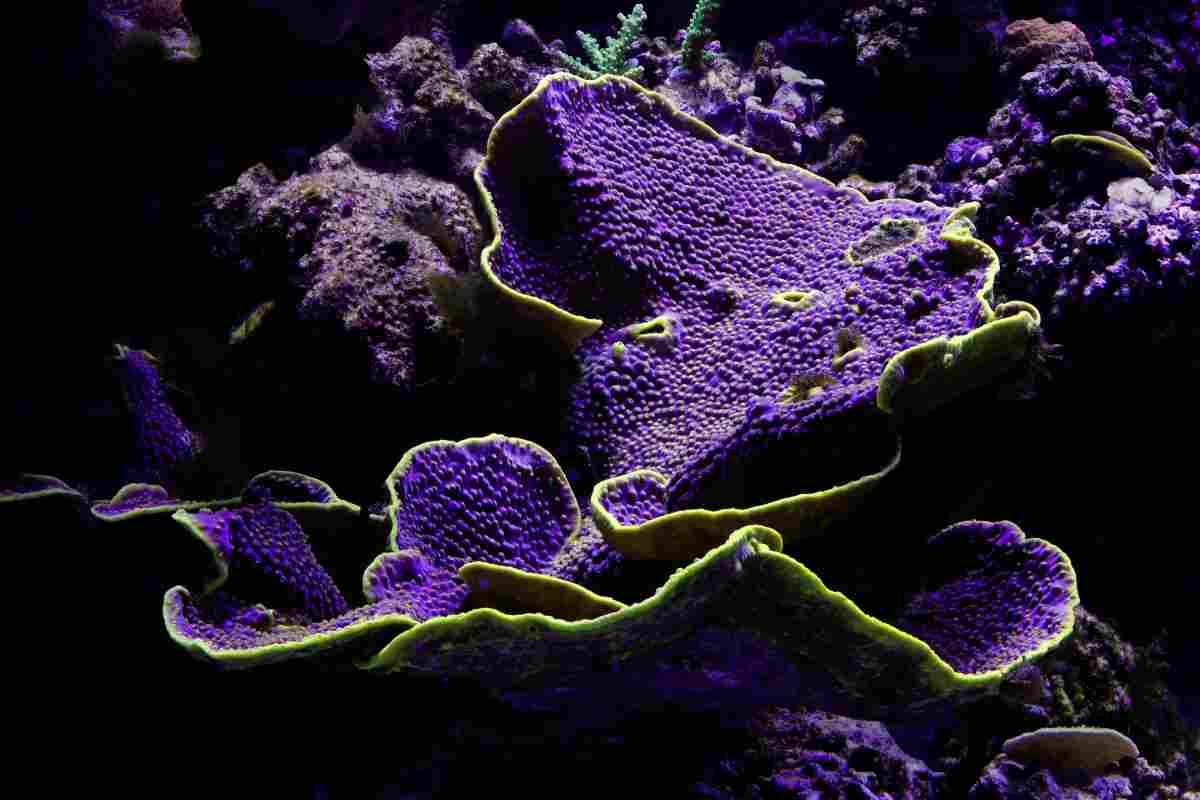
Montipora corals (genus Montipora) are small polyp stony corals within the family Acroporidae known for their diverse growth forms including plating, encrusting, and branching varieties that display vibrant fluorescent colors under actinic lighting. Montipora corals encompass over 80 species with popular varieties including Montipora capricornis (plating "Monti caps"), Montipora digitata (branching), and various encrusting species that spread across rockwork. Montipora corals require moderate to high lighting in the 150-300 PAR range and moderate to strong water flow, making these corals accessible to reef keepers with established tanks looking to transition into SPS keeping.
Montipora corals demonstrate significantly higher survival rates in home aquariums compared to Acropora, tolerating minor parameter fluctuations that would stress more demanding SPS species. Reef keepers should quarantine and dip all new Montipora specimens to prevent introduction of Montipora-eating nudibranchs, a devastating pest that can rapidly destroy entire colonies if left unchecked.
Care Requirements
Quick overview for keeping your coral thriving
Difficulty
Intermediate
Lighting
Moderate to High
Water Flow
Moderate to High
Detailed Care Guide
In-depth information for optimal care
Difficulty Level
Beginner to Intermediate
Montipora corals rank among the most forgiving SPS corals available, demonstrating significantly higher survival rates in home aquariums compared to Acropora and tolerating minor parameter fluctuations that would stress more demanding stony corals. Montipora corals should not be added to newly established tanks, as SPS corals require mature, stable systems with consistent water chemistry.
Standard SPS parameters apply with alkalinity of 7-9 dKH, calcium of 400-450 ppm, and magnesium of 1200-1400 ppm. Montipora digitata and Montipora capricornis are the most beginner-friendly species within the genus, offering fast growth and resilience to minor husbandry mistakes.
Lighting Requirements
Moderate to High
Montipora corals perform best under moderate to high lighting in the 150-300 PAR range, with plating and branching varieties tolerating the higher end while encrusting species thrive around 125-200 PAR in lower tank positions. Montipora corals can succeed at slightly lower PAR levels than Acropora, making them suitable for mid-tank placement in mixed reef systems.
Insufficient lighting causes Montipora to brown out and lose fluorescent coloration, while stable high-intensity illumination brings out vibrant greens, purples, reds, and rainbow patterns these corals are prized for. Blue-dominant spectrums enhance fluorescence under actinic viewing.
Water Flow
Moderate to High
Montipora corals thrive under moderate to strong water flow that prevents detritus accumulation on their surfaces and delivers nutrients to the small polyps distributed across the colony. Insufficient flow causes debris buildup that can lead to tissue recession, while excessive direct current may prevent polyp extension.
Plating varieties like Montipora capricornis benefit from flow that reaches both upper and lower surfaces, as shaded undersides are vulnerable to tissue loss without adequate water movement. Encrusting varieties spreading across vertical surfaces typically receive sufficient flow naturally.
Keep your Montipora healthy
Save photos, placement, parameters, and what you paid — and see how your Montipora changes over time.
Parameters
In range8.5 dKH
Alkalinity target 8–9 dKH · sample data
Your Montipora
just added$40 paid
value from live market
Growth Forms and Placement
Montipora corals exhibit three distinct growth forms that require different placement strategies within reef aquariums. Plating varieties like Montipora capricornis ("Monti caps") develop horizontal plate-like formations that grow outward in swirling patterns, requiring elevated placement in upper tank regions with space below for expansion and adequate light penetration to both surfaces. Branching Montipora digitata creates upright, finger-like colonies covered in fuzzy polyps that add vertical dimension to reef displays and performs best in upper tank positions with strong lighting around 200-300 PAR.
Encrusting Montipora species spread across rockwork surfaces rather than growing upward, making them excellent choices for covering bare rock in lower to mid-tank positions where lighting around 125-200 PAR supports healthy growth. Reef keepers can use encrusting varieties to create colorful foundations while reserving upper positions for plating and branching forms that provide structure and shading for corals below.
Montipora-Eating Nudibranch Prevention
Montipora-eating nudibranchs (Aeolidiella stephanieae) represent the most devastating pest affecting Montipora corals, capable of destroying entire colonies within weeks if introduced to reef aquariums without proper quarantine protocols. These tiny white nudibranchs measure only 1-8mm in length and blend seamlessly with coral tissue, feeding primarily at night and leaving characteristic white patches of bare skeleton as they consume tissue. Montipora-eating nudibranchs reproduce rapidly, with eggs hatching within days and juveniles reaching sexual maturity shortly after, allowing populations to explode when food is abundant.
Reef keepers must quarantine all new Montipora specimens for a minimum of two months with weekly coral dips using products like Coral Rx, Bayer insecticide solution, or iodine-based treatments to eliminate adults. Dips kill adult nudibranchs but not their eggs, requiring repeated treatments every 4-8 days to catch newly hatched individuals before they mature. Manual removal using turkey basters to blow adults off coral surfaces, combined with scraping or brushing away visible egg masses, supplements chemical treatment. Yellow wrasses (Halichoeres chrysus) may help control populations in quarantine systems but cannot be relied upon as sole treatment.
Buying Advice
What to look for when purchasing
Coloration
Choose Montipora frags with strong, vibrant coloration. Consistent color throughout the frag usually indicates good health and stable lighting conditions during grow-out.
Tissue Coverage
Look for full tissue coverage across the surface, with no bare skeleton, white patches, or signs of recession. Healthy frags should be firmly encrusting or plating onto their plug or rock.
Pest Inspection
Closely inspect for signs of pests, especially Montipora-eating nudibranchs. Avoid frags with bare spots as even small imperfections can signal a hidden issue.
Growth Edges
Active growth is often visible as lighter-colored margins or tips on encrusting and plating types — a great sign the coral is thriving and continuing to expand.
Taxonomy
Species
Reef Value
Live pricing$1,860
+$120 this month
Priced from live marketplace listings
Montipora
Just added · Frag rack
$40
Hammer Coral
8 months · Mid rock
$65
Zoa Colony
1 year · Sand bed
$40
Track Your Reef
Add your Montipora to your tank's living inventory — placement, source, and photos as it grows — next to the parameter logs and maintenance history that keep it thriving. Reef Value even shows what your collection is worth, priced from live marketplace listings.
Find Your Perfect Montipora
Compare prices from 25+ verified sellers. From budget-friendly frags to rare collector pieces.
Starting at
$5
Average Price
$40
Premium frags up to
$1300
Full Price History
Trends, movers & market data
Frequently Asked
Common questions about Montipora corals
Is Montipora good for beginner SPS keepers?
Montipora corals rank among the best SPS options for beginners due to their higher survival rates compared to Acropora and greater tolerance for minor parameter fluctuations in home aquariums. Montipora digitata and Montipora capricornis are the most beginner-friendly species, offering fast growth, vibrant colors, and resilience to small husbandry mistakes that would harm more demanding SPS.
Reef keepers should ensure their tank has matured for at least 3-6 months with stable parameters before adding Montipora, as all SPS corals require established systems with consistent alkalinity, calcium, and magnesium levels.
What lighting is best for Montipora?
Montipora corals thrive under moderate to high lighting in the 150-300 PAR range, with plating and branching varieties performing well toward the higher end while encrusting species succeed around 125-200 PAR in lower tank positions. Montipora corals tolerate slightly lower PAR than Acropora, allowing placement in mid-tank regions of mixed reef systems.
Insufficient lighting causes Montipora to brown out and lose the fluorescent coloration these corals are prized for, while stable high-intensity illumination with blue-dominant spectrums brings out vibrant greens, purples, reds, and rainbow patterns.
Can Montipora be placed near other corals?
Montipora corals are non-aggressive and lack the sweeper tentacles or strong chemical defenses found in many LPS species, making them generally safe to place near other peaceful corals. Montipora corals will lose territorial battles against more aggressive species like Acropora, torch corals, and most LPS, so adequate spacing from aggressive neighbors protects Montipora tissue from damage.
Fast-growing plating varieties like Montipora capricornis can shade or overgrow neighboring corals as they expand, so reef keepers should avoid placing Monti caps directly above light-demanding species and monitor growth to prevent accidental shading.
What are Montipora-eating nudibranchs?
Montipora-eating nudibranchs (Aeolidiella stephanieae) are tiny white pests measuring 1-8mm that feed exclusively on Montipora tissue, causing white patches, tissue recession, and rapid colony death if left unchecked. Montipora-eating nudibranchs are extremely difficult to detect due to their small size and coloration that mimics coral tissue, and they reproduce rapidly with eggs hatching in days and reaching sexual maturity shortly after.
Reef keepers should quarantine all new Montipora for at least two months and perform coral dips before adding specimens to display tanks. Treatment requires repeated dipping every 4-8 days combined with manual removal of adults and egg masses, as dips kill adults but not eggs.
Why is my Montipora turning brown?
Montipora corals turn brown primarily due to insufficient lighting that causes zooxanthellae density to increase at the expense of fluorescent pigments, resulting in dull, brownish coloration instead of vibrant greens, purples, or reds. Montipora corals receiving PAR levels below 100-125 will gradually lose their bright colors over weeks to months.
Reef keepers observing browning should gradually increase lighting intensity over 2-3 weeks to allow acclimation, verify the coral isn't being shaded by neighboring colonies, and ensure water quality supports proper zooxanthellae function. Elevated nutrients can also contribute to browning by promoting excessive zooxanthellae growth.
How fast does Montipora grow?
Montipora corals grow faster than most SPS species, with branching varieties like Montipora digitata expanding 3-4 inches annually under optimal conditions and plating Montipora capricornis growing 2-3 inches per year. Encrusting species spread more slowly at 1-2 inches annually but can eventually cover substantial rockwork areas.
Fast growth consumes alkalinity and calcium at accelerating rates as colonies expand, requiring reef keepers to monitor parameters more frequently and adjust dosing as Montipora colonies mature. The rapid growth that makes Montipora appealing also means colonies can outgrow their placement or shade neighboring corals faster than expected.
Explore Related Corals
Popular corals you might also be interested in
All SPS Corals
Browse the complete collection of SPS coral care guides