
Pocillopora Coral Care Guide
Pocillopora corals are beginner-friendly SPS corals known for fast growth and remarkable adaptability. This care guide covers lighting, water flow, placement, and management tips to help reef keepers successfully maintain these hardy branching corals.
About Pocillopora
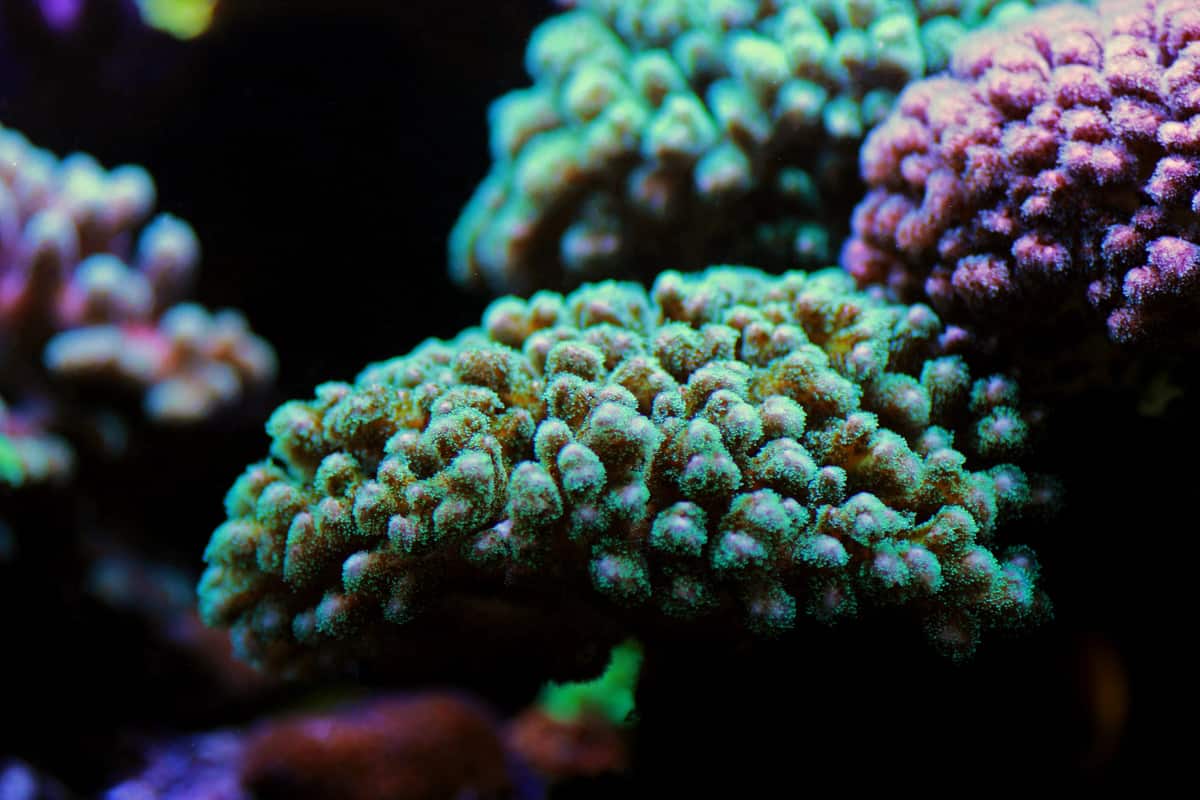
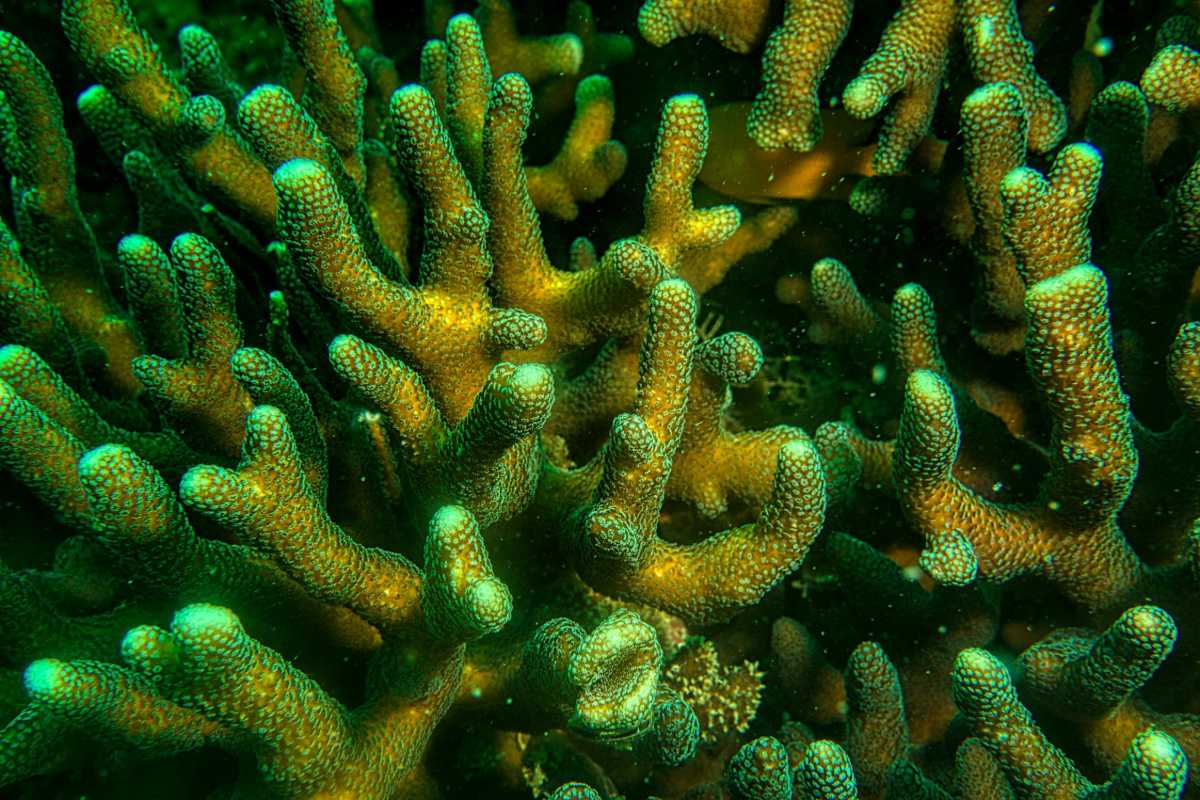
Pocillopora is a small polyp stony coral known for its compact, cauliflower-like branching structure covered in distinctive wart-like protuberances called verrucae. Pocillopora colonies display colors ranging from pink and purple to green and brown, with branches typically 1-2cm thick that form dense, hemispherical clusters up to 30cm in diameter.
Pocillopora typically thrives under moderate to high lighting of 150-300 PAR and strong, turbulent water flow, making it one of the most forgiving SPS corals for reef keepers transitioning from LPS. Pocillopora grows rapidly—up to one inch per month under optimal conditions—and readily adapts to various lighting intensities. Pocillopora exhibits a unique stress response called polyp bailout, where individual polyps detach and reattach elsewhere in the tank to form new colonies, which can lead to unintentional spreading throughout the aquarium.
Care Requirements
Quick overview for keeping your coral thriving
Difficulty
Beginner Friendly
Lighting
Moderate to High
Water Flow
Moderate to High
Detailed Care Guide
In-depth information for optimal care
Difficulty Level
Easy to Moderate
Pocillopora is considered one of the most beginner-friendly SPS corals, comparable to Montipora and Birdsnest in its forgiving nature. Pocillopora tolerates a wider range of lighting and flow conditions than most SPS species and adapts well to various tank environments.
The key to Pocillopora success is maintaining stable water parameters rather than hitting exact numbers. Pocillopora is sensitive to rapid swings in alkalinity, calcium, and temperature, but handles minor fluctuations better than demanding SPS like Acropora. Maintaining alkalinity at 8-9.5 dKH, calcium at 420-440 ppm, and magnesium at 1260-1350 ppm supports healthy skeletal growth.
Lighting Requirements
Moderate to High
Pocillopora adapts to a wide range of lighting intensities, thriving between 150-300 PAR for most varieties. Some demanding color morphs like rainbow or neon varieties perform better at 300-450 PAR, while standard pink and green specimens do well at lower ranges.
Pocillopora should be placed in the middle to upper tank where lighting is strongest. New specimens require gradual acclimation over 1-2 weeks to prevent bleaching—start in lower PAR areas and move upward as the coral adjusts. A 14-20K color spectrum enhances coloration in most Pocillopora varieties.
Water Flow
Moderate to High
Pocillopora thrives in strong, turbulent water movement that mimics its natural reef environment. High flow prevents detritus from settling on the branching structure and promotes nutrient delivery to the small polyps.
Reef keepers should position Pocillopora in areas with random, variable flow patterns rather than constant directional current. Insufficient flow leads to debris accumulation and potential tissue recession, while properly placed colonies display excellent polyp extension and accelerated growth.
Keep your Pocillopora healthy
Save photos, placement, parameters, and what you paid — and see how your Pocillopora changes over time.
Parameters
In range8.5 dKH
Alkalinity target 8–9 dKH · sample data
Your Pocillopora
just added$35 paid
value from live market
Polyp Bailout & Tank Spreading
Pocillopora exhibits a unique survival mechanism called polyp bailout, where individual polyps detach from the colonial skeleton and drift to new locations where they reattach and grow into independent colonies. This stress response allows Pocillopora to escape unfavorable conditions and represents one of the few effective asexual dispersal strategies in stony corals.
Polyp bailout triggers include heat stress, elevated salinity, low pH, and physical abrasion. In aquariums, this behavior can lead to Pocillopora colonies appearing in unexpected locations—on tank walls, in substrate, on equipment, and in crevices throughout the rockwork. Reef keepers who prefer controlled placement should regularly inspect their tanks for new settlements and remove unwanted colonies before they establish. Regular fragging of the main colony can reduce stress-induced bailout while providing frags for trading or growing out.
Buying Advice
What to look for when purchasing
Branch Structure
Healthy Pocillopora displays dense branching with intact tips and no broken or damaged sections. Avoid specimens with bare skeleton visible at branch ends or bases, which indicates recent stress or tissue recession.
Polyp Extension
Look for visible polyp extension during the day, though Pocillopora polyps are small and may be subtle. Specimens with fully retracted polyps or a "fuzzy" appearance rather than defined polyps may be stressed.
Coloration
Vibrant, saturated colors indicate healthy zooxanthellae populations. Pale or bleached appearance suggests light stress or transport shock, though color often recovers with proper acclimation. Brown coloring may indicate excessive zooxanthellae from low-light conditions.
Tissue Coverage
Inspect all branches for complete tissue coverage with no white skeleton showing. Even small areas of exposed skeleton can indicate RTN or STN that may spread after purchase.
Pest Inspection
Check branch bases and crevices for nudibranchs, flatworms, or copepod parasites that can damage SPS tissue. A preventative coral dip before adding to your display tank is recommended for all new Pocillopora specimens.
Taxonomy
Species
Reef Value
Live pricing$1,860
+$120 this month
Priced from live marketplace listings
Pocillopora
Just added · Frag rack
$35
Hammer Coral
8 months · Mid rock
$65
Zoa Colony
1 year · Sand bed
$40
Track Your Reef
Add your Pocillopora to your tank's living inventory — placement, source, and photos as it grows — next to the parameter logs and maintenance history that keep it thriving. Reef Value even shows what your collection is worth, priced from live marketplace listings.
Find Your Perfect Pocillopora
Compare prices from 8+ verified sellers. From budget-friendly frags to rare collector pieces.
Starting at
$19
Average Price
$35
Premium frags up to
$90
Full Price History
Trends, movers & market data
Frequently Asked
Common questions about Pocillopora corals
Is Pocillopora good for beginner SPS keepers?
Pocillopora is widely considered one of the best SPS corals for beginners due to its remarkable adaptability and forgiving nature. Pocillopora tolerates a wider range of lighting and flow conditions than demanding species like Acropora and recovers more readily from minor parameter fluctuations.
Pocillopora makes an excellent first SPS coral alongside Montipora and Birdsnest corals. Reef keepers transitioning from LPS to SPS should ensure their tank has stable alkalinity (8-9.5 dKH), adequate lighting (150+ PAR), and strong water flow before adding Pocillopora. Success with Pocillopora builds confidence and experience for keeping more sensitive SPS species.
How fast does Pocillopora grow?
Pocillopora is one of the fastest-growing SPS corals, capable of adding up to one inch of new growth per month under optimal conditions. Pocillopora forms compact, tree-like structures with dense branching that fills in quickly compared to slower-growing species like Acropora.
Growth rate depends heavily on stable water chemistry, adequate lighting (150-300 PAR), and strong water flow. Pocillopora colonies in well-maintained reef tanks can double in size within 6-12 months. Regular target feeding with micro-plankton or reef foods twice weekly can enhance growth and coloration, though Pocillopora obtains most nutrition through photosynthesis.
Why is my Pocillopora spreading everywhere?
Pocillopora spreads throughout aquariums through a process called polyp bailout, where stressed polyps detach from the skeleton, drift through the water column, and reattach to form new colonies in distant locations. This is a natural survival mechanism that allows Pocillopora to escape unfavorable conditions and colonize new areas.
Polyp bailout can be triggered by heat stress, sudden salinity changes, low pH, or physical disturbance. While some reef keepers appreciate the free propagation, others find uncontrolled spreading problematic. Managing Pocillopora spread requires regular tank inspections to remove unwanted settlements before they establish, maintaining stable parameters to reduce stress-induced bailout, and strategic placement away from areas where new colonies would be unwelcome.
What PAR level does Pocillopora need?
Pocillopora thrives at 150-300 PAR for most common varieties, though demanding color morphs like rainbow or neon Pocillopora perform better at 300-450 PAR. Standard pink, green, and purple Pocillopora varieties do well at the lower end of this range around 100-200 PAR.
Pocillopora adapts to various lighting intensities more readily than most SPS corals, making exact PAR less critical than stability. New specimens should be acclimated gradually over 1-2 weeks, starting in lower-light areas and moving upward to prevent bleaching. A color spectrum of 14-20K brings out the best coloration in most Pocillopora varieties.
Is Pocillopora aggressive toward other corals?
Pocillopora exhibits moderate aggression and can release a mucus-like substance to deter neighboring corals that encroach on its space. Pocillopora requires several inches of clearance from other species to prevent chemical warfare and allow room for its rapid branching growth.
Pocillopora placement should avoid proximity to aggressive LPS corals like Acanthastrea, Lobophyllia, and Galaxea, which have powerful sweeper tentacles. Chalice corals and some zoanthids may also conflict with Pocillopora through chemical competition. Other SPS corals typically coexist peacefully if given adequate spacing to prevent physical contact as colonies expand.
Why is my Pocillopora losing tissue?
Pocillopora tissue loss commonly results from rapid tissue necrosis (RTN), slow tissue necrosis (STN), or environmental stress. RTN appears as rapid flesh peeling that can kill a colony within days, while STN progresses more slowly over weeks with a visible line between living tissue and exposed skeleton.
Research associates RTN with Vibrio bacteria that become more abundant on stressed corals. Common stress triggers include unstable alkalinity, temperature swings above 80°F, excessive or insufficient lighting, and poor water flow allowing debris accumulation. Reef keepers should first verify stable parameters, then consider improving flow and reducing lighting if problems persist. Removing affected branches and coral dips may help contain STN before it spreads to healthy tissue.
Does Pocillopora need to be fed?
Pocillopora obtains most of its nutrition through photosynthesis from symbiotic zooxanthellae algae and does not require feeding to survive in a well-lit reef aquarium. Pocillopora has extremely small polyps that capture minimal food from the water column compared to larger-polyped corals.
Target feeding with micro-plankton, phytoplankton, or amino acid supplements twice weekly can enhance Pocillopora growth and coloration, though the difference is less dramatic than with LPS corals. Reef keepers who broadcast feed their tanks or maintain refugiums provide adequate supplemental nutrition for Pocillopora without specific target feeding.
Explore Related Corals
Popular corals you might also be interested in
All SPS Corals
Browse the complete collection of SPS coral care guides