The Basics
Acan Care at a Glance
- Keep Acans in low to moderate light. Roughly 50–150 PAR is a good starting range.
- Give them gentle to moderate, indirect flow. You want enough movement to keep debris from settling without constantly folding or pinning down the fleshy polyps.
- Leave room around neighboring corals. Acans can expand well beyond their skeleton and can sting what they touch.
- Prioritize stable water parameters. Keep salinity and alkalinity steady, avoid sudden swings, and don't drive nitrate or phosphate to zero.
Care Guide
Acan Lighting and PAR
Acans generally prefer low to moderate light, with roughly 50–150 PAR being a practical starting range. Corals sold as Acans don't all respond the same way, so if you don't know the coral's previous lighting, start on the dimmer side (50–80 PAR) and give it time to adjust before moving it into brighter locations. Watch for normal inflation, good color, and consistent extension before gradually increasing the light. Acans usually handle too little light better than a sudden jump into intense lighting.
Target
50–150 PAR
Acclimation start
50–80 PAR
Broader workable
30–200 PAR
Care Guide
Flow and Placement for Acan Corals
Acans prefer gentle to moderate, indirect flow. Aim a pump past the coral or bounce the current off glass or rock rather than pointing a pump directly at the colony. Random or changing movement is better than water pushing from the same direction all day. Tank wide flow numbers and pump settings don't tell you exactly what reaches the coral, so watch the tissue instead. Adjust the pump or move the coral until its fleshy polyps sway gently without being flattened, folded over, or constantly pushed to one side.
Watch the coral: You want the expanded tissue swaying softly and irregularly while loose debris gets carried away. If it's pinned to one side, sharply folded, or can't inflate, it's getting too much flow.
Choose the Acan's location based on the light and flow it actually receives, not tank height and equipment settings. Lower rockwork or a slightly raised, clean spot on the sand bed often works well, as long as detritus can't collect around the coral and it's not directly under the most intense part of your light. Give the coral enough open space to expand and extend feeding or sweeper tentacles at night.
Care Guide
Acan Water Parameters
These are practical targets for your tank. A steady reading you can trust often beats chasing a perfect number.
38sources compared63published ranges Why these recommendations
Each range is compiled from multiple sources to analyze common recommendations. Click 'View sources' on any parameter to review which sources are referenced.
Sources used
- Aqua Group UK
- Aquaforest
- Aquaforest
- Aquarium ReefSolution
- Boodleshire Aquatics
- Brightwell Aquatics
- Brightwell Aquatics
- Bulk Reef Supply
- Bulk Reef Supply
- Bulk Reef Supply
- Coralaxy
- Corals Depot
- CoralVault
- Extreme Corals
- Eye Catching Coral
- Fauna Marin
- Fauna Marin
- Fritz Aquatics
- Fritz Aquatics
- Fritz Aquatics
- Hanna Instruments
- K&P Aquaculture
- Live Corals Reef
- LiveAquaria
- Pacific East Aquaculture
- Quality Marine
- Red Sea
- Reef Chasers
- Reef Stable
- Reefco Aquariums
- Reefest
- Seachem
- Seachem
- Top Shelf Aquatics
- Tropic Marin
- Tropic Marin
- Whitlyn Aquatics
- World Wide Corals
Temperature
76–80 °FCorals do best with stable temperatures, as sudden changes are more likely to cause stress.
Salinity
1.025–1.026 sgAim for natural seawater, around 35 ppt. Keep salinity steady with a reliable top-off, since evaporation slowly raises it over time.
pH
8.1–8.4 pHA small daily swing is normal. Better gas exchange does more for pH than chasing it with additives.
Alkalinity
8–9 dKHAlkalinity helps keep pH stable and supports skeletal growth in stony corals. How quickly it’s used depends on the amount and growth rate of calcifying organisms in the tank.
Calcium
400–450 ppmCalcium supports skeletal growth in stony corals and other calcifying reef organisms. Demand varies with the type, size, and growth rate of corals in the tank.
Magnesium
1250–1400 ppmMagnesium helps maintain stable calcium and alkalinity levels and supports normal coral growth and reef chemistry.
Nitrate
5–15 ppmTreat this as a practical starting range, not a species optimum. Don't drive nitrate to zero, and change export or feeding gradually while you watch color and tissue.
Phosphate
0.03–0.1 ppmKeep phosphate measurable and steady — Acans do better with a little in the water than with none. If a reading comes in high, bring it down gradually instead of reaching for fresh filter media or heavy dosing all at once.
High confidenceModerate confidenceLimited evidence or sources reviewedReflects how consistently the reviewed sources agree on each range.
Keep your Acan healthy
Save photos, placement, parameters, and what you paid — and see how your Acan changes over time.
Parameters
In range8.5 dKH
Alkalinity target 8–9 dKH · sample data
Your Acan
just added$55 paid
value from live market
Care Guide
Acan Feeding and Growth
Wait until you see feeder tentacles out, often after the lights dim, then set a small piece of food on the responsive polyps with a pipette. Cut the local flow briefly if you need to and turn it back on once the food is captured. If a polyp doesn't respond, take the food back out instead of adding more. You don't have to feed at night forever — Acans adapt to a daytime routine if you feed at a consistent time.
- Frequency
- Optional, 1–3 times weekly
- Growth
- slow to moderate
Acans grow at a slow to moderate pace. Look for tissue creeping over the cut skeleton and new polyps budding along the colony's edges. How fast that happens depends on the species, light, feeding, and chemistry, so compare dated photos instead of expecting a set number of new polyps each month. Meta Reef's free tank tracker keeps a photo history for each coral, which makes those comparisons easy.
Large or frequent portions tend to sit on the tissue, draw in fish and invertebrates that tear at the polyps, and raise your nutrients.
Care Guide
Acan Aggression and Spacing
Acanthastrea can damage nearby corals two ways: nighttime sweeper tentacles and direct digestive-tissue contact. Acanthastrea echinata sits at the aggressive end of the corals sold as Acans, and even a small frag can defend more space than you'd expect once it settles in. Reach varies colony to colony and follows your flow — sweepers tend to find whatever sits downstream.
Begin with 4–6 inches. Treat that as your starting point, and check the coral with a dim flashlight in the evening after your lights have been off for a few hours. If it's reaching farther than that, give it more room.
Don't assume two corals are safe to touch just because both were sold as Acans. Unrelated colonies, Micromussa, Homophyllia, and other fleshy LPS can all damage one another on contact — and when an echinata reaches a Micromussa lord, expect the lord to take the damage.
Care Guide
Acclimating a New Acan
When you know how the coral was kept before, match those conditions as closely as you can. After that, change only one major variable at a time, so if it gets stressed you know why.
Float the sealed bag in your tank or sump for 15–30 minutes to match temperature, then gradually mix in tank water — and keep the shipping water out of your system.
Inspect the frag under white light before it goes anywhere near your rocks. Healthy tissue looks inflated and fleshy with no exposed or receding skeleton at the edges. Handle it by the plug or skeleton, not the tissue, and keep it underwater as much as possible.
Dip it in a coral dip following the label directions, then rinse it in clean saltwater before it enters the tank. Dips knock down flatworms and other hitchhikers but don't catch everything, so a 2–3 week quarantine is better if you have a tank set up for that.
Place it low in the tank — not directly under the brightest part of your light — in gentle, indirect flow, and secure the frag so it can't fall. Around 50–80 PAR is a good starting spot, clear of neighboring sweepers.
Give it a week or two to adjust before moving it. Look for daytime inflation, a feeding response after dark, and healthy tissue at the margins before raising the light. Some sulking after a move is normal for a fleshy LPS.
Health
Troubleshooting Acan Corals
Acan not opening or staying closed
Act soonLikely causes
- recent shipping or placement stress
- direct or excessive flow
- abrupt light increase
- unstable salinity or alkalinity
- fish or pest irritation
What to do
- Check whether the retraction lines up with the light schedule or pump cycle, then think back to what changed recently — a move to a brighter spot, new light settings, or a swing in salinity, temperature, or alkalinity.
- Redirect any direct flow, and check after dark for neighboring sweepers, a feeding response, vermetid mucus, or animals touching the tissue.
Isolate it promptly if closed tissue comes with a spreading line of exposed skeleton, brown material, odor, or damage reaching adjacent polyps.
Acan losing color or bleaching
Act soonLikely causes
- too much light or acclimation that was too fast
- nutrients driven near zero
- recent temperature or salinity stress
What to do
- Think back to when the color change started relative to any lighting changes; if the color loss is worst on the top-facing tissue, it's getting too much light — turn the light down 25–40% or reduce the amount of time your lights are on, rather than moving an already stressed coral.
- Test nitrate and phosphate and look at their trend before feeding heavier; if something reads zero, bring it up gradually instead of dosing straight to the target. Fix any temperature or salinity drift the same way — gradually, over days.
- A bleached coral is living off food while its color rebuilds, so target feed small portions after dark a couple of times a week and hold everything steady. Expect recovery to take 4–8 weeks, and raise the light back in small steps only after the color returns.
Debris collecting on your Acan
MonitorLikely causes
- insufficient or poorly directed flow
- placement in a sand or detritus trap
What to do
- Gently puff loose debris off with a turkey baster, then adjust your indirect flow until particles stop settling on the colony.
- Raise the frag slightly above the surrounding sand or depression, without putting it in a direct pump jet.
Acan tissue receding from the skeleton
Act nowLikely causes
- chemistry instability
- abrasion or sting damage
- persistent debris
- pest irritation
- possible infection
What to do
- Photograph and mark the recession edge, test salinity, temperature, and alkalinity, and inspect the whole colony and plug under white light.
- Check for a physical cause: look after dark for a neighbor's tentacles reaching the colony, make sure the tissue isn't rubbing on rock, and think back to any recent handling or a rough move. Fix what you find and keep the water steady — the edge can heal on its own. If it's still creeping at your next check, move the coral to a quarantine or frag tank where you can keep an eye on it.
- If you see brown jelly-like material or the tissue loss is fast, treat it as an infection: use an iodine-based coral dip following the label directions and gently baste away the dying material. In extreme cases, cutting back to healthy tissue gives the rest of the colony its best chance.
If tissue loss is visibly spreading, multiple corals are affected, or you see discolored material, ask an experienced local fish store or an established online reefkeeping community for help. Bring clear white-light photos and your recent water-test results.
ID & Buying
Acan Identification
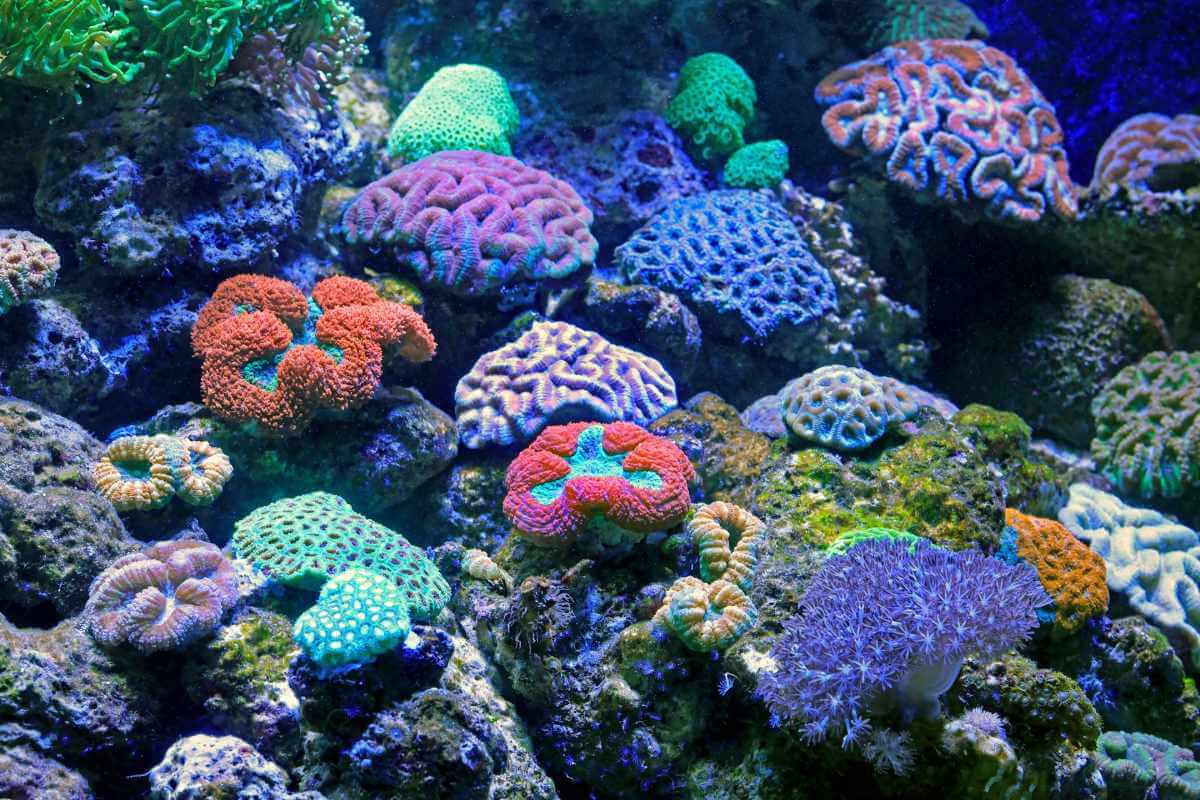
When identifying a coral labeled "Acan," the first thing to know is that the name can refer to several different corals. Years ago, both Acan Lords and bowerbanki were classified in the Acanthastrea genus. Taxonomy has changed since then and Acan Lords are now Micromussa lordhowensis, while bowerbanki is now Homophyllia bowerbanki. The old names stuck around in the hobby, but once you know what to look for, these corals get easier to tell apart.
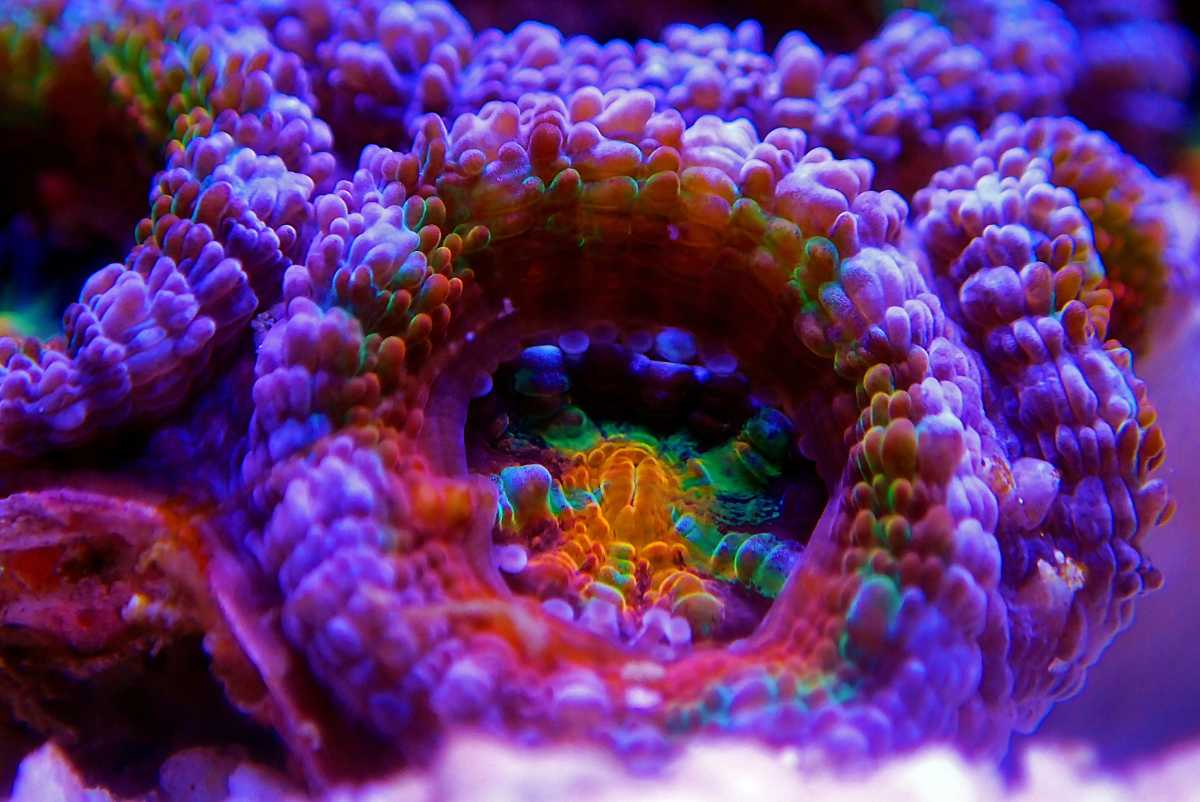
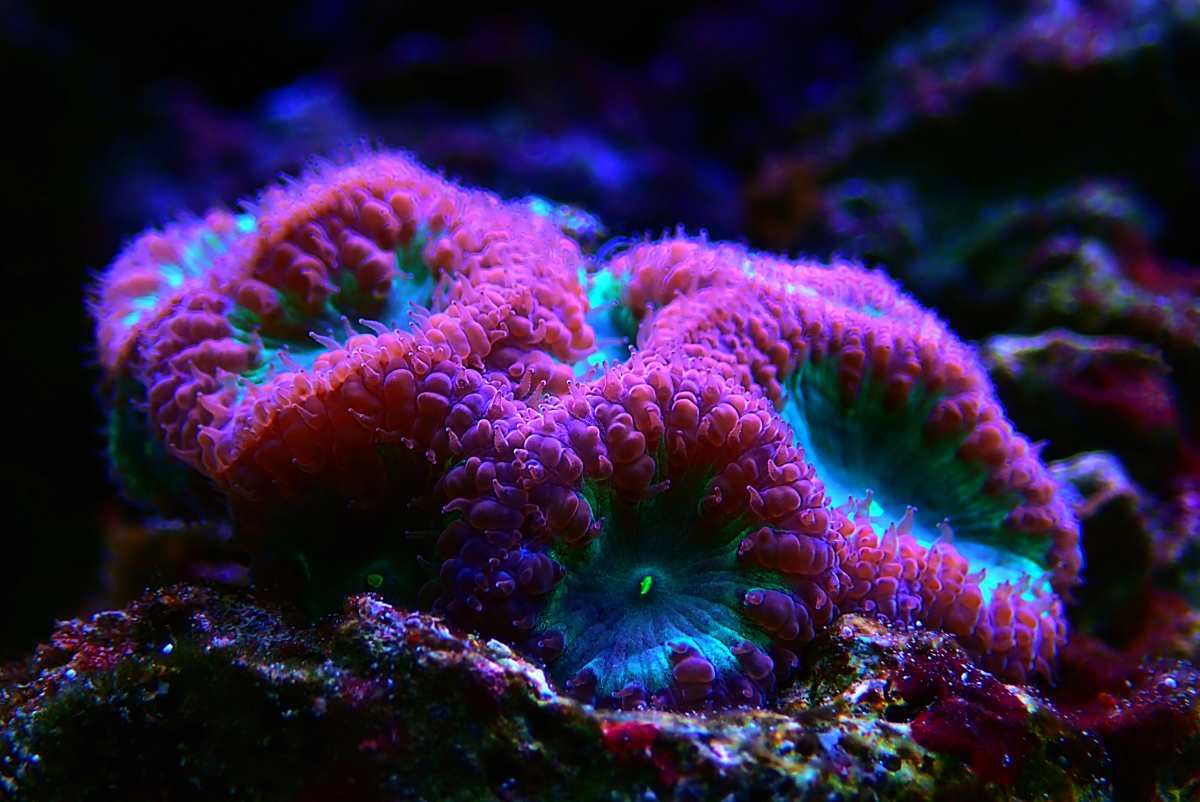
Micromussa lordhowensis, still commonly sold as an Acan Lord, usually looks like a cluster of plump, round polyps. Each mouth and fleshy rim is fairly easy to pick out. Homophyllia bowerbanki tends to have larger, less uniform corallites that can look stretched or irregular rather than neatly round. Blastomussa can look surprisingly similar when fully inflated, but its polyps grow from more distinct skeletal cups or branches instead of forming the same tightly packed colony.
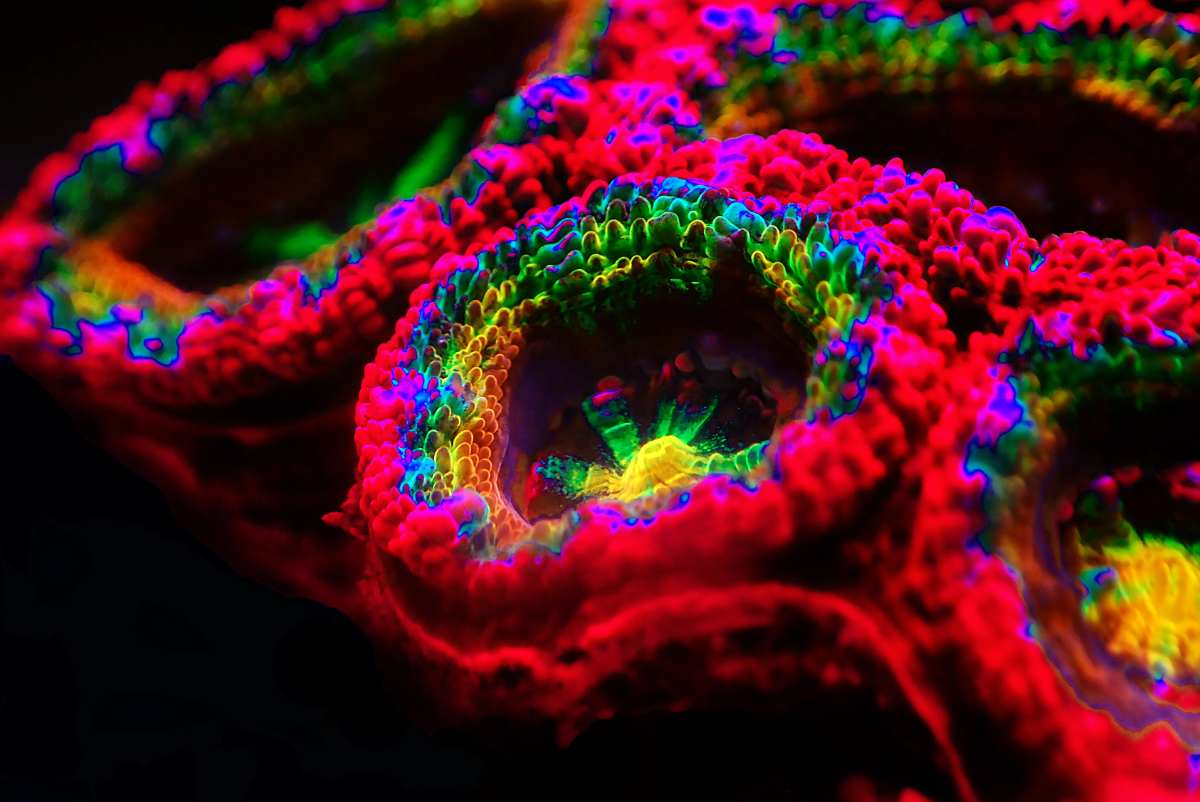
Acanthastrea species, particularly Acanthastrea echinata, have a different look. It typically grows across the rock as an encrusting colony or low mound, with tightly packed corallites, thick walls, and a rougher honeycomb appearance. When the tissue retracts, you may see concentric folds around the mouths and the prominent skeletal teeth characteristic of echinata.
If you're still unsure, don't put too much weight on the seller's label or the coral's color. Look at its growth pattern and, whenever possible, the skeleton beneath the flesh. A white light photo while the coral is open and another when it's partially retracted can make the differences much easier to see.
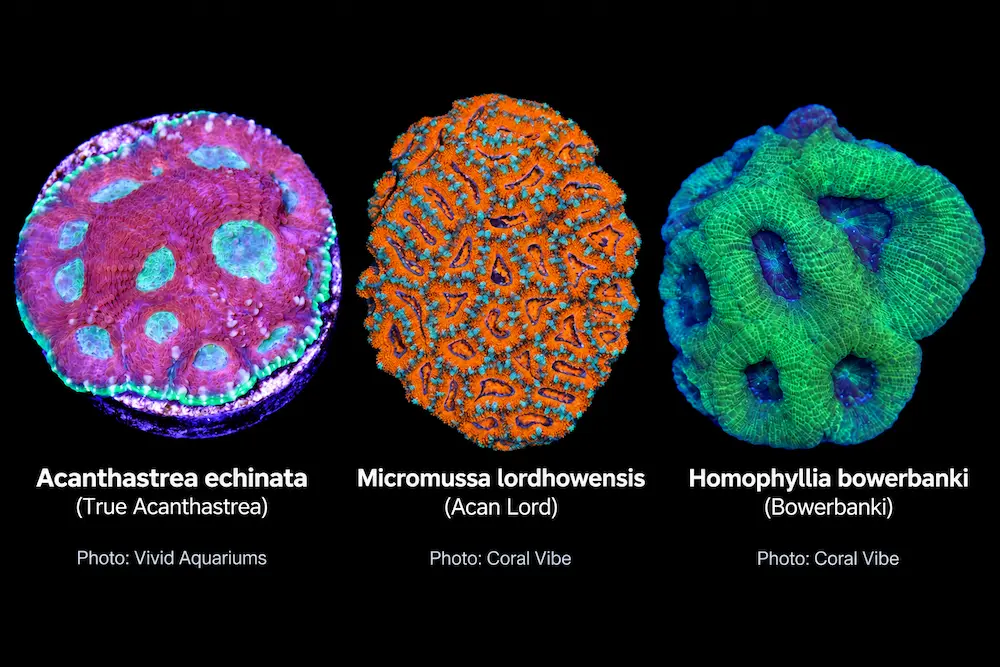
What to look for
- Acanthastrea echinata grows as a crust or low mound, its round, thick-walled corallites packed so tightly they share walls
- Long, pointed teeth on the skeleton — easiest to spot where the tissue has pulled back on its own, no need to touch the coral
- Thick, fleshy tissue that folds into rings over each corallite when the polyps close
Commonly confused with
Micromussa lordhowensisThe old Acan lord kept the trade name, but it's Micromussa now, and it usually shows more distinct, individually fleshy polyps. View care guide Homophyllia bowerbankiAnother former Acanthastrea, now Homophyllia, that typically grows much larger, broader fleshy corallites than A. echinata. View care guide Favia and Favites brain coralsSome skeletons look alike, but a living A. echinata usually carries a thicker layer of fleshy tissue over its strongly toothed structure. View care guideScientific classificationTaxonomy and names used in the aquarium trade
In the reefkeeping community, 'Acan Coral' commonly refers to several species within the Acanthastrea genus. However, some species previously classified as Acanthastrea have been reclassified - for example, A. lordhowensis is now considered a Micromussa, and A. bowerbanki has been moved to the Homophyllia genus. Despite these taxonomic changes, these corals are still widely referred to as Acans when searching or filtering in the hobby.
- kingdom
- Animalia
- phylum
- Cnidaria
- class
- Anthozoa
- order
- Scleractinia
- family
- Lobophylliidae
- genus
- Acanthastrea
Species sold as Acan
- Acanthastrea echinata
- Acanthastrea rotundoflora
- Micromussa lordhowensis (former)
- Homophyllia bowerbanki (former)
ID & Buying
What to Look For When Buying Acan Corals
Look for full, inflated tissue
Healthy tissue covers the coral right to the edges, with no fresh white skeleton, tears, or a line where it's pulling back. A coral that's retracted at the moment is far less worrying than one that's actually losing tissue.
Check the cut edge on frags
Look at where the frag was cut. You want tissue starting to grow over that edge, with nothing trapped against the living tissue — no debris, no algae. If the cut is still bare skeleton, it needs more healing time.
See it in white light
Blue lighting makes colors pop, but it can also hide recession and other problems. Look at the coral under white light when you can — the top, the tissue edges, and the plug. If white light photos aren't available, zoom in on the tissue edges and the plug for anything that looks off.
Walk away from damaged tissue
Skip a coral with spreading bare skeleton, loose or discolored material, torn tissue, or one that stays deflated for no reason you can see.