
Lord Coral Care Guide
Lord corals are beginner-friendly LPS corals prized for their bold colors and responsive feeding behavior. This care guide covers lighting, water flow, feeding, and placement to help reef keepers of all experience levels maintain healthy, growing colonies.
About Lord
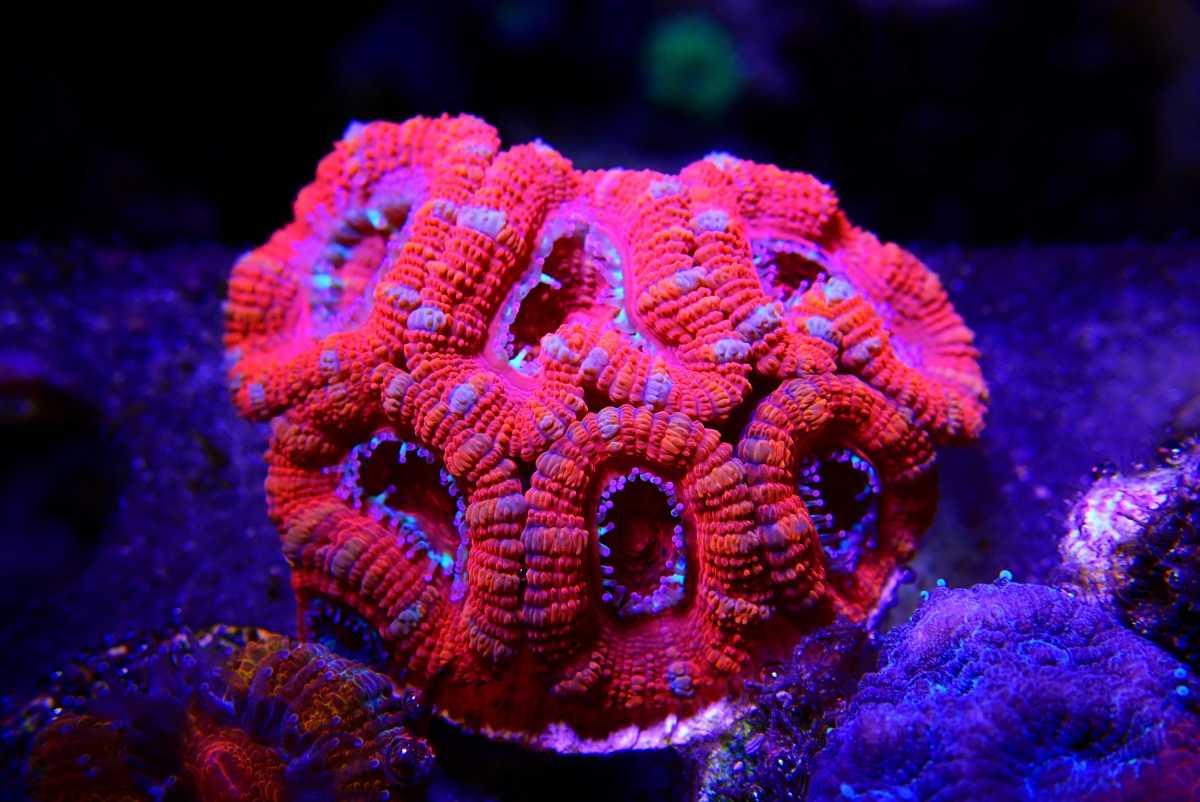
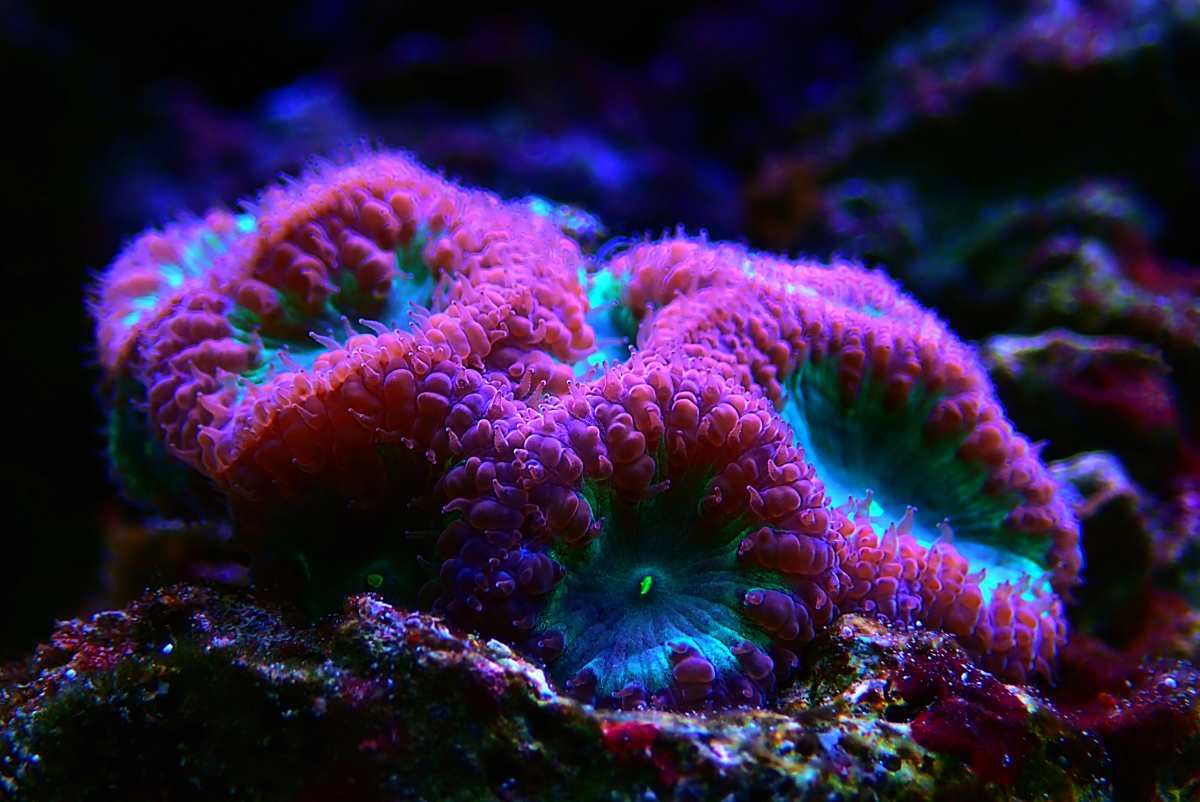
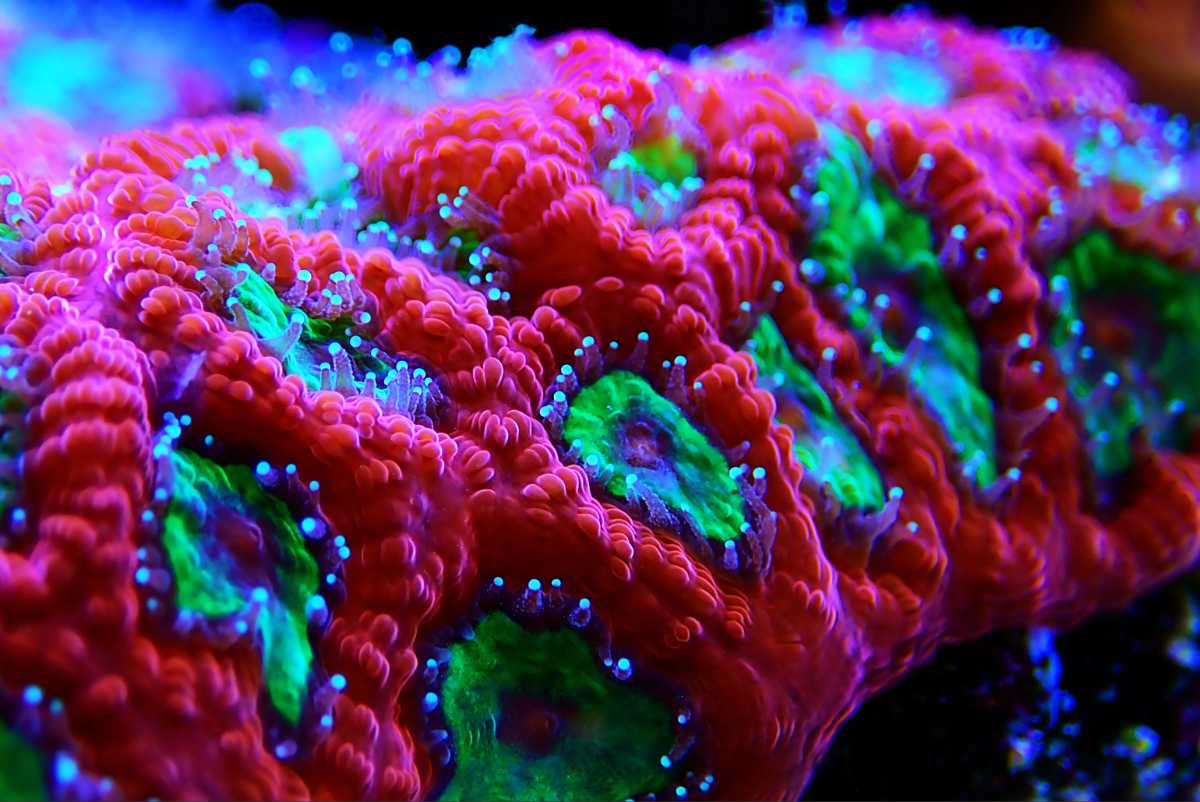
Lord Coral (Micromussa lordhowensis) is a large polyp stony coral known for its thick, fleshy polyps displaying bold concentric ring patterns in vibrant reds, teals, purples, golds, and rainbow combinations. Lord Coral polyps measure 8-12mm in diameter and expand significantly during daylight hours, creating a plump, rounded appearance that distinguishes healthy specimens.
Lord Coral thrives under low to moderate lighting of 50-100 PAR and gentle water flow, making it suitable for beginner to intermediate reef keepers with stable tank conditions. Lord Coral colonies respond enthusiastically to target feeding with mysis shrimp or similar meaty foods, and fed colonies grow 40% faster than those relying solely on photosynthesis. Lord Coral produces sweeper tentacles capable of stinging neighboring corals, requiring several inches of spacing from other species to prevent tissue damage.
Care Requirements
Quick overview for keeping your coral thriving
Difficulty
Beginner Friendly
Lighting
Low to Moderate
Water Flow
Low to Moderate
Detailed Care Guide
In-depth information for optimal care
Difficulty Level
Easy to Moderate
Lord Coral is considered hardy and forgiving, tolerating a range of conditions while thriving in stable reef environments. Lord Coral can handle minor parameter fluctuations that would stress more sensitive LPS species, making it a reliable choice for newer reef keepers.
The primary challenge with Lord Coral is providing appropriate lighting and flow—too much of either causes tissue damage or prevents full polyp extension. Maintaining nitrates between 10-20ppm actually benefits Lord Coral, as ultra-low nutrient systems can cause color loss and reduced vitality.
Lighting Requirements
Low to Moderate
Lord Coral thrives at 50-100 PAR and should be placed on the sandbed or lower rockwork where lighting is naturally dimmer. High-intensity lighting causes bleaching, color fading, and tissue damage in Lord Coral colonies.
Rainbow and multicolor Lord Coral morphs are particularly sensitive to intense light, which can prevent color development or cause colors to wash out. Lord Coral responds dramatically to lighting changes, so gradual acclimation is essential when introducing new specimens.
Water Flow
Low to Moderate
Lord Coral prefers gentle, indirect water movement that causes polyps to sway without pressing tissue against the skeleton. Direct or high flow prevents full polyp extension and can tear the fleshy tissue, leading to tissue recession or bacterial infection.
Reef keepers should provide enough flow to prevent detritus buildup on the coral surface while avoiding strong currents. Reducing flow during feeding allows Lord Coral to capture food more effectively from the water column.
Keep your Lord healthy
Save photos, placement, parameters, and what you paid — and see how your Lord changes over time.
Parameters
In range8.5 dKH
Alkalinity target 8–9 dKH · sample data
Your Lord
just added$40 paid
value from live market
Feeding & Growth Response
Lord Coral is a mixotroph that benefits significantly from regular target feeding despite being photosynthetic. Reef keepers who feed Lord Coral 2-3 times weekly with thawed mysis shrimp or similar meaty foods observe 40% faster polyp expansion compared to colonies relying solely on zooxanthellae. Fed colonies also develop deeper, more vibrant coloration—particularly reds and greens—due to astaxanthin pigments in the shrimp.
Lord Coral feeding is most effective 1-2 hours after lights-out when feeding tentacles naturally extend. Each polyp can consume 1-2 pieces of food sized to match the mouth diameter, roughly the size of a mysis shrimp. Established Lord Coral colonies under optimal conditions can produce 1-2 new polyps per month, with some hobbyists reporting new heads every 7-14 days when feeding needs are consistently met.
Buying Advice
What to look for when purchasing
Polyp Inflation
Healthy Lord Coral displays fully inflated, plump polyps that obscure the underlying skeleton. Avoid specimens with visible skeleton showing through retracted tissue, as this indicates stress or tissue recession that may continue after purchase.
Color Intensity
Look for vibrant, saturated colors with clearly defined concentric ring patterns. Faded or washed-out coloration suggests light stress or poor water quality at the source, though colors can recover with proper care.
New Growth Signs
Frags showing new polyps forming at the base or between existing mouths indicate active growth and tank readiness. These specimens have adapted to captive conditions and are more likely to thrive.
Tissue Recession
Inspect the base and edges of each frag for white areas of exposed skeleton, which indicate past or ongoing tissue recession. Even small areas of recession can spread under stress, so prioritize specimens with complete tissue coverage.
Pest Inspection
Check for small holes in the skeleton that may harbor acan-eating flatworms, and observe whether polyps retract unnaturally when the frag is handled. A freshwater or iodine dip before adding to your display tank is recommended.
Taxonomy
Species
Reef Value
Live pricing$1,860
+$120 this month
Priced from live marketplace listings
Lord
Just added · Frag rack
$40
Hammer Coral
8 months · Mid rock
$65
Zoa Colony
1 year · Sand bed
$40
Track Your Reef
Add your Lord to your tank's living inventory — placement, source, and photos as it grows — next to the parameter logs and maintenance history that keep it thriving. Reef Value even shows what your collection is worth, priced from live marketplace listings.
Find Your Perfect Lord
Compare prices from 6+ verified sellers. From budget-friendly frags to rare collector pieces.
Starting at
$30
Average Price
$40
Premium frags up to
$300
Full Price History
Trends, movers & market data
Frequently Asked
Common questions about Lord corals
Why is my Lord Coral not opening?
Lord Coral remains closed or retracted when exposed to excessive lighting, strong water flow, or unstable water parameters. The most common causes are lighting above 100 PAR, direct flow pointed at the coral, or nitrate levels below 5ppm—Lord Coral actually prefers slightly elevated nitrates around 10-20ppm.
Lord Coral may also stay closed due to pest harassment from peppermint shrimp stealing food or acan-eating flatworms hidden in the skeleton. If the coral's skeleton is visible through retracted tissue, check flow and lighting first, then consider an iodine-based coral dip if recession continues. Some healthy Lord Coral colonies close temporarily and reopen within days without intervention.
How often should you feed Lord Coral?
Lord Coral benefits from target feeding 2-3 times per week using thawed mysis shrimp, brine shrimp, or finely chopped seafood sized to match the polyp mouth diameter. Regular feeding dramatically accelerates growth—fed colonies produce new polyps 40% faster than unfed specimens and develop richer coloration from astaxanthin pigments in shrimp-based foods.
Lord Coral feeding is most effective 1-2 hours after lights-out when polyps naturally extend feeding tentacles. Turn off circulation pumps for 10 minutes during feeding to allow the coral to capture food. Each polyp can consume 1-2 appropriately sized pieces per feeding session.
Are Lord Corals beginner-friendly?
Lord Coral is considered one of the most beginner-friendly LPS corals due to its hardiness, tolerance for minor parameter fluctuations, and enthusiastic feeding response. Lord Coral thrives in stable reef environments with low to moderate lighting and gentle water flow—conditions that are easier to maintain than the high-light, high-flow demands of SPS corals.
The primary consideration for beginners is avoiding excessive lighting and flow, which damage Lord Coral tissue. Placing Lord Coral on the sandbed or lower rockwork with indirect flow provides ideal conditions for success without requiring advanced equipment or experience.
Why are Lords sometimes called Acans?
Lord Coral was originally classified as Acanthastrea lordhowensis, earning the common name "Acan Lord" that persists in the reef aquarium hobby. In 2016, genetic studies revealed this species belongs in the Micromussa genus rather than Acanthastrea, leading to the reclassification as Micromussa lordhowensis.
True Acanthastrea species like Acanthastrea echinata have smaller, more tightly-packed polyps and a more aggressive disposition. Lord Coral's large, fleshy polyps with fine beaded texture are characteristic of Micromussa, explaining why taxonomists moved the species despite decades of hobby tradition.
How fast do Lord Corals grow?
Lord Coral has a moderate growth rate that accelerates significantly with regular feeding. New frags with 1-2 polyps typically show visible growth within 3-6 months, while established colonies can produce 1-2 new polyps per month under optimal conditions with consistent feeding.
Lord Coral colonies fed 2-3 times weekly grow approximately 40% faster than unfed colonies, with some hobbyists reporting new polyp formation every 7-14 days when all conditions are optimized. Reaching a full 5+ inch dome colony typically takes 1-2 years from a small frag, with growth occurring outward as new polyps sprout around the colony perimeter.
What is the difference between Lord Coral and Acanthastrea echinata?
Lord Coral (Micromussa lordhowensis) and Acanthastrea echinata are now recognized as different genera despite both being called "Acans" in the hobby. Lord Coral has larger, fleshier polyps measuring 8-12mm that create a rounded, meaty appearance, while Acanthastrea echinata has smaller 10-15mm polyps with a more compact, textured skeletal look.
Lord Coral is peaceful and prefers low lighting and flow, while Acanthastrea echinata tolerates higher flow and is more aggressive—capable of stinging and damaging Lord Coral if placed too close. Lord Coral also comes in a wider variety of color morphs including rainbow varieties, whereas Acanthastrea echinata has more limited coloration.
Explore Related Corals
Popular corals you might also be interested in
All LPS Corals
Browse the complete collection of LPS coral care guides