
Duncan Coral Care Guide
Duncan corals are one of the most approachable LPS corals in the hobby, offering flowing tentacles, fast growth, and forgiving care requirements. This care guide covers lighting, water flow, feeding, and placement to help reef keepers grow thriving Duncan colonies.
About Duncan
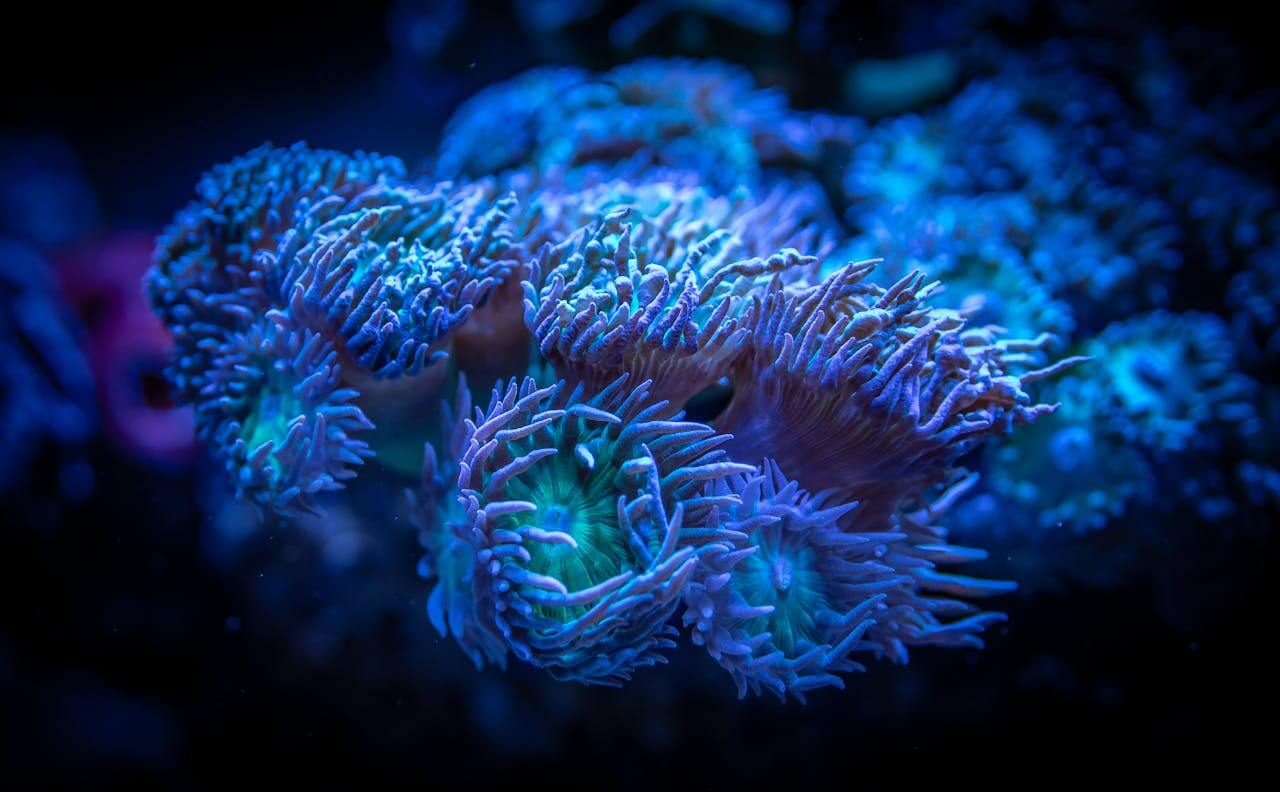
Duncan Coral (Duncanopsammia axifuga) is an LPS coral recognized for its long, flowing tentacles that extend from tubular branching stalks and sway gently in the current. Colonies display colors ranging from green and purple to pink and blue, with each polyp head featuring a contrasting oral disc that creates a daisy-like appearance. Duncans thrive under low to moderate lighting of 100-150 PAR and moderate indirect water flow, making them one of the most accessible LPS corals for beginning reef keepers. Colonies grow rapidly for an LPS species, producing new heads approximately every month under consistent feeding, and can develop into large multi-headed structures within a year. Duncan Coral belongs to the family Dendrophylliidae, a group in which most members are non-photosynthetic, making this species a notable exception that hosts symbiotic zooxanthellae and derives energy from light.
Care Requirements
Quick overview for keeping your coral thriving
Difficulty
Beginner Friendly
Lighting
Low to Moderate
Water Flow
Low to Moderate
Detailed Care Guide
In-depth information for optimal care
Difficulty Level
Beginner
Duncan Coral is one of the hardiest LPS corals available, tolerating a range of lighting and flow conditions without significant stress. Duncans forgive minor water parameter fluctuations that would cause more sensitive corals to retract or bleach, making them an excellent entry point for reef keepers new to stony corals.
Stable alkalinity between 8-11 dKH and calcium levels of 400-450 ppm support optimal skeletal growth, but Duncans are less demanding about hitting precise targets than most LPS species.
Lighting Requirements
Low to Moderate
Duncan Coral performs well under low to moderate lighting between 100-150 PAR, and is forgiving enough to tolerate PAR levels outside this range without immediate harm. Duncans maintain a fairly consistent appearance across different lighting conditions, unlike many corals that shift dramatically in color or behavior with lighting changes.
Excessive lighting can cause bleaching over time, so reef keepers who notice polyps looking pale should consider moving the colony lower in the tank. Duncan Coral can be found in its natural habitat in waters up to 50-80 feet (15-25 meters) deep, which accounts for the species' preference for moderate rather than intense lighting.
Water Flow
Low to Moderate
Duncan Coral thrives in moderate indirect water flow that keeps polyps gently swaying without flattening them against the skeleton. Polyps extend further in lower flow and retract to a more compact shape in strong current, so reef keepers should look for gentle, randomized movement as a sign of appropriate flow levels.
Colonies are susceptible to algae overgrowth on the skeleton in areas of stagnant water, so maintaining enough flow to keep the skeleton clean while avoiding direct output from powerheads provides the best balance. Positioning Duncans where flow is bounced or diffused rather than laminar prevents tissue stress on the side facing the current.
Keep your Duncan healthy
Save photos, placement, parameters, and what you paid — and see how your Duncan changes over time.
Parameters
In range8.5 dKH
Alkalinity target 8–9 dKH · sample data
Your Duncan
just added$37 paid
value from live market
Buying Advice
What to look for when purchasing
Polyp Extension
Healthy Duncans should have fully extended, flowing tentacles during the day. Look for polyps that are plump and responsive to light and flow. Avoid specimens with retracted or damaged tentacles, which may indicate stress or poor holding conditions.
Head Count and Growth
Check for new buds or heads forming at the base of existing polyps, which indicates active growth and good health. Multi-headed colonies are often more established and adapt more quickly to new environments than single-head frags.
Skeletal Integrity
Examine the base and skeleton for any signs of tissue recession, algae growth, or damage. Healthy tissue should extend all the way down the skeleton without gaps or exposed areas, as bare skeleton can indicate stress or the beginning of decline.
Pest Inspection
Inspect colonies for vermitid snails, which commonly attach to the branching skeleton and produce mucus nets that irritate polyps and cause retraction. Check the base and between stalks for hitchhikers or algae growth, and dip new specimens in a coral dip solution before adding to the display tank.
Taxonomy
Species
Reef Value
Live pricing$1,860
+$120 this month
Priced from live marketplace listings
Duncan
Just added · Frag rack
$36.5
Hammer Coral
8 months · Mid rock
$65
Zoa Colony
1 year · Sand bed
$40
Track Your Reef
Add your Duncan to your tank's living inventory — placement, source, and photos as it grows — next to the parameter logs and maintenance history that keep it thriving. Reef Value even shows what your collection is worth, priced from live marketplace listings.
Find Your Perfect Duncan
Compare prices from 15+ verified sellers. From budget-friendly frags to rare collector pieces.
Starting at
$17
Average Price
$36.5
Premium frags up to
$281
Full Price History
Trends, movers & market data
Frequently Asked
Common questions about Duncan corals
Are Duncan Corals good for beginners?
Duncan Coral is one of the most beginner-friendly LPS corals available in the reef aquarium hobby. Duncans tolerate minor water parameter fluctuations, thrive under low to moderate lighting without demanding specific PAR ranges, and grow rapidly with minimal intervention. The lack of aggressive sweeper tentacles simplifies placement decisions for reef keepers still learning coral compatibility. Stable water conditions and occasional feeding are all Duncans need to thrive, even in newer reef tanks that have completed cycling.
How fast do Duncan Corals grow?
Duncan Coral grows faster than most LPS corals, producing new heads approximately every one to two months under favorable conditions. Reef keepers who feed Duncans meaty foods like mysis shrimp or reef roids two to three times per week report dramatically faster head production, with some colonies growing from a single head to ten or more within five to six months.
Colonies grow by budding new polyps near the base of existing heads, and individual stalks bifurcate to form branching structures that expand outward over time.
Do Duncan Corals need to be fed?
Duncan Coral is photosynthetic and can survive on light alone, but supplemental feeding significantly accelerates growth and improves polyp size and coloration. Duncans respond well to target feeding with meaty foods like mysis shrimp, brine shrimp, and coral pellets two to three times per week.
The tentacles actively grab and pull food into the oral disc when offered, making target feeding straightforward even for beginners. Consistent feeding results in faster head production and larger, more extended polyps compared to unfed colonies.
Are Duncan Corals aggressive toward other corals?
Duncan Coral is one of the most peaceful LPS corals and does not produce the long sweeper tentacles found in Euphyllia species like torch, hammer, and frogspawn corals. The tentacles are short and lack significant stinging power, making Duncans safe to place near most other coral species without risk of contact damage.
Duncans are more likely to be stung by aggressive neighbors than to cause harm, so reef keepers should maintain at least 3-4 inches of spacing from aggressive LPS corals with sweeper tentacles to protect the colony.
Why is my Duncan Coral not opening?
Duncan Coral can retract polyps in response to several environmental stressors, and colonies often serve as an early warning system for tank problems that other LPS corals tolerate longer before showing symptoms. Excessive or direct water flow is the most common cause of retraction, as polyps cannot fully extend against strong current. Heavy metal contamination, particularly elevated iodine levels, can also cause prolonged closure.
Reef keepers should check flow direction, test water parameters for unusual readings, and inspect the colony for pests such as vermitid snails, which produce mucus nets that irritate polyps. Running activated carbon or polyfilter can help remove potential contaminants if the cause is not immediately apparent.
Where should Duncan Coral be placed in a reef tank?
Duncan Coral performs best in the lower to middle regions of the reef tank where lighting falls within the 100-150 PAR range and water flow is moderate and indirect. Duncans can be placed on the sand bed or mounted on rockwork, and both locations work well provided the colony receives adequate flow to prevent algae buildup on the skeleton.
Reef keepers should plan for long-term growth when positioning Duncans, as healthy colonies expand substantially and can develop dozens of heads within a year. Keeping distance from aggressive corals with sweeper tentacles like torch and hammer corals protects the colony from stinging damage.

All LPS Corals
Browse the complete collection of LPS coral care guides