

Goniopora Coral Care Guide
Goniopora corals bring stunning movement and color to reef aquariums with their flowing, flower-like polyps in shades of neon green, pink, red, and purple. This care guide covers lighting, water flow, feeding, placement, and trace element supplementation to help reef keepers maintain healthy Goniopora colonies long-term.
About Goniopora
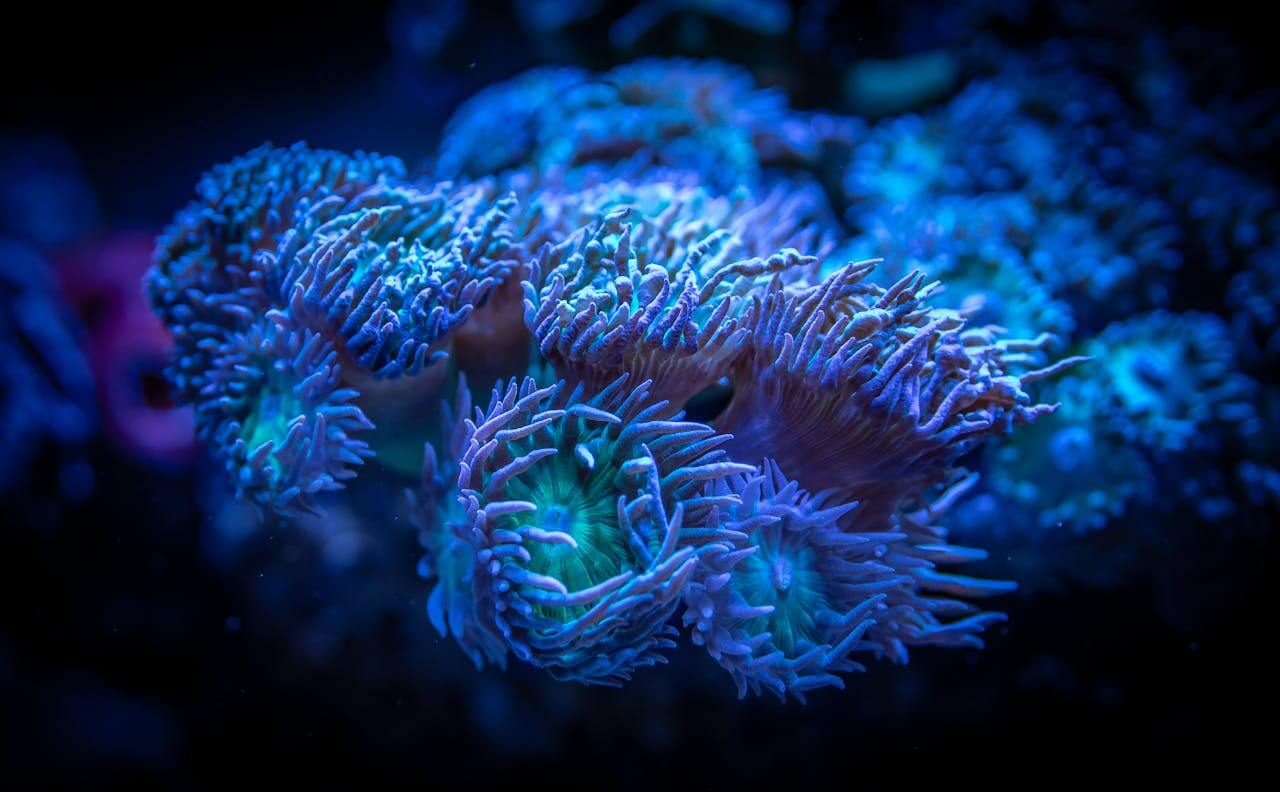
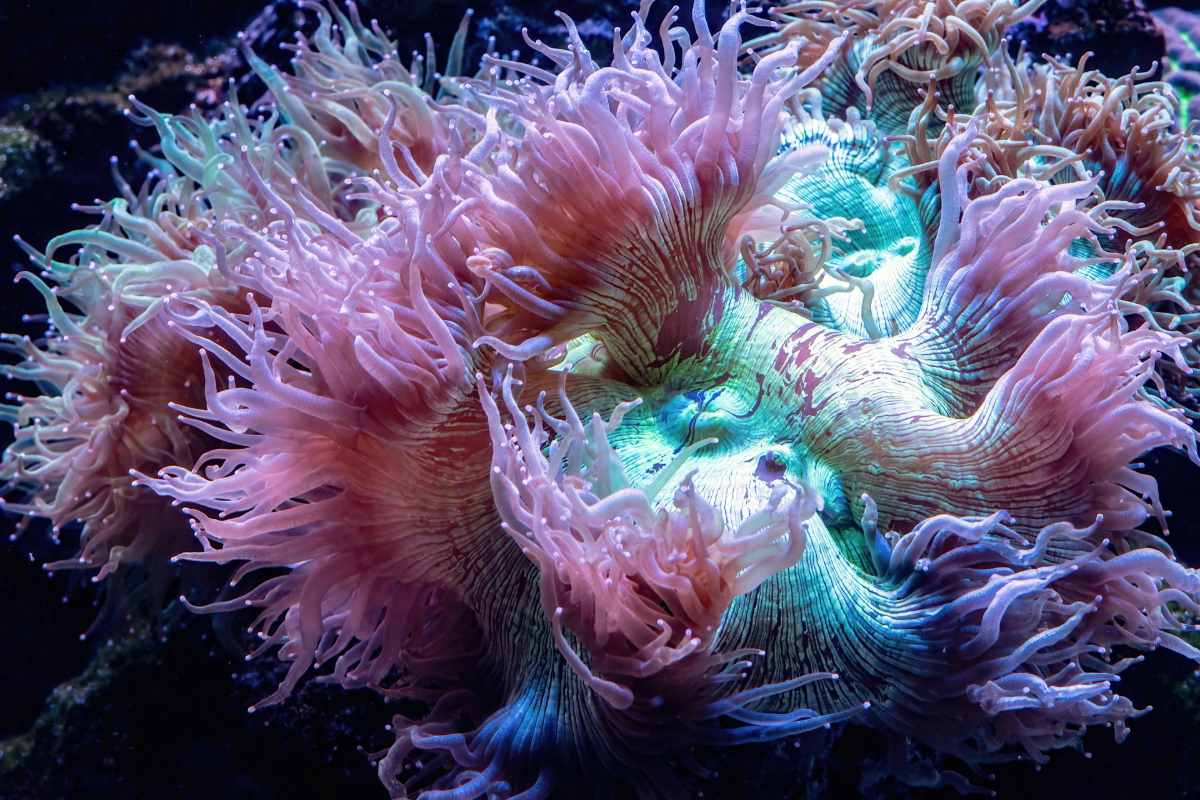
Goniopora (Goniopora spp.), commonly known as Flowerpot Coral, is an LPS coral recognized for its flower-like polyps that extend several inches from a dense skeleton and sway gently in the current. Colonies display vibrant colors including neon green, pink, red, purple, and metallic shades, with each polyp featuring 24 delicate tentacles that create a flowing, garden-like appearance in the aquarium. Goniopora thrives under moderate lighting of 75-150 PAR and low to moderate indirect water flow, making the species suitable for intermediate reef keepers maintaining stable, mature systems. Colonies are sensitive to alkalinity fluctuations and depend on regular supplemental feeding with amino acids and fine particulate foods to prevent the slow starvation that historically caused wild-collected specimens to decline within months. Aquacultured Goniopora strains have significantly improved long-term survival, and reef keepers who provide consistent feeding, stable water chemistry, and patient acclimation report strong success with captive-grown colonies.
Care Requirements
Quick overview for keeping your coral thriving
Difficulty
Intermediate
Lighting
Moderate
Water Flow
Low to Moderate
Detailed Care Guide
In-depth information for optimal care
Difficulty Level
Intermediate
Goniopora requires stable water parameters, consistent feeding, and patient acclimation, making the species unsuitable for new reef keepers or immature aquarium systems. Wild-collected specimens historically had very low survival rates due to slow starvation, but aquacultured varieties are significantly more resilient when provided proper nutrition and stable alkalinity in the 8-9 dKH range.
Reef keepers should select aquacultured Goniopora when possible and start with hardier species such as Goniopora lobata or Goniopora tenuidens before attempting more sensitive varieties like Goniopora stokesi.
Lighting Requirements
Moderate
Goniopora performs well under moderate lighting intensities of 75-150 PAR, with most reef keepers reporting optimal results in the 100-125 PAR range. The species is more susceptible to light damage than many LPS corals, and excessive PAR causes bleaching and tissue recession. Reef keepers should start colonies under lower light intensity and increase gradually over several weeks to allow the zooxanthellae to adjust.
Colonies that receive too little light will turn brown as zooxanthellae overpopulate the tissue, while those under excessive light will pale and bleach. Placing Goniopora in the lower to middle tank regions typically provides the appropriate PAR range without requiring precise measurement.
Water Flow
Low to Moderate
Goniopora thrives in gentle, indirect water flow that allows polyps to sway naturally without being whipped or flattened against the skeleton. Direct flow from powerheads is the most common cause of polyp retraction and should be avoided entirely. Colonies benefit from randomized or gyre-style flow patterns that mimic the calm lagoon environments where the species naturally occurs.
Reef keepers who notice polyps violently thrashing or failing to extend should reduce flow intensity or redirect flow away from the colony, as prolonged exposure to excessive current can cause tissue damage and prevent feeding.
Keep your Goniopora healthy
Save photos, placement, parameters, and what you paid — and see how your Goniopora changes over time.
Parameters
In range8.5 dKH
Alkalinity target 8–9 dKH · sample data
Your Goniopora
just added$75 paid
value from live market
Goniopora Starvation and Long-Term Survival
Goniopora earned a reputation as one of the most difficult corals to maintain in home aquariums, with hobbyists reporting that wild-collected specimens would appear healthy for months before entering a rapid, irreversible decline. The species' deceptive mortality pattern made the coral notorious in the hobby, as colonies would gradually weaken over several months with no obvious cause before tissue recession began and the colony died within days. The reef keeping community now recognizes that multiple factors contribute to this slow wasting, including insufficient feeding, trace element depletion, and oxidative stress that compounds over time in closed aquarium systems.
Modern aquacultured strains combined with targeted feeding protocols and improved trace element supplementation have transformed survival rates from below 20% for wild-collected specimens to approximately 80% for captive-grown colonies over the first year. Reef keepers who feed colonies amino acids, powdered plankton, and fine zooplankton at least twice weekly while maintaining stable water chemistry report significantly better polyp extension, tissue density, and long-term colony growth.
Iron and Manganese Supplementation
Goniopora may benefit from supplemental iron and manganese, two trace elements that are rapidly depleted in closed reef aquarium systems. Reef aquarist Julian Sprung hypothesized in a 2002 Advanced Aquarist article that iron and manganese depletion prevents the coral from producing sufficient superoxide dismutase (SOD) enzymes to neutralize oxygen free radicals, leading to oxidative stress, bleaching, and the characteristic slow wasting that makes Goniopora stokesi particularly difficult to maintain long-term. Manganese is particularly difficult to measure accurately outside of ICP testing and is consumed quickly by algae, phytoplankton, and refugium macroalgae, making depletion likely in systems running algae reactors or heavy refugiums.
Multiple hobbyists have reported improvements in colony health after introducing iron and manganese supplementation through dedicated trace element products or consistent water changes with a high-quality reef salt mix. Sprung's oxidative stress hypothesis remains the most cited explanation for Goniopora's slow wasting syndrome, though the exact mechanism has not been conclusively proven through controlled study.
Buying Advice
What to look for when purchasing
Polyp Extension
Healthy Goniopora should display extended, flowing polyps when acclimated. Avoid frags with retracted or melting tissue, which can indicate poor health, starvation, or prolonged stress during holding and transport.
Color and Consistency
Look for vivid and consistent coloration across the entire frag. Faded, pale, or uneven coloring may indicate light stress, nutritional deficiency, or deteriorating health. Australian-origin Goniopora tend to display stronger coloration and smaller polyps compared to Indonesian specimens.
Aquacultured vs. Wild
Aquacultured Goniopora are significantly more resilient and better suited for long-term success in reef aquariums, with substantially higher survival rates than wild-collected specimens. Whenever possible, choose frags that are clearly labeled as aquacultured or captive-propagated from a proven growing colony.
Pest Inspection and Dipping
Inspect Goniopora frags carefully for nudibranchs, flatworms, and areas lacking polyps that may indicate pest damage. Dipping all new specimens in a coral dip solution before adding to the display tank reduces the risk of introducing pests that can spread to other corals.
Taxonomy
Species
Reef Value
Live pricing$1,860
+$120 this month
Priced from live marketplace listings
Goniopora
Just added · Frag rack
$75
Hammer Coral
8 months · Mid rock
$65
Zoa Colony
1 year · Sand bed
$40
Track Your Reef
Add your Goniopora to your tank's living inventory — placement, source, and photos as it grows — next to the parameter logs and maintenance history that keep it thriving. Reef Value even shows what your collection is worth, priced from live marketplace listings.
Find Your Perfect Goniopora
Compare prices from 22+ verified sellers. From budget-friendly frags to rare collector pieces.
Starting at
$25
Average Price
$75
Premium frags up to
$1000
Full Price History
Trends, movers & market data
Frequently Asked
Common questions about Goniopora corals
Why is my Goniopora not opening?
Goniopora commonly fails to extend polyps when exposed to excessive or direct water flow, which is the most frequent cause of retraction in aquarium settings. The polyps are delicate and require gentle, indirect current to fully extend, so reef keepers should verify the coral receives bounced or randomized flow rather than direct output from powerheads. Alkalinity instability is the second most common cause of Goniopora retraction, as fluctuations greater than 0.5 dKH per day can trigger prolonged closure and eventual tissue recession.
Reef keepers should also evaluate lighting intensity, as colonies placed under excessive PAR will bleach and retract, and consider whether the coral is receiving adequate nutrition through regular feeding of amino acids and fine particulate foods.
Do Goniopora corals need to be fed?
Goniopora benefits significantly from regular supplemental feeding, even though the species is photosynthetic. Insufficient nutrition is widely considered one of the key factors behind the slow decline that historically plagued wild-collected specimens in aquarium settings, and many reef keepers report that consistent feeding made the biggest difference in their long-term success with this coral.
Goniopora are filter feeders that capture fine particles from the water column and absorb dissolved nutrients through their tissue. Reef keepers should broadcast feed colonies at least twice per week by turning off flow pumps, mixing a cloudy solution of powdered plankton, reef roids, or amino acids, and spraying the food cloud over the coral with a turkey baster. Leaving pumps off for 15-20 minutes allows polyps to capture suspended particles before current disperses the food. Colonies that receive consistent broadcast feeding show improved polyp extension, coloration, and long-term growth.
Is Goniopora a beginner-friendly coral?
Goniopora is best suited for intermediate reef keepers with established, mature aquarium systems and should not be considered a beginner coral. The species requires stable alkalinity in the 8-9 dKH range, consistent supplemental feeding, and careful placement with appropriate lighting and flow to thrive long-term.
Aquacultured varieties are significantly hardier than wild-collected specimens and are recommended for reef keepers attempting Goniopora for the first time. Species selection also matters, as Goniopora lobata and Goniopora tenuidens are generally more forgiving than Goniopora stokesi, which remains challenging even for experienced aquarists.
Where should Goniopora be placed in a reef tank?
Goniopora performs best in the lower to middle regions of the reef tank where lighting intensity falls within the 75-150 PAR range and water flow is gentle and indirect. Many reef keepers place colonies on the sand bed or low rockwork, as the species naturally inhabits calm lagoon environments.
Colonies expand dramatically when open, often doubling or tripling the diameter of the skeletal base, so reef keepers should allow adequate space around the coral to prevent polyps from contacting neighboring specimens. Avoiding placement directly in front of powerheads or return nozzles is critical, as direct flow prevents polyp extension and can cause tissue damage over time.
How do you tell the difference between Goniopora and Alveopora?
Goniopora and Alveopora are visually similar but can be distinguished by counting the tentacles on each polyp. Goniopora polyps feature 24 tentacles per polyp, which tend to be longer and more wispy in appearance, while Alveopora polyps have only 12 tentacles that are shorter and more rounded.
Goniopora also has a denser, heavier skeleton compared to the lighter, more porous skeleton of Alveopora. Alveopora is generally considered easier to keep and belongs to a different family (Acroporidae), despite the similar appearance that frequently causes confusion among reef keepers purchasing flowerpot corals.
Do Goniopora sting other corals?
Goniopora can produce sweeper tentacles that extend several inches beyond the colony base and sting neighboring corals, making adequate spacing essential in reef aquariums. The polyps themselves are also capable of stinging on contact, and different colonies may sting each other despite being the same genus.
Reef keepers should maintain at least 3-4 inches of clearance around a fully expanded Goniopora colony to prevent contact with other corals. Monitoring expansion over time is important, as healthy colonies grow and extend further as they acclimate, potentially reaching corals that were initially placed at a safe distance.
All LPS Corals
Browse the complete collection of LPS coral care guides