
Elegance Coral Care Guide
Elegance Coral is a challenging LPS species requiring specific placement and careful sourcing to avoid Elegance Coral Syndrome (ECS). This care guide covers sandbed placement, lighting acclimation, feeding, and the critical differences between Australian and Indonesian specimens.
About Elegance
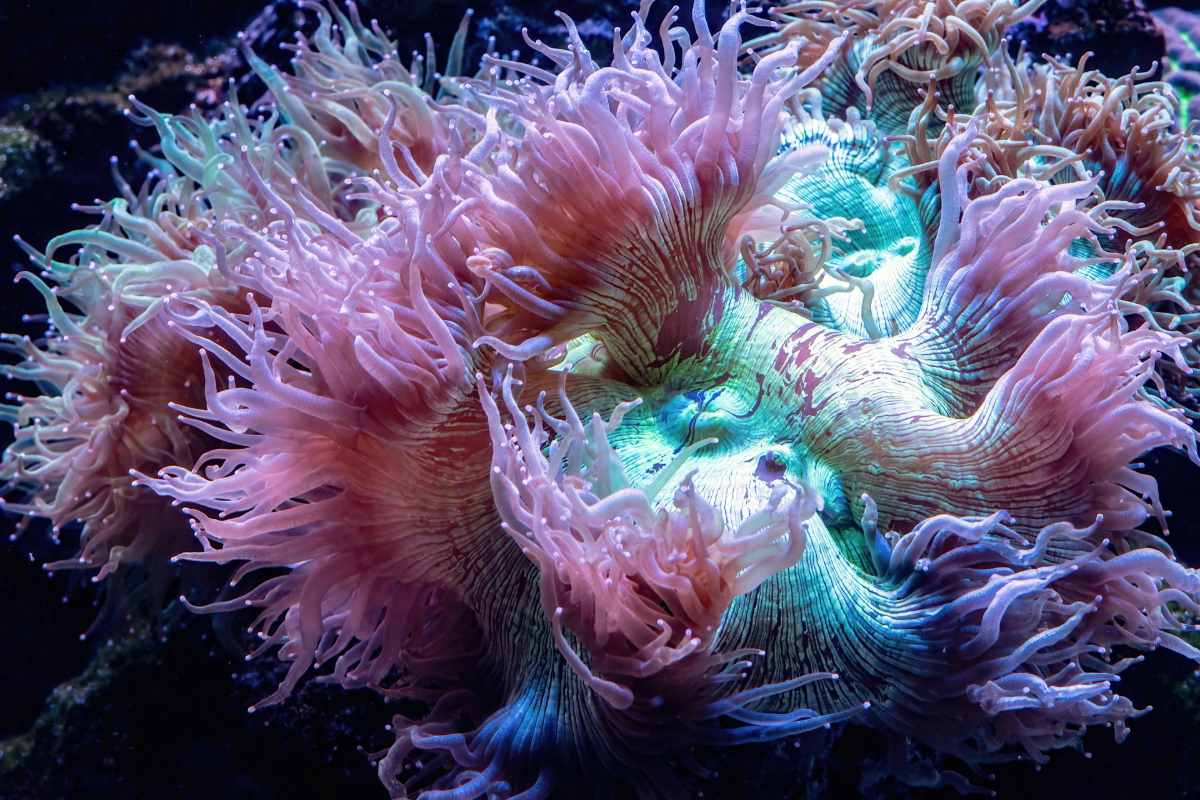
Elegance Coral (Catalaphyllia jardinei) is a large polyp stony coral known for its long, flowing tentacles with fluorescent tips in green, pink, or purple that create an anemone-like appearance unique among LPS species. Elegance Coral displays a fleshy, fan-like oral disc with tentacles extending up to 6 inches from the conical skeleton, designed to anchor in sandy substrates rather than rockwork.
Elegance Coral typically thrives under low to moderate lighting of 80-150 PAR and gentle indirect water flow, with sandbed placement recommended to prevent tissue damage against its sharp skeleton. Elegance Coral is considered an advanced species due to susceptibility to Elegance Coral Syndrome (ECS), a fatal disease with no known cure that primarily affects Indonesian specimens. Australian Elegance Coral demonstrates significantly higher survival rates and disease resistance, making specimen origin the most critical factor for long-term success.
Care Requirements
Quick overview for keeping your coral thriving
Difficulty
Advanced
Lighting
Low to Moderate
Water Flow
Low to Moderate
Detailed Care Guide
In-depth information for optimal care
Difficulty Level
Intermediate to Advanced
Elegance Coral is considered an advanced species primarily due to Elegance Coral Syndrome (ECS), a fatal and contagious disease that has devastated captive populations since the early 2000s. Specimen origin dramatically affects survival—Australian Elegance Coral is significantly more disease-resistant than Indonesian specimens.
Beyond ECS risk, Elegance Coral performs best with placement on sandbeds (not rockwork), careful light acclimation over 4-6 weeks, and stable water parameters. Reef keepers should wait at least 6 months after tank setup before introducing Elegance Coral to allow bacterial populations and parameters to stabilize.
Lighting Requirements
Low to Moderate
Elegance Coral thrives at 80-150 PAR, significantly lower than many LPS species, reflecting its natural habitat in deeper, turbid lagoon environments. High-intensity lighting without proper acclimation can trigger stress responses and potentially contribute to ECS onset.
New specimens require careful light acclimation regardless of previous conditions—start at 50% of target intensity and increase by 10% weekly over 4-6 weeks. Elegance Coral coloration remains remarkably consistent across lighting levels, so lower placement does not sacrifice appearance.
Water Flow
Low to Moderate
Elegance Coral prefers gentle, indirect water movement that causes tentacles to sway naturally without being plastered against the skeleton or whipped around aggressively. Strong direct flow can tear the delicate fleshy tissue and stress the coral.
Controllable powerheads or wavemakers producing random flow patterns work best. The tentacles should move like "leaves in a light wind"—enough movement to prevent detritus buildup and deliver food, but not so strong that tissue contacts the sharp skeleton.
Keep your Elegance healthy
Save photos, placement, parameters, and what you paid — and see how your Elegance changes over time.
Parameters
In range8.5 dKH
Alkalinity target 8–9 dKH · sample data
Your Elegance
just added$180 paid
value from live market
Elegance Coral Syndrome (ECS)
Elegance Coral is highly susceptible to Elegance Coral Syndrome (ECS), a fatal disease with no known cure that has devastated captive populations since being identified and named by coral researcher Eric Borneman in 2006. ECS is contagious—introducing one infected specimen to a tank with healthy Elegance Coral will result in death of both corals.
Early ECS symptoms include unusual tissue retraction from the base upward, excessive mucus production forming a white opaque coating, and reduced feeding response. Advanced cases show rapid tissue loss with sloughing in sheets, exposed skeleton, and a distinctive rotting smell. Unlike typical bacterial infections, ECS progresses within days of symptom onset. No reliable treatment exists, though experimental freshwater dips (30-60 seconds in pH-matched fresh water) have shown limited success when applied at earliest symptom detection. Prevention through sourcing Australian specimens and strict quarantine remains the only reliable strategy.
Australian vs Indonesian Specimens
Elegance Coral survival rates differ dramatically based on collection origin, making specimen sourcing the single most important factor for long-term success. Australian Elegance Coral demonstrates significantly better survival rates and strong resistance to Elegance Coral Syndrome, while Indonesian specimens are plagued by ECS with mortality rates that have made them nearly unsuitable for aquarium keeping.
Indonesian Elegance Coral was once considered a bulletproof beginner coral, but something changed in collection practices or habitat conditions during the early 2000s that introduced ECS into the supply chain. Australian specimens command higher prices—often 2-3x Indonesian pricing—but the investment is justified by dramatically improved survival rates. Indonesian coral exports have faced recent bans, making Australian specimens the primary market option. When purchasing, confirm Australian origin with the vendor and quarantine new arrivals for 4-6 weeks before adding to displays containing other Elegance Coral.
Buying Advice
What to look for when purchasing
Confirm Australian Origin
The most critical factor for Elegance Coral survival is specimen origin. Always confirm Australian collection with the vendor before purchase—Australian specimens demonstrate dramatically higher survival rates and resistance to Elegance Coral Syndrome compared to Indonesian corals.
Tissue Condition
Healthy Elegance Coral displays plump, fully inflated tissue with no signs of peeling, detachment, or exposed skeleton. Tissue should cover the entire base and respond normally to stimulation. Avoid specimens showing any tissue recession, unusual mucus production, or retracted tentacles.
Tentacle Extension
Look for specimens with fully extended tentacles that sway naturally in the water. Avoid corals with retracted, clumped, or collapsed tentacles—these may be early signs of stress or Elegance Coral Syndrome. Healthy tentacles should respond to food by curling inward.
Quarantine Essential
Quarantine new Elegance Coral arrivals for 4-6 weeks before adding to displays, especially if you already have Elegance Coral specimens. ECS is contagious and can spread to healthy corals. Observe for any signs of tissue recession, excessive mucus, or reduced feeding response during quarantine.
System Maturity
Elegance Coral performs best in mature aquarium systems. Wait at least 6 months after initial tank setup before introducing this species to allow bacterial populations to establish, parameters to stabilize, and any initial cycling issues to resolve.
Taxonomy
Species
Reef Value
Live pricing$1,860
+$120 this month
Priced from live marketplace listings
Elegance
Just added · Frag rack
$180
Hammer Coral
8 months · Mid rock
$65
Zoa Colony
1 year · Sand bed
$40
Track Your Reef
Add your Elegance to your tank's living inventory — placement, source, and photos as it grows — next to the parameter logs and maintenance history that keep it thriving. Reef Value even shows what your collection is worth, priced from live marketplace listings.
Find Your Perfect Elegance
Compare prices from 8+ verified sellers. From budget-friendly frags to rare collector pieces.
Starting at
$99
Average Price
$180
Premium frags up to
$480
Full Price History
Trends, movers & market data
Frequently Asked
Common questions about Elegance corals
What is Elegance Coral Syndrome (ECS)?
Elegance Coral is highly susceptible to Elegance Coral Syndrome (ECS), a contagious and fatal disease with no known cure that has affected captive populations since the early 2000s. ECS was identified and named by coral researcher Eric Borneman in 2006 and is suspected to be caused by a bacterial pathogen, potentially a Vibrio species.
ECS symptoms include unusual tissue retraction, excessive white mucus production, reduced feeding response, and rapid tissue sloughing. The disease is communicable—introducing one sick specimen to a tank with healthy Elegance Coral will infect both. Prevention through sourcing Australian specimens (which show strong disease resistance) and strict quarantine protocols remains the only reliable strategy.
Where should I place Elegance Coral in my tank?
Elegance Coral requires sandbed placement rather than rockwork mounting due to its conical skeleton designed to anchor in sandy substrates. Elegance Coral's sharp skeleton can damage the fleshy tissue if the coral is allowed to contact hard surfaces or be whipped around by flow, creating wounds that invite bacterial infection.
Reef keepers should position Elegance Coral in a protected area of the sandbed with gentle indirect flow and moderate lighting of 80-150 PAR. Elegance Coral extends sweeper tentacles approximately 6 inches from its base, requiring substantial spacing from neighboring corals to prevent stinging damage.
Should I feed Elegance Coral?
Elegance Coral benefits significantly from regular target feeding despite being photosynthetic, with feeding contributing to long-term health and disease resistance. Elegance Coral readily accepts meaty foods including mysis shrimp, enriched brine shrimp, chopped krill, and quality coral foods with particle sizes around 3-5mm.
Target feed Elegance Coral 2-3 times weekly during evening hours when the coral naturally extends its feeding tentacles. Use a pipette or turkey baster to deliver food directly to the tentacles, which will capture and transport particles to the central mouth. Larger food pieces may not be digested properly, so chop offerings appropriately.
Why is Australian Elegance Coral more expensive?
Australian Elegance Coral commands premium pricing—often 2-3x the cost of Indonesian specimens—because Australian corals demonstrate dramatically higher survival rates and strong resistance to Elegance Coral Syndrome (ECS). The price difference reflects actual value rather than arbitrary markup.
Indonesian Elegance Coral was once considered hardy and beginner-friendly, but since the early 2000s, Indonesian specimens have been plagued by ECS with mortality rates making them poor investments regardless of price. Australian specimens adapted better to aquarium conditions and rarely carry or develop ECS. Recent Indonesian export bans have further limited supply, making Australian specimens the primary market option.
How do I acclimate Elegance Coral to my tank?
Elegance Coral requires careful acclimation to both water chemistry and lighting intensity to minimize stress that could trigger disease. Drip acclimate new arrivals over 1-2 hours to match tank water parameters, and minimize handling since the fleshy tissue is easily damaged.
Light acclimation is critical regardless of the specimen's previous environment—start at 50% of your target intensity and increase by 10% weekly over 4-6 weeks. Signs of light stress include tissue retraction, bleaching from tentacle tips, or unusual mucus production. Reef keepers should wait at least 6 months after tank setup before introducing Elegance Coral to allow parameters and bacterial populations to stabilize.
Is Elegance Coral aggressive toward other corals?
Elegance Coral is semi-aggressive and extends sweeper tentacles approximately 6 inches from its base that will sting neighboring corals. Elegance Coral's long, anemone-like tentacles may not appear threatening during the day, but sweeper tentacles emerge at night and can damage or kill corals within reach.
Reef keepers should provide at least 6 inches of clear space around Elegance Coral colonies, preferably more for larger specimens. The sandbed placement requirement naturally creates spacing from rockwork-mounted corals, but be cautious of other sandbed-dwelling species like plate corals or open brain corals that could come within stinging range.
All LPS Corals
Browse the complete collection of LPS coral care guides