
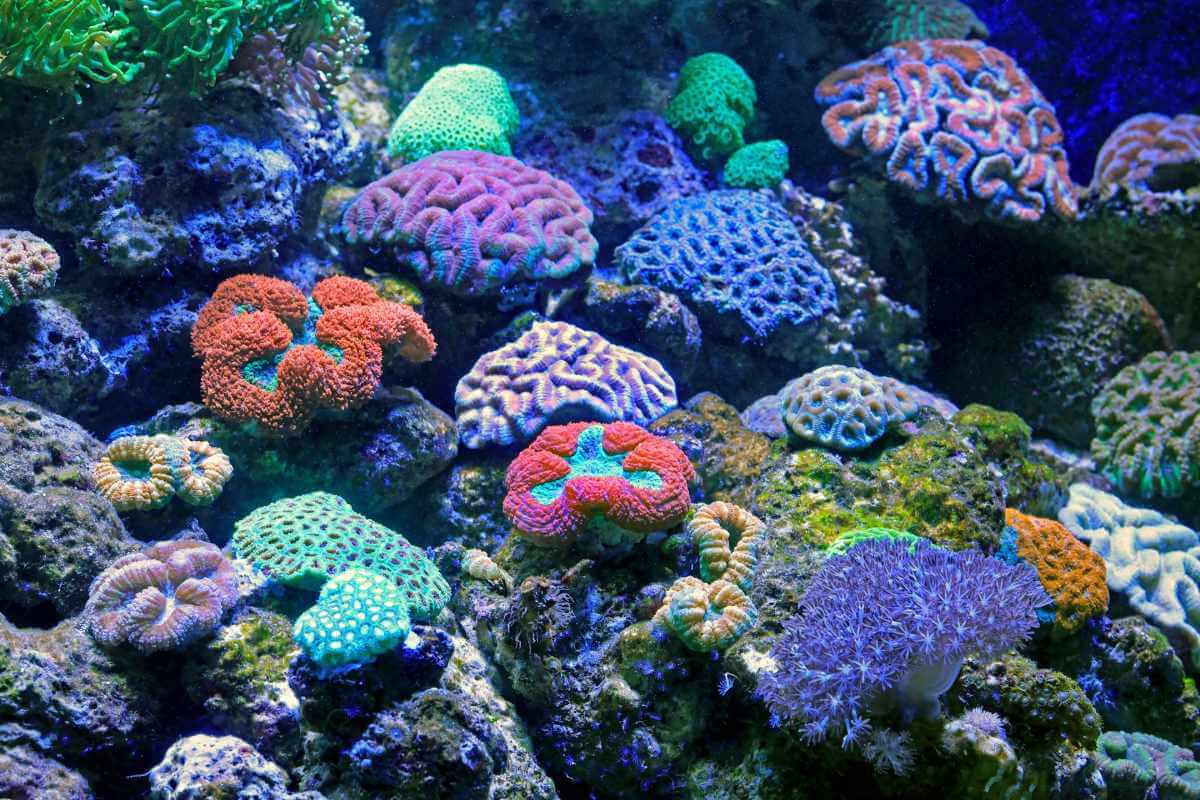
Bowerbanki Coral Care Guide
Bowerbanki corals are slow-growing LPS corals prized for their chunky polyps and vivid coloration. This care guide covers lighting, water flow, feeding, and placement to help reef keepers maintain these striking showpiece corals.
About Bowerbanki
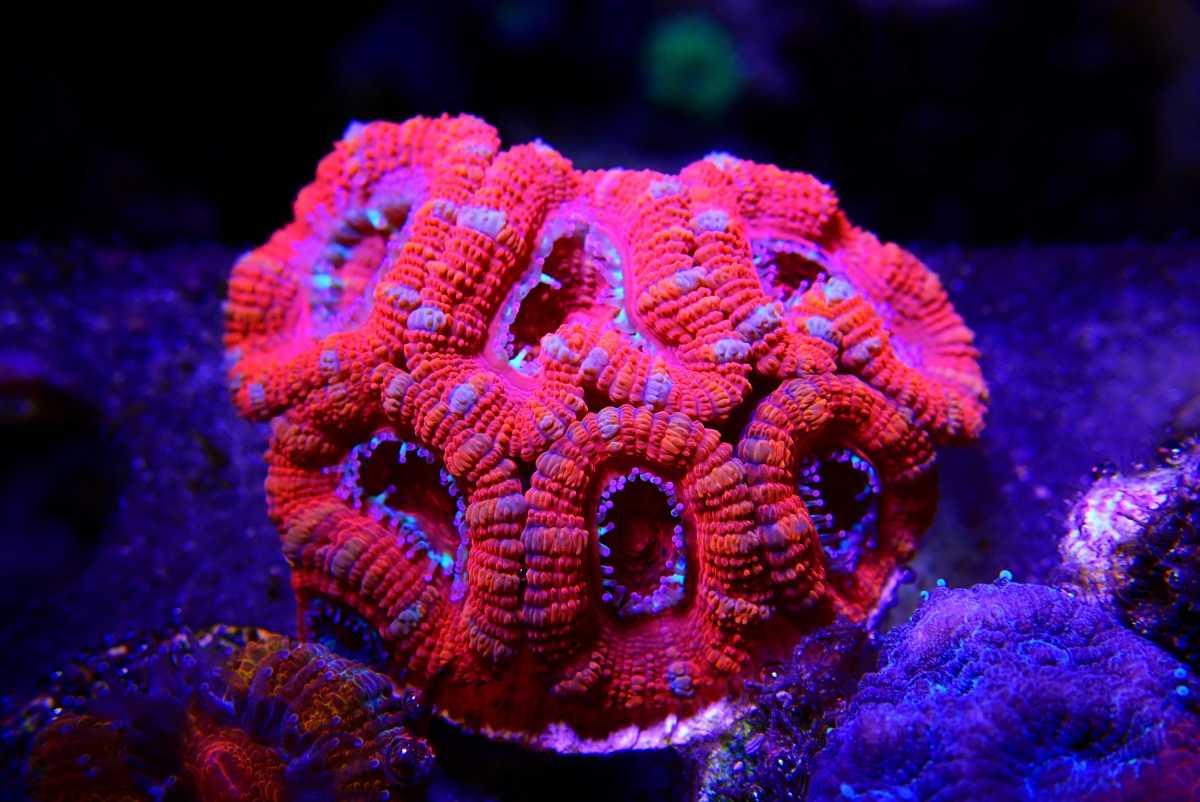
Bowerbanki Coral (Homophyllia bowerbanki) is a large polyp stony coral known for its thick, fleshy polyps with deep skeletal ridges and bold concentric color patterns in reds, oranges, greens, golds, and rainbow combinations. Bowerbanki polyps are the largest among corals formerly classified as Acanthastrea, measuring up to 2 inches across with a distinctive chunky, cushion-like appearance.
Bowerbanki thrives at low to moderate lighting of 100-200 PAR and gentle indirect water flow, making it suitable for lower tank placement where these conditions naturally occur. Bowerbanki grows slowly compared to related LPS species—colonies typically double in size over 1-2 years—but responds enthusiastically to target feeding, which accelerates growth and enhances coloration. Bowerbanki produces strong sweeper tentacles capable of damaging neighboring corals, requiring 2-5 inches of spacing depending on colony size.
Care Requirements
Quick overview for keeping your coral thriving
Difficulty
Intermediate
Lighting
Low to Moderate
Water Flow
Low to Moderate
Detailed Care Guide
In-depth information for optimal care
Difficulty Level
Beginner to Intermediate
Bowerbanki requires a moderate level of reef keeping knowledge to thrive long-term. The coral is forgiving of minor parameter fluctuations but performs best when the right combination of lighting, flow, feeding, and filtration are achieved and maintained.
Bowerbanki tolerates slightly elevated nutrients better than many LPS species, with nitrates around 5-10 ppm and phosphates at 0.03-0.25 ppm being acceptable. Maintaining calcium at 400-450 ppm, alkalinity at 8-12 dKH, and magnesium at 1300-1500 ppm supports healthy skeletal growth.
Lighting Requirements
Low to Moderate
Bowerbanki thrives at 100-200 PAR with optimal coloration often occurring in the 70-150 PAR range. High-intensity lighting causes bleaching and tissue damage in Bowerbanki colonies, so placement should favor the lower to middle tank regions.
New specimens should be acclimated by starting in the lower tank and gradually moving upward to the desired location over several weeks. Bowerbanki displays vivid colors under moderate lighting and can lose intensity or bleach under excessive PAR levels.
Water Flow
Low to Moderate
Bowerbanki prefers gentle, indirect water movement that keeps the coral clean without damaging its thick, fleshy tissue. Direct flow from powerheads causes tissue recession and prevents full polyp extension, stressing the coral over time.
Lower flow also provides more feeding opportunities, which is particularly important for this slow-growing species. Reef keepers should position Bowerbanki in areas with moderate indirect flow using random or variable patterns rather than constant directional current.
Keep your Bowerbanki healthy
Save photos, placement, parameters, and what you paid — and see how your Bowerbanki changes over time.
Parameters
In range8.5 dKH
Alkalinity target 8–9 dKH · sample data
Your Bowerbanki
just added$94 paid
value from live market
Feeding Response & Growth
Bowerbanki is an extremely aggressive feeder with capable tentacles that readily capture most food types including frozen mysis, brine shrimp, LPS pellets, and liquid coral foods. Regular target feeding is essential for Bowerbanki health and can transform growth from slow to moderate—some hobbyists report growth rates "exploding" when consistently fed pellets once or twice weekly.
Bowerbanki colonies that receive regular feeding keep their feeding tentacles extended for most of the day, improving overall health and reducing susceptibility to disease or infection. The coral's feeding aggression can extend to neighboring corals, making adequate spacing critical. While Bowerbanki accepts food eagerly, overfeeding should be avoided as uneaten food can rot against the tissue and cause localized tissue death.
Buying Advice
What to look for when purchasing
Tissue Inflation
Healthy Bowerbanki displays thick, fully inflated polyps with a chunky, cushion-like appearance. Flat or deflated polyps indicate stress and may require time to recover—or may signal poor health that could worsen after purchase.
Complete Tissue Coverage
Look for complete tissue coverage extending to all edges with no white skeleton visible. Exposed skeleton indicates stress, recession, or damage that may continue spreading after purchase.
Healed Frag Cuts
Ensure frags have had time to heal on their plug or rock before purchase. Fresh cuts are vulnerable to bacterial infection and transport stress—look for tissue that has grown over cut edges.
Color Vibrancy
Vibrant, saturated colors with clearly defined ring patterns indicate healthy zooxanthellae populations. Pale or washed-out coloration suggests light stress or poor water quality at the source.
Feeding Response
If possible, observe the coral during feeding. Healthy Bowerbanki extends feeding tentacles aggressively when food is present. Specimens that show no feeding response may be stressed or unhealthy.
Taxonomy
Species
Reef Value
Live pricing$1,860
+$120 this month
Priced from live marketplace listings
Bowerbanki
Just added · Frag rack
$94
Hammer Coral
8 months · Mid rock
$65
Zoa Colony
1 year · Sand bed
$40
Track Your Reef
Add your Bowerbanki to your tank's living inventory — placement, source, and photos as it grows — next to the parameter logs and maintenance history that keep it thriving. Reef Value even shows what your collection is worth, priced from live marketplace listings.
Find Your Perfect Bowerbanki
Compare prices from 7+ verified sellers. From budget-friendly frags to rare collector pieces.
Starting at
$40
Average Price
$94
Premium frags up to
$530
Full Price History
Trends, movers & market data
Frequently Asked
Common questions about Bowerbanki corals
What is the difference between Bowerbanki and Acan Lords?
Bowerbanki (Homophyllia bowerbanki) and Acan Lords (Micromussa lordhowensis) were both reclassified in 2016 into separate genera, despite both being commonly called "Acans" in the hobby. Bowerbanki has the largest polyps of any formerly-classified Acanthastrea species, with chunky polyps reaching up to 2 inches across, while Lord polyps are smaller at 0.5-2 inches.
Bowerbanki grows significantly slower than Lords, typically doubling in size over 1-2 years compared to Lords' faster growth rate. Bowerbanki also has a stronger sting and can damage Lords if placed too close—experienced reef keepers recommend never placing these species adjacent to each other.
How fast does Bowerbanki grow?
Bowerbanki is one of the slowest-growing LPS corals, with colonies typically doubling in size over 1-2 years under standard care. This slow growth rate is reflected in Bowerbanki pricing and explains why the species is rarely aquacultured despite its popularity.
Regular target feeding can significantly accelerate Bowerbanki growth, with some hobbyists reporting dramatic improvement when consistently feeding LPS pellets once or twice weekly. Growth may appear stagnant for extended periods before suddenly increasing, leading keepers to describe Bowerbanki as corals that "sneak up on you" with unexpected growth spurts.
What PAR level does Bowerbanki need?
Bowerbanki thrives at 100-200 PAR, with many hobbyists finding optimal coloration in the 70-150 PAR range. The coral should be placed in the lower to middle tank regions where lighting is naturally moderate, avoiding high-PAR areas near the water surface.
High-intensity lighting causes bleaching and tissue damage in Bowerbanki colonies. New specimens should be acclimated by starting in dimmer areas and gradually moving upward over several weeks. LED, T5, and metal halide lighting systems are all suitable when PAR levels are appropriately managed.
How often should I feed Bowerbanki?
Bowerbanki benefits from target feeding 1-2 times per week using LPS pellets, mysis shrimp, brine shrimp, or finely chopped meaty seafood. Regular feeding significantly improves growth rate, coloration, and overall health compared to colonies relying solely on photosynthesis.
Bowerbanki is an aggressive feeder that readily accepts most food types and will extend feeding tentacles when it detects food in the water. Place one appropriately-sized pellet or piece of food in each polyp mouth during feeding sessions. Avoid overfeeding, as uneaten food rotting against tissue can cause localized damage.
Why is my Bowerbanki receding?
Bowerbanki tissue recession commonly results from excessive lighting, direct water flow, or bacterial infection. If recession is occurring from the base upward while the upper tissue appears healthy, placement issues are more likely than lighting—consider moving the coral to a different location with more appropriate conditions.
Immediate intervention improves recovery chances. Move receding Bowerbanki to a lower-light, lower-flow area and consider a coral dip using TMPCC, Lugol's iodine, or Revive to address potential bacterial infection. If recession continues, fragging healthy tissue away from affected areas may save the remaining colony. Bowerbanki can recover from significant tissue loss with proper care over several months.
Are Bowerbanki Corals aggressive?
Bowerbanki has a strong sting and extends sweeper tentacles at night capable of damaging or killing neighboring corals. Bowerbanki's feeding aggression can also extend to nearby corals when food is detected, making adequate spacing critical for reef harmony.
Small to medium Bowerbanki colonies require 2-4 inches of clearance from other corals, while larger colonies need 4-5 inches minimum. Bowerbanki can defeat Micromussa Lords and other LPS species in territorial disputes, so never place these corals adjacent to prized specimens.
Explore Related Corals
Popular corals you might also be interested in
All LPS Corals
Browse the complete collection of LPS coral care guides