
Trachyphyllia Coral Care Guide
Trachyphyllia corals are fleshy LPS corals known for their dramatic inflation, vivid coloration, and preference for sand bed placement over traditional rockwork mounting. This care guide covers lighting, water flow, proper placement techniques, and feeding strategies to help reef keepers maintain healthy Open Brain colonies long-term.
About Trachyphyllia
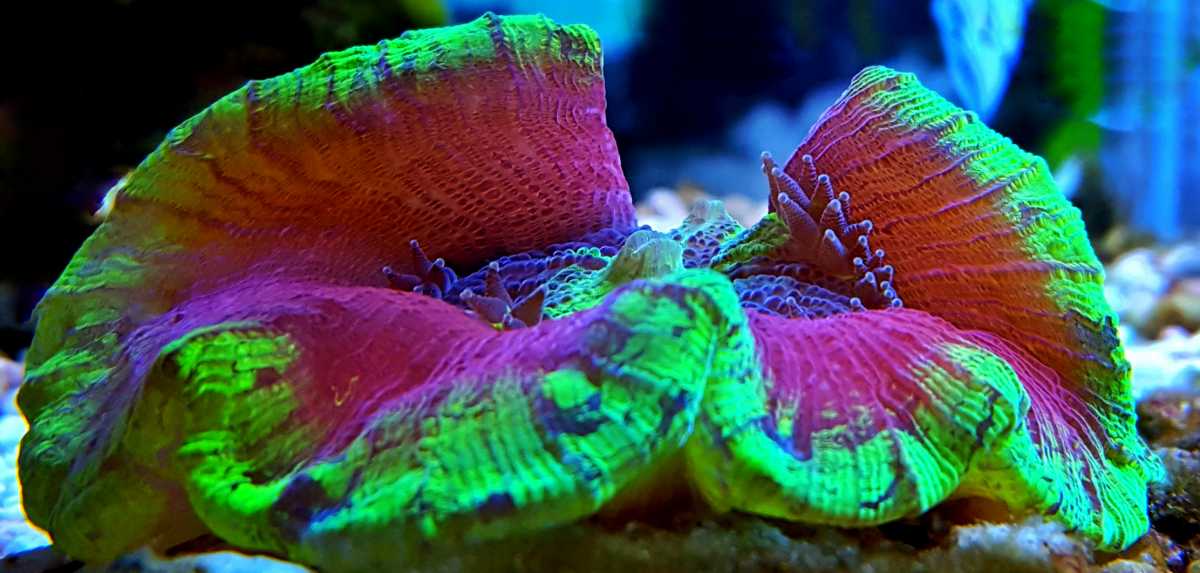
Trachyphyllia geoffroyi (Open Brain Coral) is a large polyp stony coral known for its heavily fleshed, dome-shaped body that inflates dramatically during daylight hours and displays vibrant colors including metallic greens, deep reds, oranges, pinks, and multi-colored rainbow patterns. Trachyphyllia corals feature rippling tissue that expands well beyond the underlying skeleton, creating a meaty, organic appearance prized by reef keepers seeking bold centerpiece corals. Trachyphyllia corals require low to moderate lighting in the 50-150 PAR range and gentle water flow, making these corals suitable for sand bed placement in lower tank regions.
Trachyphyllia corals are free-living species that naturally rest on sandy lagoon floors rather than attaching to reef structures, and reef keepers should replicate this by placing specimens directly on sand beds rather than rough rockwork that can damage their delicate tissue during expansion cycles. All Open Brain corals in the aquarium trade now fall under the single species Trachyphyllia geoffroyi, with the former genus Wellsophyllia having been synonymized into Trachyphyllia.
Care Requirements
Quick overview for keeping your coral thriving
Difficulty
Beginner Friendly
Lighting
Low to Moderate
Water Flow
Low
Detailed Care Guide
In-depth information for optimal care
Difficulty Level
Beginner to Intermediate
Trachyphyllia corals prove hardy once properly acclimated and placed, tolerating a range of lighting and flow conditions that make them accessible to reef keepers with established tanks. Trachyphyllia corals are not available through aquaculture and grow extremely slowly, which limits fragging potential but also means healthy specimens can thrive for years with consistent care.
The primary challenge involves proper placement on sand beds to prevent tissue damage, and maintaining stable water quality to avoid brown jelly disease and tissue recession that can affect stressed specimens.
Lighting Requirements
Low to Moderate
Trachyphyllia corals thrive under low to moderate lighting in the 50-150 PAR range, with many specimens performing best toward the lower end around 50-100 PAR. Excessive lighting causes Trachyphyllia corals to bleach and expel zooxanthellae, leading to tissue recession and potential death if not corrected promptly.
New Trachyphyllia specimens should be acclimated in lower light areas and gradually adjusted over 2-3 weeks if higher intensity is desired. Blue-spectrum lighting enhances the fluorescent colors these corals are prized for while maintaining appropriate intensity levels.
Water Flow
Low
Trachyphyllia corals require gentle, indirect water flow that allows their fleshy tissue to expand fully without causing abrasion or forced contraction. Strong direct current damages the delicate tissue of Trachyphyllia corals and causes them to remain tightly contracted, reducing both photosynthesis and overall health.
Reef keepers should position Trachyphyllia in calm areas where flow is diffused, avoiding placement in powerhead streams or high-turbulence zones. Light random flow helps keep the coral surface clean of detritus without stressing the animal.
Keep your Trachyphyllia healthy
Save photos, placement, parameters, and what you paid — and see how your Trachyphyllia changes over time.
Parameters
In range8.5 dKH
Alkalinity target 8–9 dKH · sample data
Your Trachyphyllia
just added$180 paid
value from live market
Sand Bed Placement Requirements
Trachyphyllia corals are free-living species that naturally inhabit sandy lagoon floors rather than attaching to reef structures, making proper sand bed placement essential for long-term health in reef aquariums. Trachyphyllia tissue is exceptionally delicate and inflates dramatically during daylight hours, often expanding 2-3 times the size of the underlying skeleton. Placing Trachyphyllia on rough rockwork causes tissue abrasion during these expansion cycles, leading to wounds that invite bacterial infection and progressive tissue recession.
Reef keepers should position Trachyphyllia directly on fine sand beds with adequate clearance from rocks and neighboring corals on all sides to accommodate full inflation. Avoid locations where water flow disturbs sand onto the coral surface, as Trachyphyllia must expend significant energy sloughing off debris, weakening the animal and increasing susceptibility to bleaching and disease. While some hobbyists successfully keep Trachyphyllia on smooth, flat rock surfaces, sand bed placement consistently produces healthier specimens with fewer tissue damage incidents over time.
Feeding Response and Behavior
Trachyphyllia corals display distinctive feeding behavior that differs from many other LPS species, extending specialized feeding tentacles primarily during nighttime hours when water column prey is most active in their natural habitat. Trachyphyllia feeding tentacles emerge from the coral surface after lights-out and remain extended until the coral successfully captures food or determines no prey is available, at which point they retract until the next feeding opportunity.
Target feeding Trachyphyllia corals produces the best results, with reef keepers using turkey basters or feeding syringes to deliver mysis shrimp, brine shrimp, or minced seafood directly onto the extended tentacles. Trachyphyllia corals that sense food entering the aquarium may extend feeding tentacles during daylight hours in anticipation, providing feeding opportunities outside the typical nighttime window. Regular feeding enhances tissue health, coloration intensity, and overall coral vigor, though overfeeding more than 2-3 times weekly may cause abnormal growth patterns.
Buying Advice
What to look for when purchasing
Coloration
Look for vibrant, saturated colors such as red, green, orange, or rainbow morphs. Dull or faded colors may indicate stress or poor health.
Tissue Health
Choose specimens with full, inflated tissue and no visible skeleton. Recession, tears, or exposed white areas are signs of damage or disease.
Inflation
A healthy Trachy should appear inflated and fleshy during the day. While some deflation is normal during transport or at night, persistently deflated tissue could signal stress or disease.
Taxonomy
Species
Reef Value
Live pricing$1,860
+$120 this month
Priced from live marketplace listings
Trachyphyllia
Just added · Frag rack
$180
Hammer Coral
8 months · Mid rock
$65
Zoa Colony
1 year · Sand bed
$40
Track Your Reef
Add your Trachyphyllia to your tank's living inventory — placement, source, and photos as it grows — next to the parameter logs and maintenance history that keep it thriving. Reef Value even shows what your collection is worth, priced from live marketplace listings.
Find Your Perfect Trachyphyllia
Compare prices from 10+ verified sellers. From budget-friendly frags to rare collector pieces.
Starting at
$50
Average Price
$180
Premium frags up to
$450
Full Price History
Trends, movers & market data
Frequently Asked
Common questions about Trachyphyllia corals
Where should I place Trachyphyllia in my tank?
Trachyphyllia corals belong on the sand bed in lower tank areas with gentle, indirect flow and moderate to low lighting in the 50-150 PAR range. Trachyphyllia corals are free-living species that naturally rest on sandy lagoon floors, and placing them on rough rockwork risks tissue damage as the coral expands and contracts throughout the day.
Reef keepers should provide adequate clearance around Trachyphyllia specimens to allow full tissue inflation without contact with rocks or neighboring corals, and avoid areas where disturbed sand or debris will settle on the coral surface.
How often should I feed Trachyphyllia?
Trachyphyllia corals benefit from target feeding 1-3 times per week with meaty foods such as mysis shrimp, brine shrimp, finely minced seafood, or commercial LPS pellets. Trachyphyllia corals extend feeding tentacles primarily at night, making evening the optimal time for target feeding, though hungry specimens will accept food during daylight hours when directly offered.
Feeding frequency depends on lighting intensity—specimens under lower light rely more heavily on supplemental feeding, while those receiving stronger illumination may require less frequent meals. Overfeeding can cause abnormal growth patterns, so reef keepers should monitor response and adjust frequency accordingly.
Why is my Trachyphyllia turning white?
Trachyphyllia corals turn white through bleaching, a stress response where the coral expels symbiotic zooxanthellae from its tissue in reaction to environmental stressors. Trachyphyllia corals bleach most commonly from excessive lighting above 150 PAR, sudden increases in light intensity, elevated water temperatures above 82°F, or unstable water chemistry.
Reef keepers observing bleaching should immediately relocate the Trachyphyllia to a lower-light area, verify temperature stability, and test water parameters for abnormalities. Increased target feeding during recovery helps Trachyphyllia corals rebuild tissue and regain coloration over several weeks, though severely bleached specimens may not survive.
Can Trachyphyllia be placed on rock instead of sand?
Trachyphyllia corals can technically survive on rockwork, but sand bed placement remains strongly recommended to prevent tissue damage during the coral's natural expansion and contraction cycles. Trachyphyllia tissue is delicate and can tear or abrade against rough rock surfaces as the coral inflates throughout the day, potentially leading to bacterial infection and tissue recession.
Reef keepers who must place Trachyphyllia on rock should select completely smooth, flat surfaces and ensure the coral cannot shift or contact edges during expansion. Most experienced aquarists agree that sand bed placement produces healthier, longer-lived specimens with fewer tissue damage issues.
What is the difference between Trachyphyllia and Wellsophyllia?
Trachyphyllia and Wellsophyllia are now recognized as the same coral species following taxonomic revision that synonymized Wellsophyllia radiata into Trachyphyllia geoffroyi. Reef keepers may still encounter the name "Wellsophyllia" in older references or from vendors using legacy terminology, but all Open Brain corals in the aquarium trade belong to the single species Trachyphyllia geoffroyi regardless of color morph or growth form.
The hobby distinction between "Trachy" and "Wellso" typically reflected appearance variations or collection locations rather than actual species differences, and purchasing either label yields the same coral with identical care requirements.
Why is my Trachyphyllia not inflating?
Trachyphyllia corals remain deflated or fail to fully inflate primarily due to excessive water flow, recent environmental stress, or underlying health issues affecting tissue expansion. Trachyphyllia corals exposed to strong direct current cannot expand properly and will stay contracted to protect their delicate tissue from damage.
Reef keepers observing persistent deflation should first verify flow is gentle and indirect, then check lighting levels and water parameters for abnormalities. New Trachyphyllia specimens may take 1-2 weeks to fully acclimate and display normal inflation behavior, while deflation accompanied by tissue recession or brown jelly indicates serious health decline requiring immediate intervention.
Explore Related Corals
Popular corals you might also be interested in
All LPS Corals
Browse the complete collection of LPS coral care guides