
Blasto Coral Care Guide
Blasto corals are beginner-friendly LPS corals valued for their vivid colors and low-maintenance care requirements. This care guide covers Blastomussa lighting, water flow, placement, feeding, and species differences to help reef keepers of all experience levels maintain healthy, colorful Blasto Coral colonies.
About Blasto
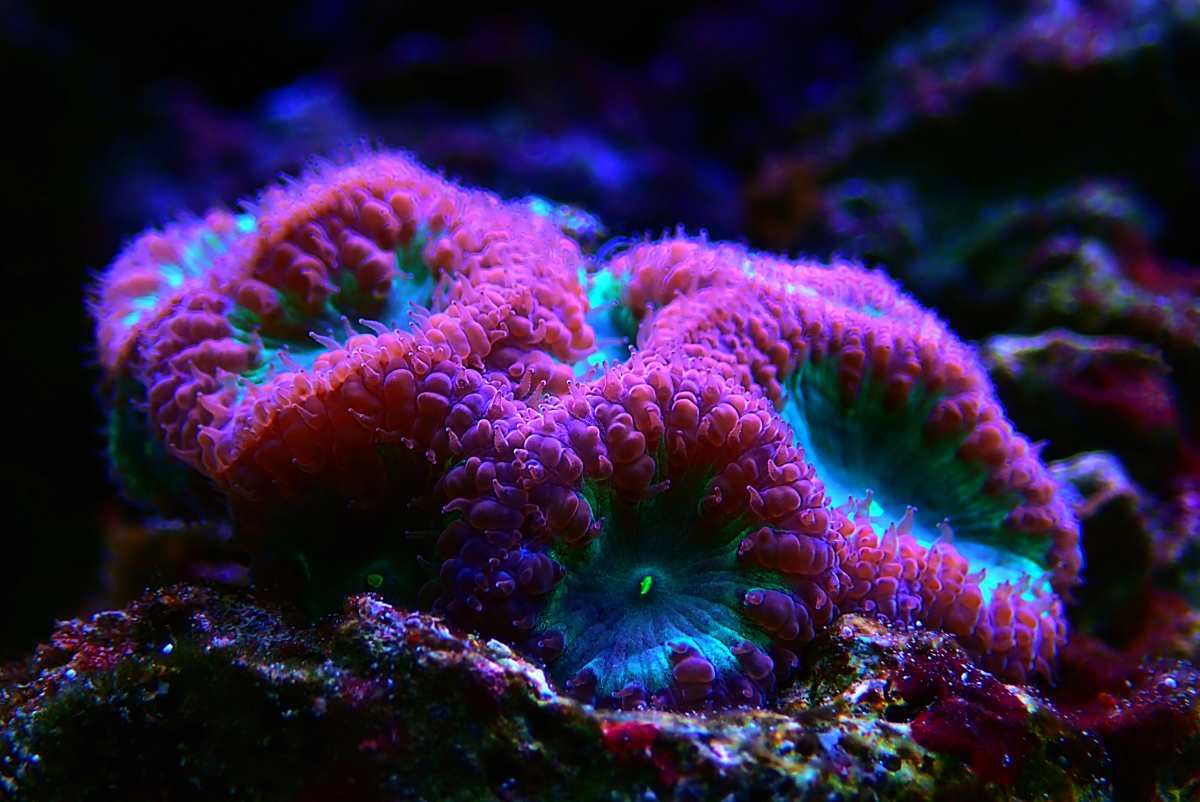
Blasto Coral (Blastomussa spp.) is a large polyp stony (LPS) coral in the family Mussidae, recognized for round, fleshy polyps in vivid colors including red, green, teal, orange, and purple. Blastomussa corals are native to Indo-Pacific reef environments in Indonesia, Fiji, and Australia's Great Barrier Reef, where colonies grow in dome-shaped or flat clusters with individual polyps ranging from 1 to 5 inches across depending on species. Blasto Coral thrives under low to moderate lighting of 75–150 PAR and gentle, indirect water flow, making Blastomussa one of the most beginner-friendly LPS corals in the reef aquarium hobby.
Blasto Coral is a peaceful species that lacks potent sweeper tentacles, requiring placement away from more aggressive neighbors that could sting or damage exposed Blastomussa polyps. Blastomussa colonies grow slowly under optimal conditions, producing 2–4 new polyps per year, and respond well to weekly target feeding with meaty foods like mysis shrimp.
Care Requirements
Quick overview for keeping your coral thriving
Difficulty
Beginner Friendly
Lighting
Low to Moderate
Water Flow
Low to Moderate
Detailed Care Guide
In-depth information for optimal care
Difficulty Level
Easy to Intermediate
Blasto Coral is one of the most forgiving LPS corals for beginning reef keepers. Blastomussa tolerates moderate parameter fluctuations and does not require high-intensity lighting or precise water flow, making Blasto Coral an ideal stepping stone from soft corals to stony coral husbandry.
Reef keepers should maintain stable water chemistry — temperature between 75–80°F, salinity of 1.024–1.026, alkalinity of 8–9.5 dKH, calcium of 420–440 ppm, and magnesium of 1260–1350 ppm — for optimal Blasto Coral health and coloration.
Lighting Requirements
Low to Moderate
Blasto Coral thrives under low to moderate lighting in the 75–150 PAR range. Blastomussa placed under excessive light will bleach, retract polyps, or develop an abnormal inflated appearance that signals light stress.
Reef keepers should start newly acquired Blasto Coral in the darkest area of the tank for the first two weeks, then gradually transition Blastomussa to its permanent position. Blasto Coral does not require high-output reef lighting and performs well under standard LED fixtures positioned in the lower third of the aquarium.
Water Flow
Low to Moderate
Blasto Coral performs best in low to gentle indirect water flow. Blastomussa polyps are large and fleshy, and direct powerhead current will cause Blasto Coral to retract polyps and refuse to open, eventually leading to tissue damage if flow is not reduced.
Reef keepers should position Blasto Coral behind live rock or in a sheltered area where flow is present but indirect. Adjustable powerheads help dial in the right amount of current — Blastomussa polyps should show gentle swaying movement without constant retraction.
Keep your Blasto healthy
Save photos, placement, parameters, and what you paid — and see how your Blasto changes over time.
Parameters
In range8.5 dKH
Alkalinity target 8–9 dKH · sample data
Your Blasto
just added$80 paid
value from live market
Blastomussa Species in the Aquarium Hobby
Wellsi, Merleti, and Vivida
Blastomussa corals are available in three species commonly found in the reef aquarium trade, each with distinct characteristics. Blastomussa wellsi is the most popular and widely available species, producing large fleshy polyps measuring 1–5 inches in diameter that grow by encrusting over rock surfaces. Blastomussa merleti features smaller polyps approximately 1 inch across that grow on elongated branching stalks, giving colonies a pipe-like skeletal structure distinct from the encrusting growth form of Blastomussa wellsi. Blastomussa vivida is the rarest of the three species, producing the largest individual polyps up to 4 inches across but growing without stalks and proving more sensitive to injury than the other two species.
Blastomussa wellsi displays the widest range of color morphs in the hobby, including red, green, teal, purple, orange, and multicolor combinations that command premium prices among collectors. Blastomussa merleti is most commonly found in red and green color combinations with a distinctive whiskered polyp appearance. All three Blastomussa species require the same care conditions — low to moderate lighting of 75–150 PAR and gentle indirect water flow — though Blastomussa vivida requires more careful handling and slower acclimation than Blastomussa wellsi or Blastomussa merleti.
Buying Advice
What to look for when purchasing
Polyp Health
Healthy Blasto Coral frags display fully inflated, fleshy polyps with no signs of retraction or tissue tearing. Blastomussa frags with visible skeleton, sunken polyp mouths, or partially retracted tissue may indicate stress, disease, or damage during shipping. Reef keepers should select Blasto Coral specimens showing plump, extended polyps as the primary indicator of overall health.
Coloration
Healthy Blasto Coral displays rich, saturated colors with distinct patterns across each polyp. Blastomussa frags with faded, washed-out, or uniformly brown coloration may indicate prolonged light stress, poor water quality, or bleaching. Reef keepers should compare Blasto Coral color intensity against other specimens from the same seller to gauge relative health.
Tissue Recession
Blasto Coral frags should show tissue fully covering the skeleton with no exposed calcium carbonate at the base or between polyps. Blastomussa tissue recession — where flesh pulls back from the skeleton — can spread rapidly if not addressed and often indicates unstable water parameters or bacterial infection. Reef keepers should avoid purchasing Blasto Coral with any visible skeletal exposure, particularly around the base of the colony.
Pest Inspection
Blasto Coral should be inspected for flatworms, nudibranchs, and parasitic snails before adding Blastomussa to an established reef tank. Reef keepers should dip all new Blasto Coral frags in a coral dip solution for 5–10 minutes, then rinse in clean saltwater before placement. Inspecting the dip water for expelled pests confirms whether Blastomussa was carrying hitchhikers.
Taxonomy
Species
Reef Value
Live pricing$1,860
+$120 this month
Priced from live marketplace listings
Blasto
Just added · Frag rack
$80
Hammer Coral
8 months · Mid rock
$65
Zoa Colony
1 year · Sand bed
$40
Track Your Reef
Add your Blasto to your tank's living inventory — placement, source, and photos as it grows — next to the parameter logs and maintenance history that keep it thriving. Reef Value even shows what your collection is worth, priced from live marketplace listings.
Find Your Perfect Blasto
Compare prices from 15+ verified sellers. From budget-friendly frags to rare collector pieces.
Starting at
$15
Average Price
$80
Premium frags up to
$450
Full Price History
Trends, movers & market data
Frequently Asked
Common questions about Blasto corals
Is Blasto Coral good for beginners?
Blasto Coral (Blastomussa spp.) is one of the most beginner-friendly LPS corals in the reef aquarium hobby. Blastomussa tolerates a wide range of water parameters and does not demand high-intensity lighting or strong water flow, making Blasto Coral forgiving for new reef keepers still learning to maintain stable tank chemistry. Blasto Coral thrives under standard aquarium lighting and low to moderate flow, and Blastomussa colonies rarely exhibit aggression toward neighboring corals.
Reef keepers should maintain stable water chemistry — temperature between 75–80°F, alkalinity of 8–9.5 dKH, and calcium of 420–440 ppm — and Blasto Coral will reward them with vibrant polyp extension and steady growth.
What lighting does Blasto Coral need?
Blasto Coral thrives under low to moderate lighting in the 75–150 PAR range, and Blastomussa polyps will fully extend and display their brightest colors under these subdued conditions. Blasto Coral placed under excessive light intensity will bleach, retract its polyps, or develop an abnormal inflated appearance — each of these responses signals that the coral needs to be relocated to a shadier position.
Reef keepers adding a new Blasto Coral should place Blastomussa in the darkest area of the tank for the first two weeks, then gradually transition the coral to its permanent location with slightly more light. Blasto Coral does not require expensive high-output reef lighting and performs well under standard LED fixtures.
Where should I place Blasto Coral in my tank?
Blasto Coral performs best when placed on the sand bed or low rockwork in the lower third of the aquarium, where Blastomussa receives low to moderate indirect lighting and gentle water flow. Blasto Coral positioned higher in the tank typically shows less intense coloration and slower growth due to increased light and flow exposure.
Reef keepers should leave at least 1–2 inches of space between Blasto Coral and neighboring corals, because Blastomussa lacks potent sweeper tentacles and cannot defend itself against more aggressive species like Torch Coral or Hammer Coral. Mounting Blasto Coral with IC gel glue or putty on an exposed rock ledge provides a stable base for long-term colony growth.
How do I feed Blasto Coral?
Blasto Coral obtains most of its energy from symbiotic zooxanthellae algae through photosynthesis, but Blastomussa colonies benefit significantly from supplemental target feeding one to two times per week. Blasto Coral accepts meaty foods including mysis shrimp, brine shrimp, reef roids, and finely chopped marine pellets — target feeding ensures each polyp receives nutrition directly, since every Blastomussa polyp functions as an individual organism.
Reef keepers can maximize feeding response by offering food approximately one hour after lights go out, when Blasto Coral extends its feeding tentacles. Regular target feeding accelerates Blastomussa growth rates and enhances color intensity compared to colonies that rely solely on photosynthesis.
Can Blasto Coral touch other corals?
Blasto Coral is a peaceful species that ranks low on the LPS aggression scale, and Blastomussa will not sting or damage most neighboring corals through direct contact. Blasto Coral does possess sweeper tentacles, but Blastomussa sweeper tentacles are weak compared to aggressive LPS species like Torch Coral or Galaxea.
The greater concern is that more aggressive corals may sting and damage Blasto Coral — Blastomussa lacks the defensive capability to protect itself from potent sweeper tentacles of neighboring species. Reef keepers should maintain 1–2 inches of clearance around Blasto Coral colonies and avoid placing Blastomussa directly adjacent to known aggressive corals, anemones, or species with long sweeper tentacles.
How fast does Blasto Coral grow?
Blasto Coral is a slow-growing LPS species, and Blastomussa colonies typically produce 2–4 new polyps per year under stable aquarium conditions. Blasto Coral growth rate increases with consistent target feeding of meaty foods like mysis shrimp one to two times per week, combined with stable water chemistry including alkalinity of 8–9.5 dKH and calcium of 420–440 ppm.
Blastomussa wellsi tends to grow by encrusting over rock surfaces, while Blastomussa merleti produces branching stalks that extend outward from the colony base. Reef keepers should not expect rapid colony expansion from Blasto Coral, but patient aquarists who maintain optimal conditions will see steady polyp addition over time.
What is the difference between Blastomussa wellsi and Blastomussa merleti?
Blastomussa wellsi and Blastomussa merleti differ primarily in polyp size and growth form. Blastomussa wellsi produces large, fleshy polyps measuring 1–5 inches in diameter that grow by encrusting over rock surfaces, while Blastomussa merleti has smaller polyps reaching approximately 1 inch across that grow on elongated branching stalks.
Blastomussa wellsi displays a wider range of color morphs and is generally the most sought-after species in the reef aquarium hobby. Blastomussa merleti tends to be easier to propagate because individual stalked polyps separate cleanly for fragging. Both Blastomussa species require identical care — low to moderate lighting of 75–150 PAR and gentle indirect water flow — and both species are considered beginner-friendly LPS corals.
Why is my Blasto Coral not opening?
Blasto Coral that remains retracted or refuses to open polyps is most commonly responding to excessive light or excessive water flow, the two leading causes of Blastomussa stress in reef aquariums. Blasto Coral placed in high-light areas above 150 PAR or in direct powerhead flow will retract polyps as a protective response, and prolonged exposure can lead to tissue recession.
Reef keepers should first verify that Blasto Coral is positioned in a low-light, low-flow area — ideally on the sand bed or low rockwork — and check water parameters including magnesium (1260–1350 ppm), calcium (420–440 ppm), and alkalinity (8–9.5 dKH). Blasto Coral may also retract temporarily after handling, fragging, or acclimation to a new tank, and Blastomussa typically requires one to two weeks to recover and resume normal polyp extension.
Explore Related Corals
Popular corals you might also be interested in

All LPS Corals
Browse the complete collection of LPS coral care guides