
Plate Coral Care Guide
Plate Corals are free-living LPS corals known for their disc shape, vibrant colors, and ability to move across the substrate. This care guide covers lighting, water flow, sand bed placement, and feeding to help reef keepers maintain healthy Plate Coral specimens in their aquariums.
About Plate
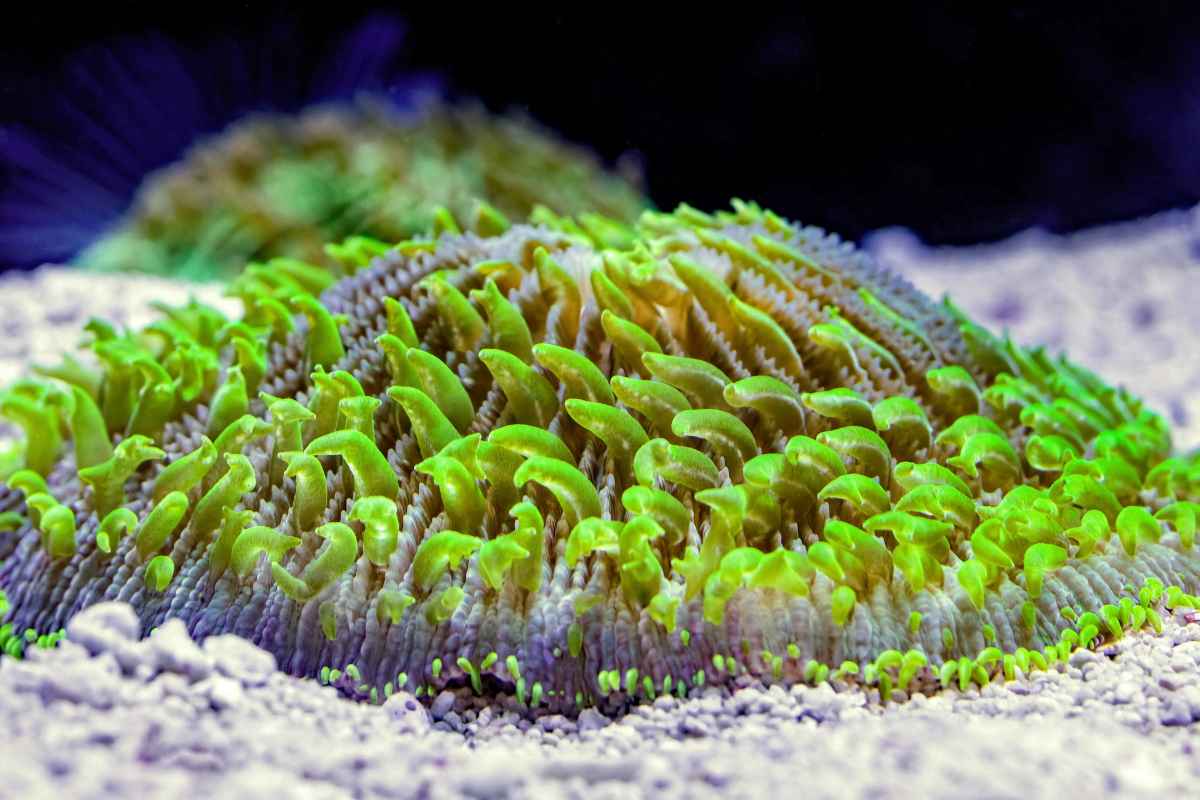
Plate Coral (Fungia spp., Cycloseris spp.) is a free-living large polyp stony coral characterized by its disc-shaped skeleton, central mouth, and radiating tentacles that extend during feeding. Plate Corals display colors including orange, green, pink, purple, and red, with specimens resting unattached on sand beds or rubble rather than affixing to rock surfaces like most reef corals. Plate Corals require low to moderate lighting of 50-150 PAR and low to moderate indirect water flow, making the species suitable for beginning to intermediate reef keepers who can provide appropriate sand bed placement.
Plate Corals possess the remarkable ability to move across substrate at speeds up to 12 inches per day and can inflate their tissue to flip upright if overturned. Plate Coral aggression manifests through toxic mucus secretion that damages neighboring corals, requiring 4-6 inches of spacing from other species. Plate Corals benefit significantly from target feeding with meaty foods like mysis shrimp when tentacles extend at night, supplementing nutrition derived from photosynthetic zooxanthellae.
Care Requirements
Quick overview for keeping your coral thriving
Difficulty
Intermediate
Lighting
Low to Moderate
Water Flow
Low to Moderate
Detailed Care Guide
In-depth information for optimal care
Difficulty Level
Beginner to Intermediate
Plate Corals adapt well to aquarium conditions when provided appropriate sand bed placement, gentle flow, and regular feeding, making the species accessible to beginning reef keepers with established systems. Plate Corals tolerate moderate parameter variation but respond negatively to debris accumulation, excessive flow, or placement on sharp substrates that damage their fleshy tissue.
Plate Coral long-term success requires attention to feeding schedules and spacing from aggressive neighbors, as the species may decline over months without supplemental nutrition despite photosynthetic capability. Reef keepers who commit to regular target feeding typically maintain healthy Plate Coral specimens for years.
Lighting Requirements
Low to Moderate
Plate Corals thrive under low to moderate lighting between 50-150 PAR, with blue spectrum emphasis enhancing the fluorescent pigments that produce their characteristic vibrant colors. Plate Corals tolerate higher PAR levels up to 200-250 when acclimated gradually, though most specimens display optimal coloration and health in the 75-150 PAR range typical of sand bed positions.
Plate Coral coloration responds to light spectrum more than raw intensity, with strong blue lighting producing the most vibrant fluorescence in orange, green, and pink specimens. New Plate Corals should begin at lower light levels and acclimate over 2-3 weeks to prevent stress from sudden intensity changes.
Water Flow
Low to Moderate
Plate Corals prefer low to moderate indirect water flow that allows tentacle extension without causing tissue distortion or constant movement stress. Plate Coral flesh draws tight against the skeleton when exposed to excessive direct flow, indicating flow levels that will damage the specimen over time.
Plate Corals benefit from randomized flow patterns that prevent detritus accumulation on their disc surface while avoiding the strong currents that push lightweight specimens across the substrate. Placement in areas where flow converges gently rather than impacts directly produces optimal tentacle extension and feeding response.
Keep your Plate healthy
Save photos, placement, parameters, and what you paid — and see how your Plate changes over time.
Parameters
In range8.5 dKH
Alkalinity target 8–9 dKH · sample data
Your Plate
just added$115 paid
value from live market
Buying Advice
What to look for when purchasing
Tissue Health
Look for full, inflated tissue with no signs of recession, tears, or exposed skeleton. A healthy Plate Coral will appear plump and responsive to tank motion or light touch.
Coloration
Choose specimens with vibrant, saturated colors and even pigmentation. Dull or faded colors may indicate stress or poor lighting history.
Polyp Extension
Look for corals with tentacles visibly extended. Healthy Plate Corals often show gentle movement and respond to light or touch. A withdrawn or unresponsive coral may indicate stress or poor acclimation.
Taxonomy
Species
Reef Value
Live pricing$1,860
+$120 this month
Priced from live marketplace listings
Plate
Just added · Frag rack
$115
Hammer Coral
8 months · Mid rock
$65
Zoa Colony
1 year · Sand bed
$40
Track Your Reef
Add your Plate to your tank's living inventory — placement, source, and photos as it grows — next to the parameter logs and maintenance history that keep it thriving. Reef Value even shows what your collection is worth, priced from live marketplace listings.
Find Your Perfect Plate
Compare prices from 15+ verified sellers. From budget-friendly frags to rare collector pieces.
Starting at
$29
Average Price
$115
Premium frags up to
$700
Full Price History
Trends, movers & market data
Frequently Asked
Common questions about Plate corals
Can Plate Corals move?
Plate Corals possess the remarkable ability to move across substrate by inflating and contracting their fleshy tissue, traveling up to 12 inches per day when seeking preferred conditions. Plate Corals use this mobility to right themselves if overturned, relocate away from aggressive neighbors, or find optimal lighting and flow positions within the aquarium.
Plate Coral movement resembles anemone locomotion, with specimens capable of climbing rock slopes at angles up to 30 degrees when motivated to relocate. Reef keepers should expect newly placed Plate Corals to explore their surroundings before settling into a preferred position, sometimes moving considerable distances from their initial placement.
Where should I place Plate Coral in my tank?
Plate Corals require placement on sand beds or rubble zones where they can rest unattached with 4-6 inches of clear space separating them from neighboring corals. Plate Corals prefer medium to coarse substrate over fine sand, as powder-fine sand irritates their tissue when water movement deposits particles on their disc surface.
Plate Coral placement benefits from positioning on flat rocks or coral rubble pieces set into the sand bed, elevating the specimen slightly to prevent debris accumulation while maintaining the low-tank position the species prefers. Reef keepers should avoid placing Plate Corals where strong direct flow will push them across the substrate or where rockwork shadows reduce lighting below 50 PAR.
Do Plate Corals need feeding?
Plate Corals benefit significantly from regular target feeding despite deriving partial nutrition from photosynthetic zooxanthellae, with fed specimens displaying better coloration, tissue fullness, and long-term survival than unfed corals. Plate Corals accept mysis shrimp, brine shrimp, reef roids, and other meaty foods placed anywhere on their disc surface, using their tentacles to transport food to the central mouth.
Plate Coral feeding works best at night when tentacles extend fully, with reef keepers target-feeding 2-3 times per week for optimal results. Plate Corals rank among the most aggressive feeders in reef aquariums, readily capturing and consuming food items that contact their tentacles.
Are Plate Corals aggressive?
Plate Corals display semi-aggressive behavior through toxic mucus secretion that damages neighboring corals within reach, requiring minimum spacing of 4-6 inches from other species. Plate Coral aggression increases when specimens inflate to double their resting size, extending their effective reach and potential for contact with tank mates.
Plate Corals tolerate other Plate Corals well, often coexisting peacefully when specimens contact each other, making it possible to keep multiple Fungia in proximity without the chemical warfare directed at other coral species. Reef keepers maintaining mixed reef aquariums should monitor Plate Coral movement patterns and adjust spacing when specimens relocate toward vulnerable neighbors.
Why is my Plate Coral not opening?
Plate Corals remain closed when experiencing stress from excessive water flow, inappropriate lighting, debris accumulation, or recent contact with aggressive tank mates. Plate Coral tissue recession and failure to extend tentacles commonly results from placement in high-flow areas where current presses flesh against the skeleton, or from fine sand particles depositing on the disc surface.
Plate Corals may take several days to resume normal extension after relocation or environmental changes, and reef keepers should allow 1-2 weeks of observation before assuming problems require intervention. Plate Coral specimens showing exposed skeleton, brown jelly formation, or persistent mouth gaping indicate serious decline requiring immediate assessment of water parameters and potential quarantine.
What causes Plate Coral tissue loss?
Plate Coral tissue loss results from bacterial infections like brown jelly disease, contact with aggressive corals, parameter instability, or chronic stress from improper flow and lighting conditions. Plate Corals are susceptible to brown jelly disease, a bacterial infection appearing as dark gelatinous material on tissue that spreads rapidly and can affect other corals in the system.
Plate Coral tissue recession often begins around the central mouth area when specimens experience stress, potentially triggered by alkalinity swings, low pH below 8.0, or contact with stinging corals like Euphyllia species. Reef keepers noticing early tissue loss should verify parameters, reduce flow if excessive, and consider iodine dips for bacterial infections while improving overall water quality.
Explore Related Corals
Popular corals you might also be interested in
All LPS Corals
Browse the complete collection of LPS coral care guides