
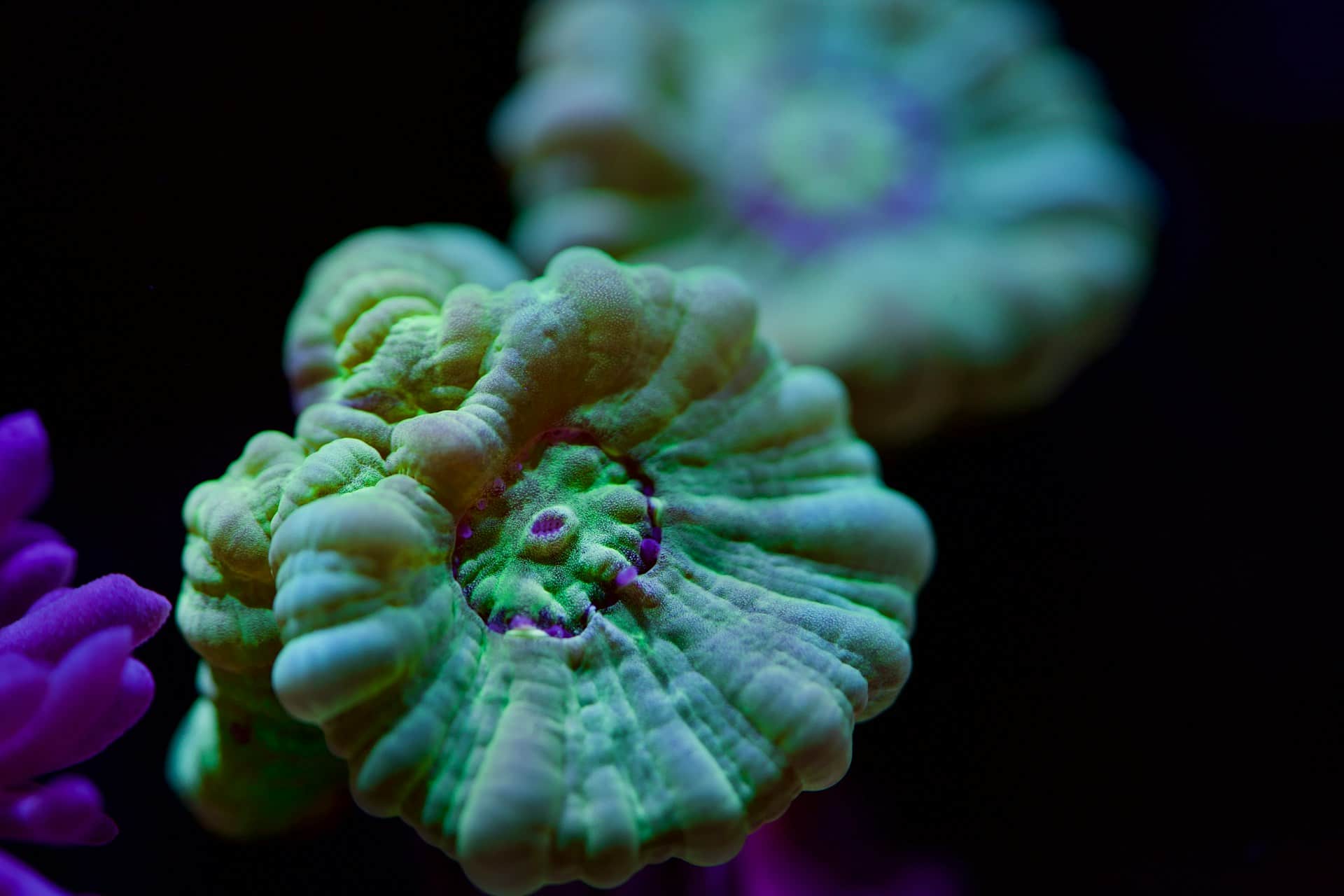
Candy Cane Coral Care Guide
Candy Cane corals are beginner-friendly LPS corals appreciated for their hardiness and vibrant colors. This care guide covers lighting needs, water flow requirements, feeding practices, and placement recommendations to help reef keepers successfully maintain healthy Candy Cane colonies.
About Candy Cane
Candy Cane Coral (Caulastrea furcata) is one of the most popular and beginner-friendly large polyp stony (LPS) corals in the reef keeping hobby. Named for its distinctive trumpet-shaped polyps that resemble candy canes, this coral typically displays vibrant green, blue, or brown polyps with contrasting white or cream-colored centers. Candy Cane Corals are extremely hardy, tolerant of a wide range of lighting conditions, and forgiving of minor water parameter fluctuations. They form branching colonies with multiple heads and can grow relatively quickly when provided with occasional target feeding. Their peaceful nature and ease of care make them an ideal choice for beginners and a reliable staple in established reef tanks.
Care Requirements
Quick overview for keeping your coral thriving
Difficulty
Beginner Friendly
Lighting
Low to Moderate
Water Flow
Low to Moderate
Keep your Candy Cane healthy
Save photos, placement, parameters, and what you paid — and see how your Candy Cane changes over time.
Parameters
In range8.5 dKH
Alkalinity target 8–9 dKH · sample data
Your Candy Cane
just added$35 paid
value from live market
Buying Advice
What to look for when purchasing
Polyp Appearance
Look for fully extended, plump polyps with vibrant coloration. Healthy Candy Cane Corals should display their characteristic trumpet shape clearly. Avoid specimens with retracted, deflated, or pale polyps.
Multiple Heads
Frags or colonies with multiple heads are often more stable and established. Check for new growth or budding heads at the base, which indicates the coral is healthy and actively growing.
Base and Tissue Health
Examine the base of the coral for signs of tissue recession, brown jelly disease, or exposed skeleton. Healthy tissue should extend all the way down each branch without gaps or algae buildup.
Taxonomy
Species
Reef Value
Live pricing$1,860
+$120 this month
Priced from live marketplace listings
Candy Cane
Just added · Frag rack
$35
Hammer Coral
8 months · Mid rock
$65
Zoa Colony
1 year · Sand bed
$40
Track Your Reef
Add your Candy Cane to your tank's living inventory — placement, source, and photos as it grows — next to the parameter logs and maintenance history that keep it thriving. Reef Value even shows what your collection is worth, priced from live marketplace listings.
Find Your Perfect Candy Cane
Compare prices from 15+ verified sellers. From budget-friendly frags to rare collector pieces.
Starting at
$10
Average Price
$35
Premium frags up to
$225
Full Price History
Trends, movers & market data
Frequently Asked
Common questions about Candy Cane corals
Are Candy Cane Corals good for beginners?
Yes, Candy Cane Corals are among the best LPS corals for beginners. They are extremely hardy, tolerate a wide range of lighting conditions, and are very forgiving of minor fluctuations in water parameters. They thrive in most stable reef aquariums with minimal special attention.
How fast do Candy Cane Corals grow?
Candy Cane Corals grow at a moderate to fast rate when conditions are favorable. New heads can form every few months, and colonies can expand significantly over a year. Growth accelerates with regular target feeding and stable water parameters.
Do Candy Cane Corals need feeding?
While Candy Cane Corals can survive on light alone through photosynthesis, they respond very well to target feeding. Offering meaty foods like mysis shrimp, brine shrimp, or coral pellets 1-2 times per week will promote faster growth and more vibrant colors.
Are Candy Cane Corals aggressive?
No, Candy Cane Corals are generally peaceful and have low aggression. They may extend short sweeper tentacles at night, but these are minimal compared to other LPS corals. It's still recommended to leave a few inches of space between them and other corals to prevent contact.

All LPS Corals
Browse the complete collection of LPS coral care guides